Podcast: Play in new window | Download | Embed
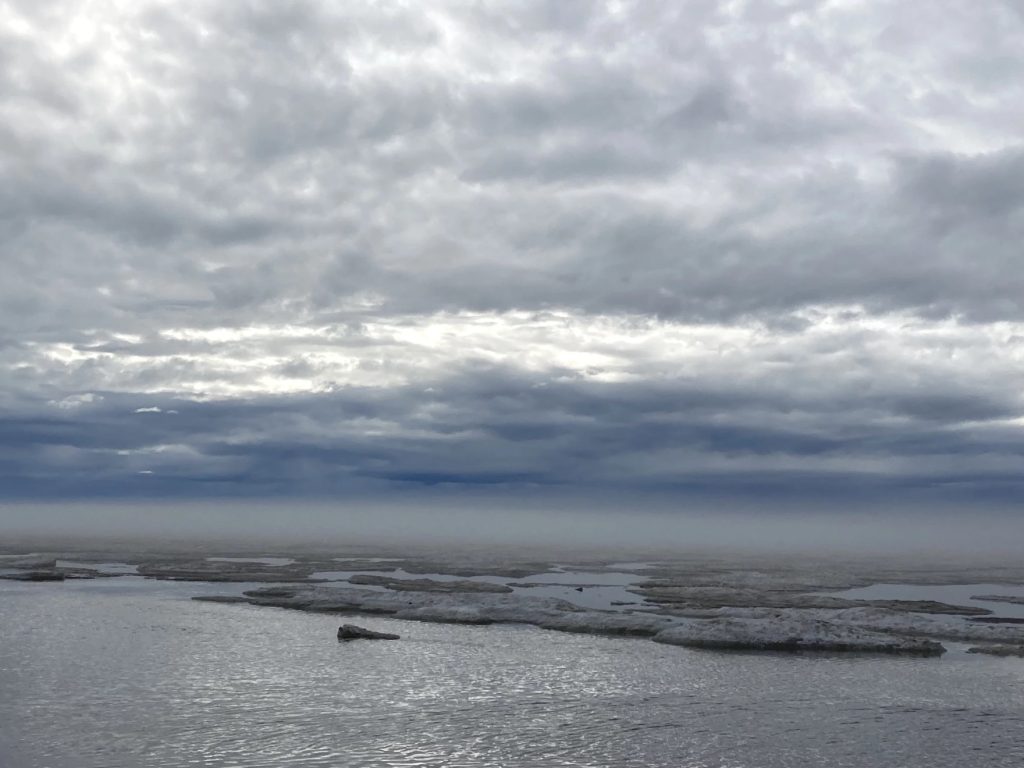
Photo: Utqiagvik coast in June 2022. (Alena Naiden)
Arctic sea ice has been shrinking in recent decades, reaching record lows both in summer and in winter.
A new study shows a continuation of this trend: ice is sticking to Alaska’s northern shores for less time than it used to.
Researchers say this can have implications for the climate, resource development, and subsistence hunting.
The Alaska Desk’s Alena Naiden from our flagship station KNBA reports.
Andrew Mahoney is a research professor at the University of Alaska Fairbanks Geophysical Institute.
In January, he and his colleague published a study in the “Journal of Geophysical Research: Oceans”.
It focused on the ice that attaches to the shores of Alaska’s northern coast, called landfast ice.
They found that over nearly three decades, the landfast ice in Alaska’s Arctic is forming later, breaking up earlier, and not reaching as far offshore.
“So it’s sort of shrinking in time, and it’s shrinking in space as well.”
Mahoney previously looked at the landfast ice in Chukchi and Beaufort seas in a study published in 2014. At that time, the Chukchi Sea seemed to experience more ice loss, while the Beaufort Sea seemed more stable.
This year’s study showed that that has changed.
“Now we’re starting to see changes in the Beaufort Sea, that the Beaufort Sea of today is not the Beaufort Sea of the 1970s.
Mahoney says that while landfast ice is only a small fraction of the overall ice cover, it is the type of ice most people come in contact with.
Indigenous communities have used it for millennia to hunt – like whalers in Utqiagvik in spring.
“A large fraction of the community, at any one time might actually be out on the land fast ice actively whaling, and the success of that whale hunt is in part related to how accessible and how stable and safe the land fast ice is.”
He added that the oil and gas industry also uses landfast ice to build seasonal ice roads to connect to facilities.
His team’s study was funded by the federal Bureau of Ocean Energy Management, with the interest of oil and gas development near shore.
And when landfast ice breaks up earlier in spring, coastal communities lose a shield protecting them from the open water and waves.
“There’s a lot of erosion affecting these communities. Most of it happens in the fall, but we could start to see more erosion happening in the springtime if landfast Ice keeps breaking up earlier.”
The Arctic has been warming four times faster than the rest of the world. The recent landfast ice decline might be related to the overall thinning of Arctic sea ice due to climate change. But more research is needed to better understand the process behind it.
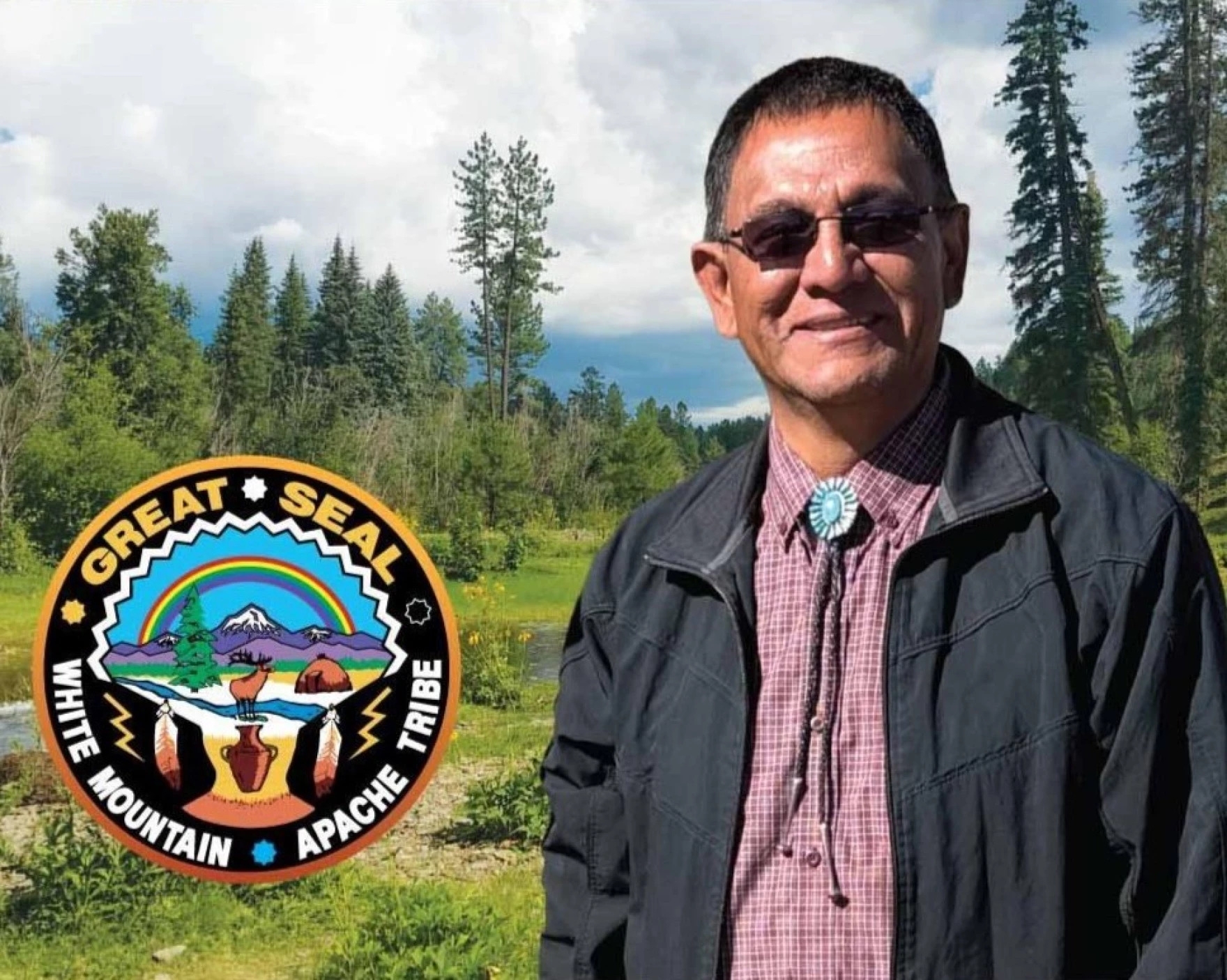
Orlando Carroll was elected chairman of the White Mountain Apache Tribe on April 1, 2026. (Courtesy Orlando Carroll for WMAT Chairman)
It was just election day for the 15,000-member White Mountain Apache Tribe.
As KJZZ’s Gabriel Pietrorazio reports, a new chairman has been named and hopes his administration can help change course.
The tribal radio station first announced official election committee results late Wednesday.
Whiteriver school board member Orlando Carroll won the seat by 80 ballots. Over 4,200 votes were cast in that race.
The chairman-elect celebrated with supporters.
“You are the core of the Carroll administration.”
Carroll promises stability and a brighter future after the tribe had two different sitting chairmen within in recent weeks.
Get National Native News delivered to your inbox daily. Sign up for our daily newsletter today.
Download our NV1 Android or iOs App for breaking news alerts.
Check out today’s Native America Calling episode
Friday, April 3, 2026 – Juno Awards reach new milestones for Indigenous representation


Leave a Reply