Podcast: Play in new window | Download | Embed
Canadian Prime Minister Mark Carney is in China for the first visit by a Canadian leader in almost a decade.
Already, he’s signed a Memorandum of Understanding with Beijing that could result in more Canadian oil, natural gas, and clear energy exported to China.
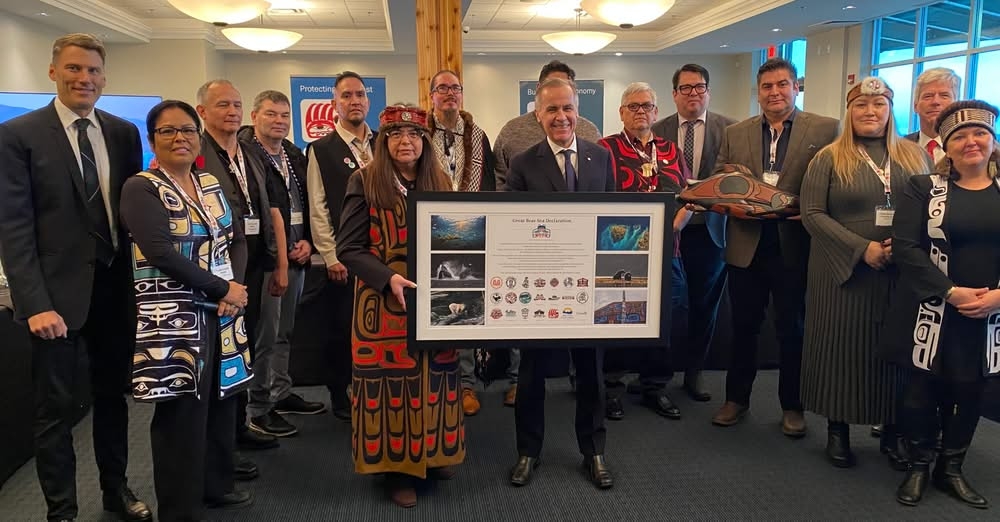
But as Dan Karpenchuk reports, before he left, PM Carney made a stop over in British Columbia to talk with Coastal First Nations about his plans for energy exports.
The meeting was held in Prince Rupert, and on the agenda – Ottawa’s major projects.
The Coastal First Nations, made up of nine First Nations, try to ensure that they have a say in how resources and waters are managed. They also work to protect the Great Bear Rainforest and the British Columbia (BC) coastline.
And they have strongly opposed the idea of a new pipeline or the end of a ban on the moratorium on oil tankers. Both are major components of Ottawa’s plans to diversity Canada’s trade in energy, and move away from dependency on U.S. trade, especially now in the era of uncertainty caused by President Donald Trump.
But Coastal First Nations remain opposed to any new pipeline to the BC coast.
Carney played down expectations, saying that the meeting was more about dialogue to explore ways they could work together, but the coastal chiefs are not budging on their opposition, according to the group’s president, Maily Slett.
“We reiterated that there is no technology that can clean up an oil spill at sea. And that it would take just one spill to destroy our way of life. We shared our reliance on a healthy and intact ocean and our determination to protect the ocean and the ecosystem that we rely upon.”
Without their support, Carney’s government appears to be in a lose-lose situation.
Coastal chiefs say they will use every tool available to stop construction if Ottawa pushes ahead with a North Coast pipeline.
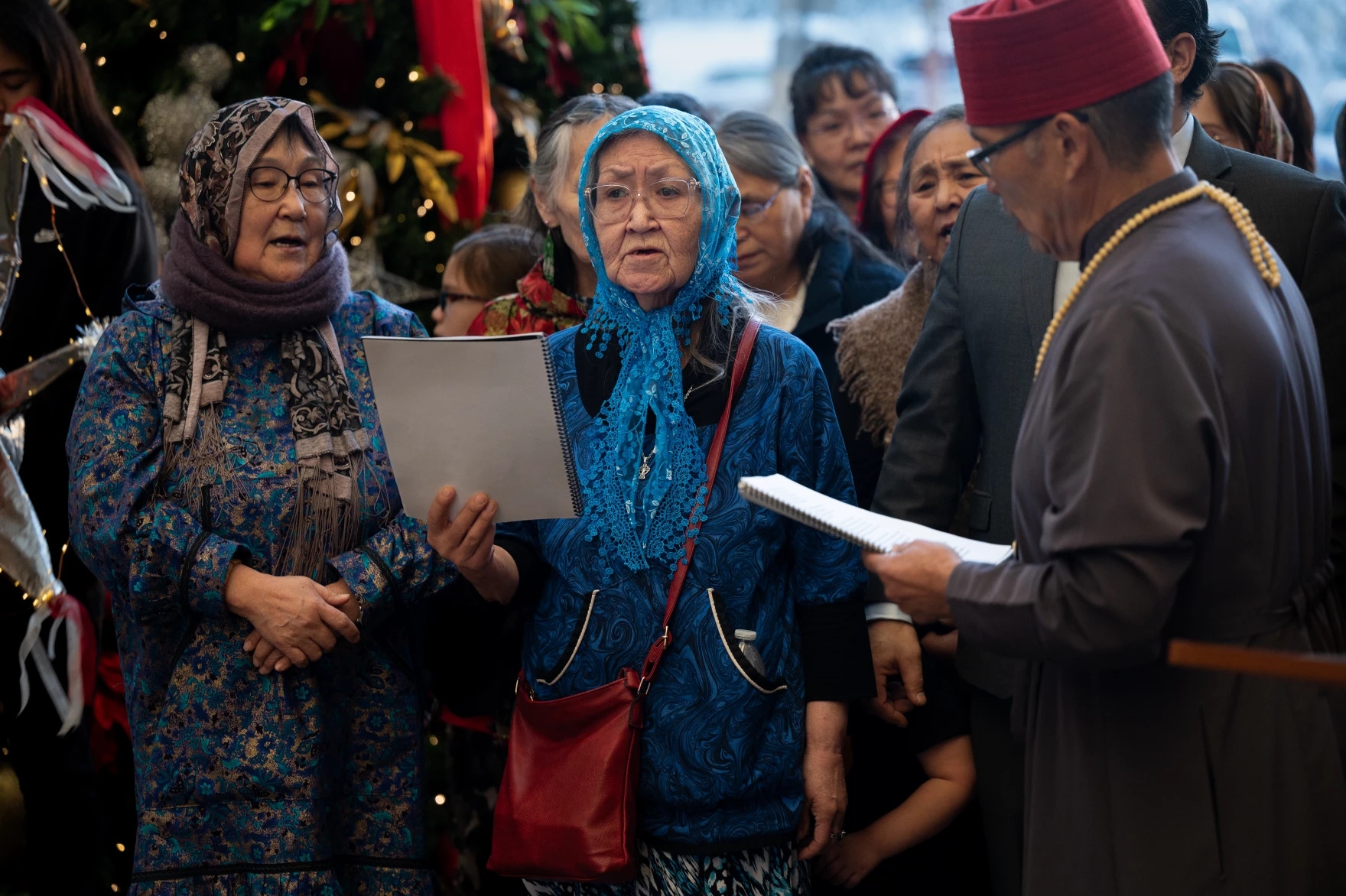
The St. Innocent Russian Orthodox Cathedral choir performs hymns during a Christmas celebration on January 7 at the Yagheli Shesh Qenq’a Anchorage Native Primary Care Center. (Photo: Matt Faubion / Alaska Public Media)
The holidays may be over, but Alaskans across the state recently celebrated Russian Orthodox Christmas and New Year.
Celebrations often include hymns, feasts, and a tradition called Starring, or Slaviq.
One celebration in Anchorage brought together people who could not celebrate the holiday with their families or in church.
The Alaska Desk’s Alena Naiden from our flagship station KNBA was there and has the story.
Singers in kuspuks and head scarfs chant Christmas hymns in English, Yup’ik, Russian, and Church Slavonic.
Next to them, three young men spin sparkling pinwheel-shaped stars on wooden poles, each with an Orthodox icon of a Nativity scene in the center.
The group is gathered for a Russian Christmas celebration hosted by the Alaska Native Medical Center at their primary care clinic.
The singers are from St. Innocent Russian Orthodox Cathedral choir in Anchorage, though most of them are originally from the Yukon-Kuskokwim Delta.
Alaska Orthodox Archbishop Alexei was a part of the opening of Slaviq, a custom he says originated in the Carpathian Mountains in Eastern Europe.
“This wonderful, beautiful tradition that has been in Alaska for over 100 years.”
Okalena Patricia Lekanoff-Gregory is from Unalaska and grew up singing hymns in Aleut and Russian. Her family always gathered around Slaviq to decorate stars for the celebration.
Now she makes them herself. Gregory says she wants to pass down the tradition to the next generation.
“It’s our history. It’s been going, coming over from Ukraine, from Russia, and and still being sung today. To me, it’s powerful.”
The best part of the night for Gregory is having a big feast, sometimes until two in the morning. And she loves it when the songs make people move.
She remembers one song from her childhood, similar to @Joy to the World@, that shifted between fast and slow tempo.
“You could see the people kind of dance or move to it. You’re not supposed to dance in church, right? But this song, they always did. All the elders, you can see them tapping their feet, and their head bop. I miss that.”
Gregory says she was happy to attend Slaviq at the primary care center, to bring comfort and healing to patients.
After the performance, the group crossed the street from the primary care center and continued the procession at the patient housing.
Get National Native News delivered to your inbox daily. Sign up for our daily newsletter today.
Download our NV1 Android or iOs App for breaking news alerts.
Check out the latest episode of Native America Calling