Podcast: Play in new window | Download | Embed
FBI Director Kash Patel met with tribal law enforcement partners in Albuquerque, New Mexico last week.
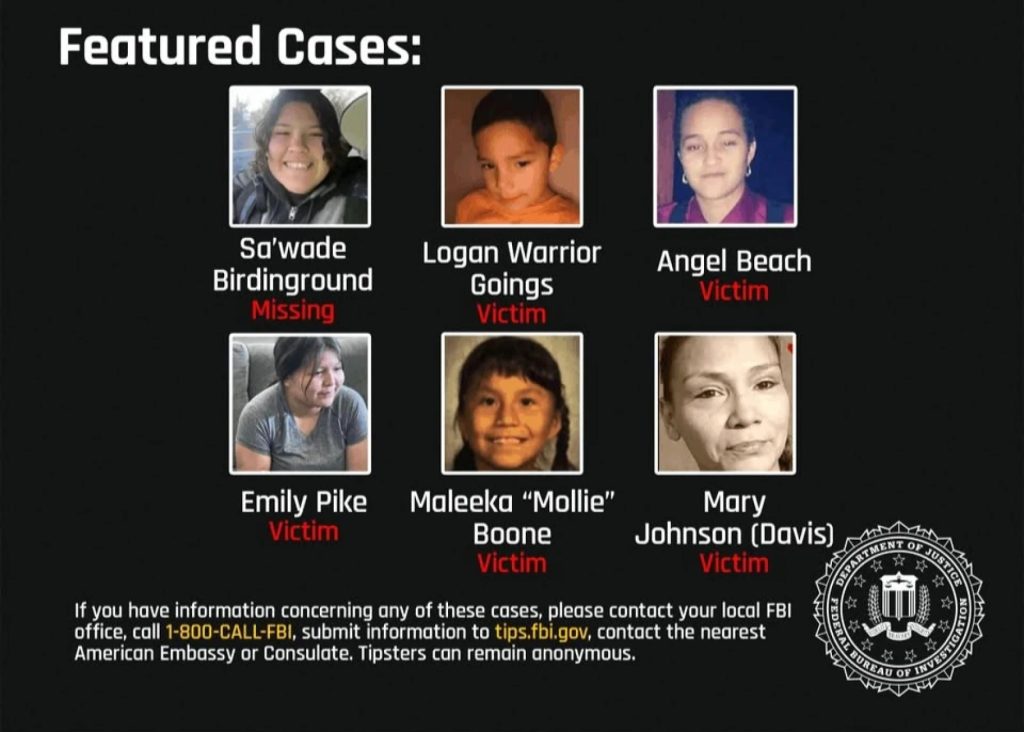
The visit comes on the heels of the agency launching a new tool to raise public awareness over missing and murdered Indigenous cases.
KJZZ’s Gabriel Pietrorazio has details.
It is called Voices Not Forgotten, a webpage featuring select, unsolved crimes across Indian Country where the FBI is seeking the public’s help by offering $25,000 minimum rewards. That includes the high-profile homicides in Arizona of Maleeka “Mollie” Boone and Emily Pike.
But as Deiandra Reid with the Albuquerque nonprofit Coalition to Stop Violence Against Native Women notes, this tool is not exhaustive.
“You know, I looked at this website that they have, and I didn’t see my sister on there.”
Twenty-two years ago, Navajo teenager Tiffany Reid went missing while walking to high school in Shiprock, New Mexico.
Decades prior, a 9-year-old Navajo girl disappeared from nearby Gallup, New Mexico.
“Anthonette Cayedito is on there, and she’s [been] missing for about 40 years, so I don’t see what the difference is between her case and my sister’s case. And a lot of times, our relatives fall through the cracks. The visibility is very important, but it’s not the finish line.”
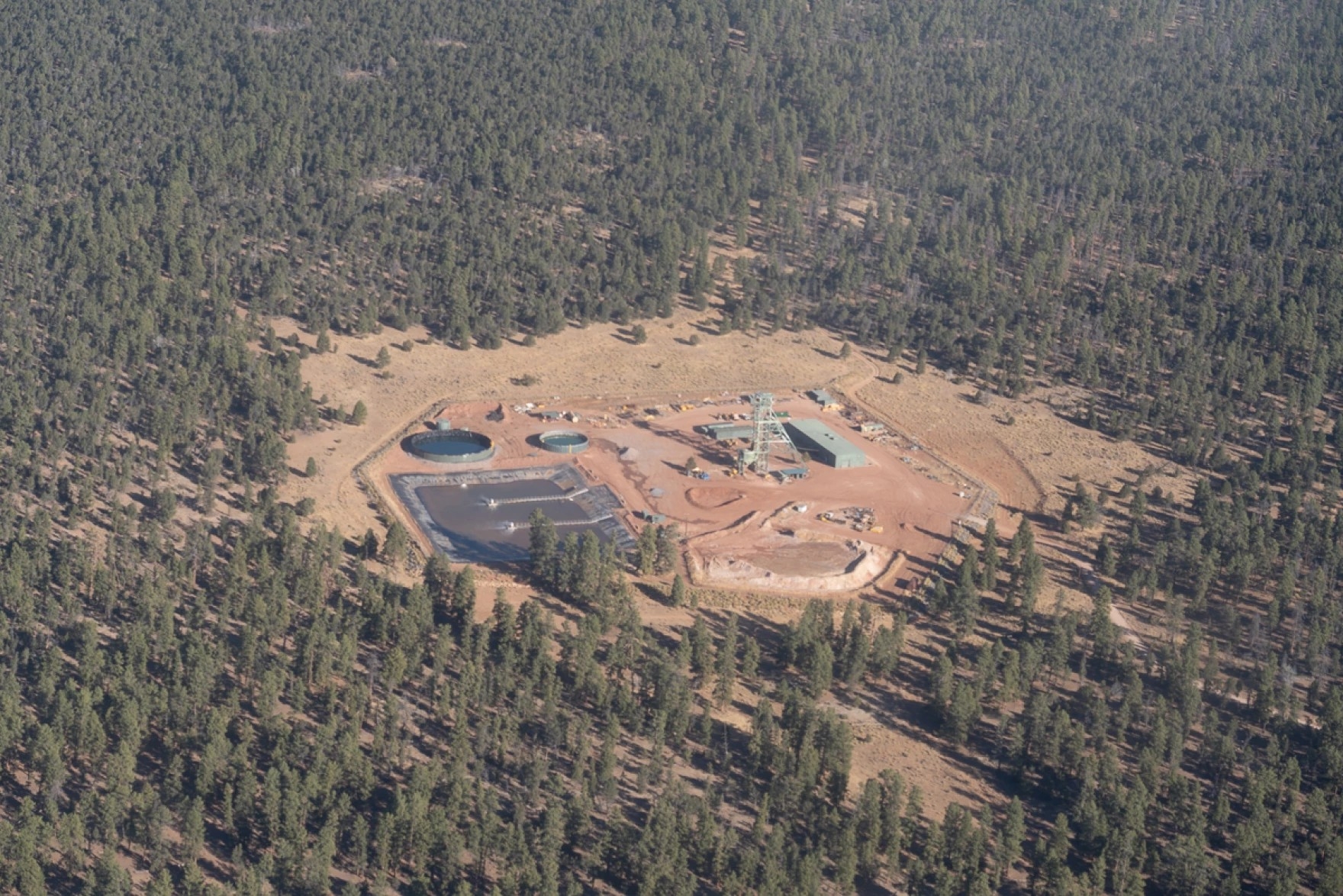
The Pinyon Plain Mine, as seen from the air in November 2019, is owned and operated by Energy Fuels Inc., which has extensive Canadian roots: (Photo: Ryan Heinsius / KNAU)
There has been a surge of mining companies looking to dig for minerals in the Southwest, including near tribal communities.
KNAU’s Chris Clements explains why so many of these companies are Canadian.
It boils down to this: Canada has a unique tax system that allows mining companies that are exploring projects to pass their costs along to investors.
John Steen, a professor at the University of British Columbia, says Canada is home to hundreds of those companies.
“They’re hearing that the regulatory regime is, you know, maybe as not as tight as it was, and they’re seeing the U.S. as an attractive place for investment and exploration.”
Steen says Canadian firms are responding to President Donald Trump’s push to end reliance on China for critical minerals.
Take Chakana Copper, which is using a subsidiary to explore mining copper on the Navajo Nation.
Or Laramide Resources, which wants to mine uranium near the site of the largest release of radioactive mining material in U-S history.
James Hopkins, an associate professor at the University of Arizona, says the reason for that is due in part to the rollback of mining regulations. And that’s had consequences.
“The growth in uranium mining in the United States is unprecedented. With the increased deregulation, you’re seeing these conflicts arising more and more with respect to tribal lands and tribal resources.”
Hopkins says the flurry of mining projects, including some proposed by Canadian companies, is causing pushback from tribes who have long borne the environmental consequences of mining.
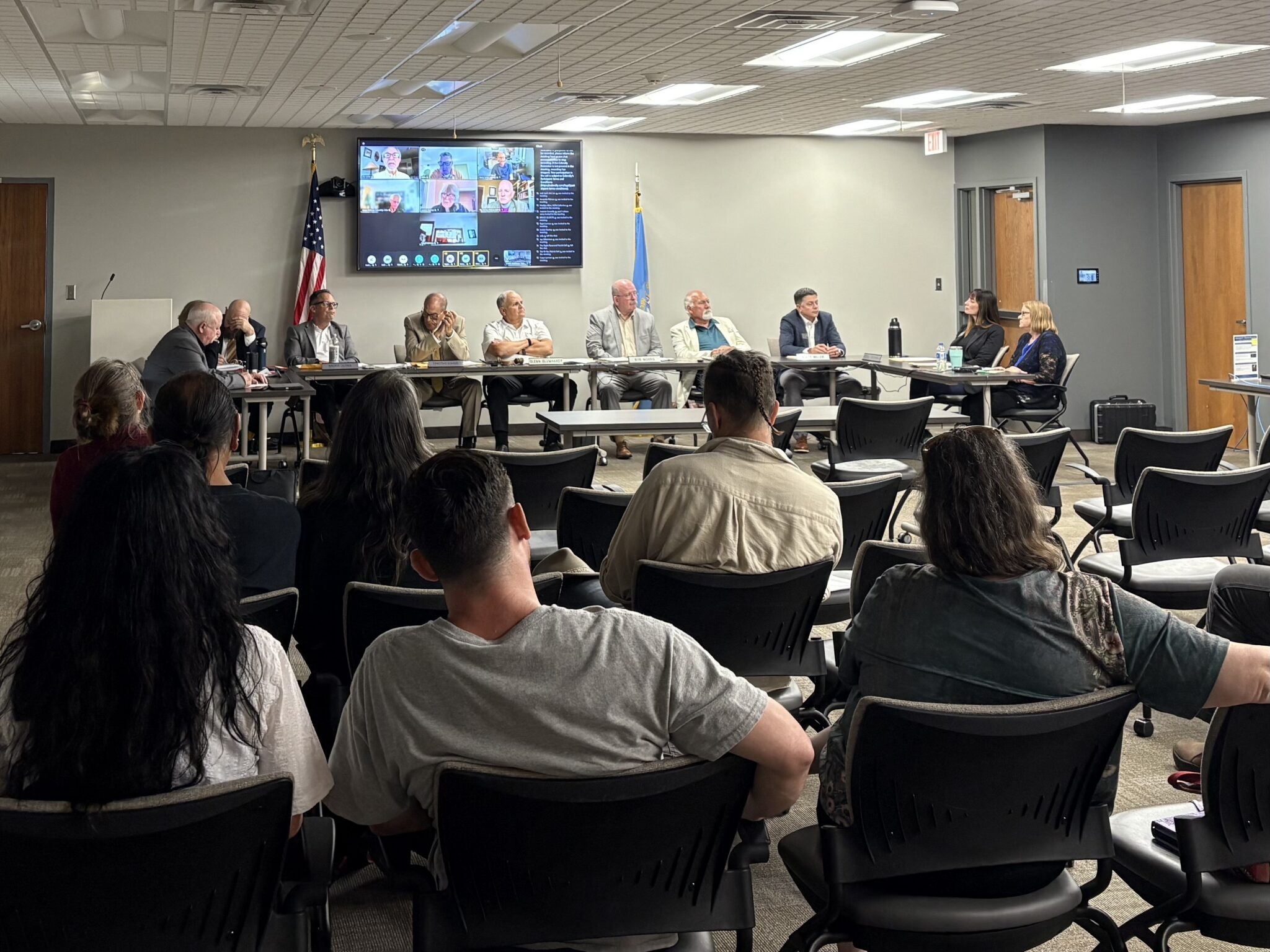
Opponents of a proposed project to drill for uranium in the southern Black Hills listen to a meeting of the Board of Minerals and Environment at the Joe Foss Building in Pierre, South Dakota, Aug. 20, 2026. (Photo: Meghan O’Brien / South Dakota Searchlight)
The South Dakota Board of Minerals and Environment took actions affecting two proposed uranium projects in the Black Hills.
South Dakota Searchlight’s Meghan O’Brien has more.
The Dewey-Burdock Project has been on hold for more than a decade. Project leaders want to mine for uranium near Edgemont in the southern Black Hills.
Uranium is a metallic, radioactive element used as fuel in nuclear weapons and nuclear power plants.
Interest in uranium exploration and mining has risen recently. That is in response to nuclear energy’s potential to supply electricity for data centers.
The project needs federal, state, and local permitting. After being held up by legal challenges, it secured the remaining federal permits it needs and will start seeking state permits.
The Board of Minerals and Environment approved a socioeconomic study, which will help the board understand the economic, environmental, and community impacts of the project.
The board also continued discussions on a separate request to drill holes in search of uranium near Craven Canyon, in the same general area of the southern Black Hills.
A new state law requires the board to have language interpretation services available at hearings for those who need it, such as Lakota speakers. Some of the project opponents are members of Lakota tribes.
A lawsuit by a project opponent against the board alleges it violated due process because an interpreter was not available on the first day of a May permit hearing. The lawsuit is ongoing in federal court and the hearing is on hold.
Opponents to the drilling project say it could endanger the canyon walls which are lined with ancient Native American petroglyphs.
Others say Native American spiritual practices at the site could be disrupted and the drilling could endanger local water sources.
Get National Native News delivered to your inbox daily. Sign up for our daily newsletter today.
Download our NV1 Android or iOs App for breaking news alerts.
Check out today’s Native America Calling episode
Monday, August 24, 2026 — Native in the Spotlight: Dr. Lori Arviso Alvord