Podcast: Play in new window | Download | Embed
Arizona tribal reservations were home to two of the nation’s 10 internment camps during World War II.
On the western edge of the state, the Colorado River Indian Tribes (CRIT) welcome visitors to see abandoned relics from that dark past.
In fact, there is even an annual pilgrimage – and this year, KJZZ’s Gabriel Pietrorazio went along, in part three of his ongoing series.
One way to remember those who lived – and died – at the internment camp officially known as the Colorado River Relocation Center, and more commonly known as Poston, is by rebuilding, with CRIT entrusting the care of crumbling buildings to the nonprofit behind the pilgrimage.
Barbara Darden is a preservation architect from Aurora, Colo.
“It’s not Poston Community Alliance. It’s not anybody that we work for. The building is our client.”
She’s been restoring Poston piece-by-piece since 2009, turning that camp into a construction zone – this time, along with Andrew Phillips, owner of a Durango, Colo. company called Natural Dwelling.
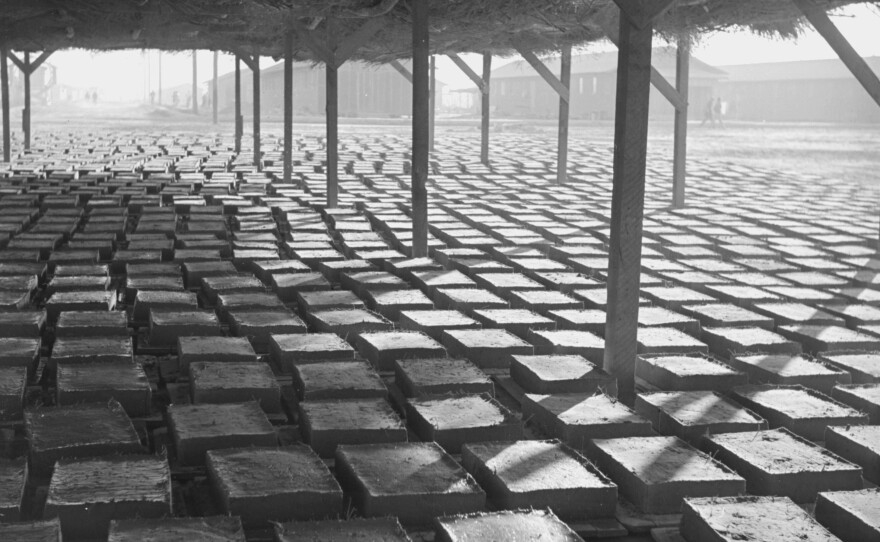
“The same mud, the same walls, the same exact material being reworked a second time around.”
In October, camp survivors and descendants repaired a classroom wall internees made from adobe clay and mud.
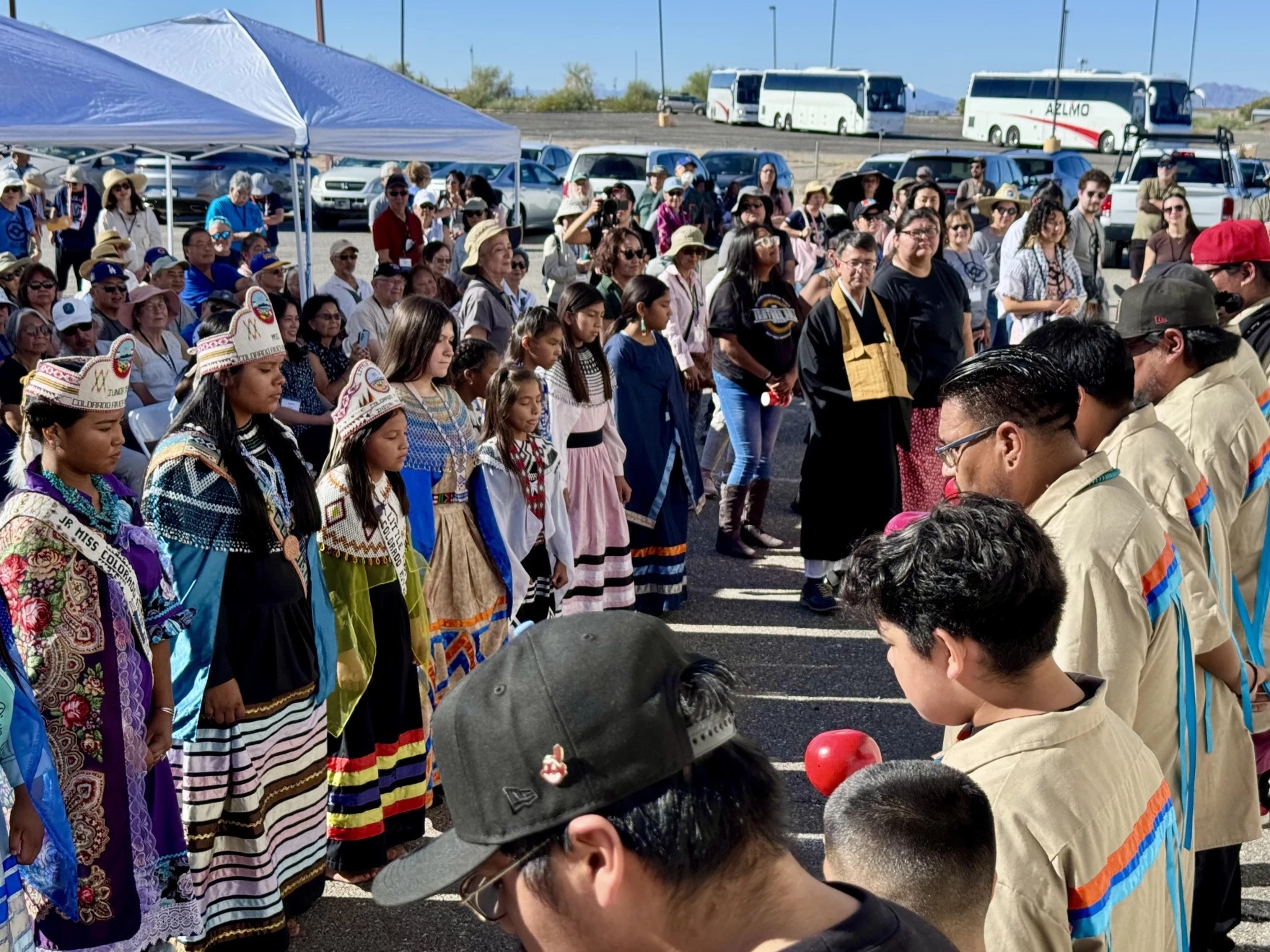
Youth groups from the Colorado River Indian Tribes honor Poston pilgrimage guests with bird dances and songs on October 25, 2025. (Photo: Gabriel Pietrorazio / KJZZ)
“My first guess is they were able to find these little pockets of windblown clay in the foothills here … they used the few scant resources they had, made great brick and their workmanship and their mix design and how they laid it and stacked it and built it, is all top drawer.”
For the restoration, new slabs were hauled out from a Phoenix, Ariz. brickyard to replace that broken wall, but the old material isn’t going to waste.
It’s being blended into new mortar that will fill in the cracks, using a mixer much like one the U.S. Army gifted to internees over eight decades ago.
Hard work also being done by CRIT member Adrian Antone Jr. to restore vandalized structures.
“I thought it was pretty disrespectful. And so finally, giving my part to help out, especially build this little wall.”
Darden dreamt of rebuilding a lot more.
“We would love to restore everything.”
But that comes with a big price tag, defrayed by National Park Service grants to preserve interment sites like this one. Now, the Trump administration is eradicating signs marking the camps and other so-called “disparaging” reminders of the country’s history.
“We do not anticipate any more grants. Being more realistic, we’re looking at maybe four buildings here, and then the others will just have to let them go and watch them fall into ruin.”
Either way, CRIT will keep working to protect this history – one brick at a time.
 President Donald Trump signed a bill into law on Friday that will give Alaska Native veterans more time to file for their Native allotments.
KNBA’s Rhonda McBride has more.
The deadline to apply is Monday, December 29, but legislation passed earlier this month gives veterans a five-year extension.
The Native allotment program was created more than 100 years ago to put more federal land into private ownership.
It allowed individual Alaska Natives to each claim 160 acres, but when the federal program ended in 1971.
Vietnam vets missed out, because many were overseas fighting the war.
As of mid-December, only about 25% of eligible veterans had applied for their allotments.
Many said the process was too difficult to navigate.
U.S. Sen. Dan Sullivan (R-AK), one of the main sponsors of the bill, said he will make staff available to assist veterans with their applications.
Get National Native News delivered to your inbox daily. Sign up for our daily newsletter today.
Download our NV1 Android or iOs App for breaking news alerts.
Check out the latest episode of Native America Calling
Monday, December 29, 2025 – Wounded Knee’s perpetual stain on history