Podcast: Play in new window | Download | Embed
Tribes are among those expressing condolences to the family of 37-year-old Alex Pretti, who was fatally shot over the weekend by federal agents in Minneapolis.
Tribes are also raising concerns for their citizens in the Twin Cities as the Trump administration’s immigration actions continue in Minnesota.
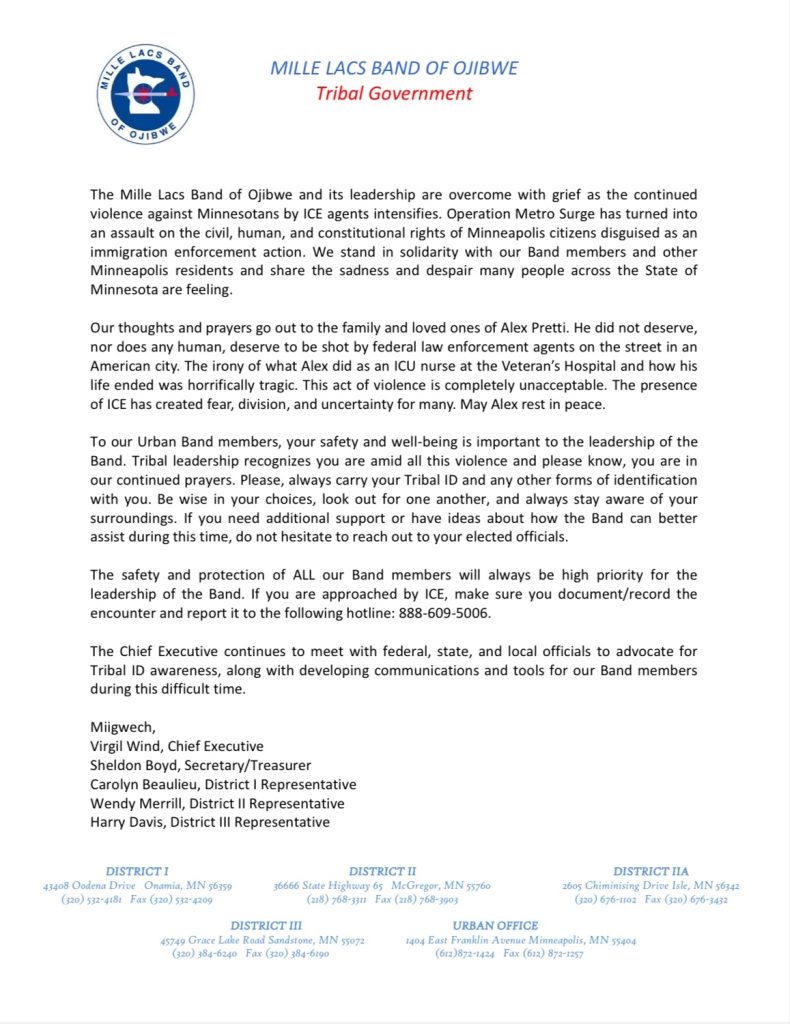
In a statement, the Mille Lacs Band of Ojibwe offered condolences and said it is standing in solidarity with its Band members and other Minneapolis residents.
Tribal leaders are urging their members to carry tribal IDs and report any U.S. Immigration and Customs Enforcement (ICE) interactions to the tribe, as leaders meet with federal, state, and local officials.
The Sprit Lake Nation, Crow Creek Sioux Tribe, Sisseton Wahpeton Oyate, Rose Bud Sioux Tribe, and Standing Rock Sioux Tribe issued a joint statement saying they stand in solidarity with communities in Minnesota, and expressed condolences to the family of Pretti.
The tribes say recent federal actions in Minnesota include the taking of a Sisseton Wahpeton Oyate member, but they did not provide additional information.
The tribes say leaders are in contact with federal agencies and are urging tribal citizens to prioritize safety.
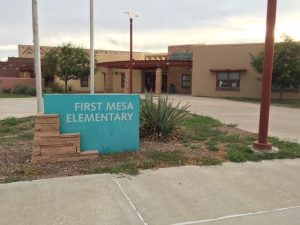
The First Mesa Elementary School was built on the site of the Polacca Day School on the Hopi reservation. (Courtesy First Mesa Elementary School / Facebook)
A teacher who was convicted of sexually abusing Hopi boys for nearly a decade was recently denied parole after the tribe and the U.S. attorney for Arizona penned a letter opposing his release.
John Boone was hired as a teacher in 1979 at a Hopi school run by the Bureau of Indian Affairs. In 1987, the FBI found photos and videotapes of 142 nude boys at his home, and Boone was sentenced to life in prison.
“His name is still widely known on the reservation, even though it’s been close to 40 years. We still continue to suffer to this day.”
That’s Hopi Chairman Lamar Keevama.
“Unfortunately, we’ve lost some either to suicide or alcohol or substance abuse. Nothing will ever make up for what was done. It’s an open wound that will never go away.”
U.S. Attorney Timothy Courchaine has watched the case closely – even sending a letter to the U.S. Parole Commission in tandem with Hopi leadership.
“And with the understanding that federal special trust responsibility doesn’t end at the sentencing.”
Courchaine also credits his tribal liaison Kiyoko Patterson (Navajo) and pays close attention.
“She really stays on this for us.”
The US agreed to pay $13 million to 58 victims. He says Boone broke the tribe’s trust.
“That creates a generational impact … But you’ve heard it from Attorney General [Pam] Bondi, you’ve heard it from Deputy Attorney General Todd Blanche, that this Department of Justice has to be ensuring sex offenders and those who prey on children are held accountable and prevented from reoffending at all.”
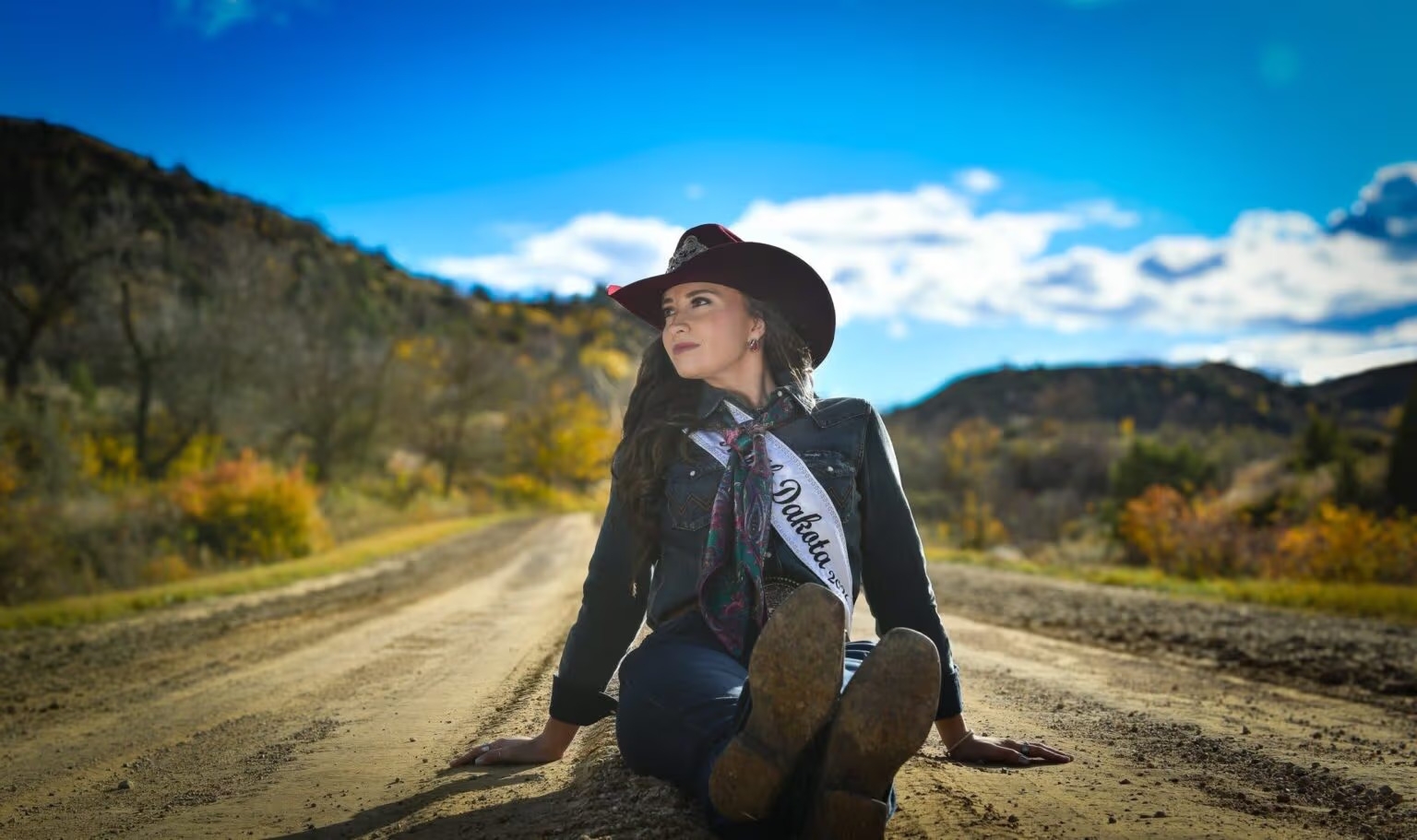
Jaylynn Hicks sits on an old stretch of road at the badlands near Killdeer, N.D., on Thursday, October 16, 2025. (Photo: Chuck Miner)
For the first time in 40 years, a Native person is wearing the crown as Miss Rodeo North Dakota.
Brian Bull of Buffalo’s Fire has the story.
24-year-old Jaylynn Hicks of Dunn Center scored highest in the categories of horsemanship, appearance, and personality.
She competed twice before, but persevered and will now travel the rodeo circuit across the country.
Hicks is one-quarter French Canadian Chippewa, of the Turtle Mountain Band.
The last known Native rodeo queens were Janet Voight in 1986, and Audrey Hall, in 1954. Both were with the Three Affiliated Tribes Mandan, Hidatsa, and Arikara.
Hicks says she’s happy to continue this representation.
“I love the fact that Native American culture has such a heavy influence on the Western industry. Whether you want to look at the horsemanship, the jewelry with we see such a huge influence. The leatherwork, the fringe we wear on our jackets. That’s all from Native American culture.”
Hicks was declared Miss Rodeo North Dakota last year, and was formally coronated earlier this month.
Besides educating people about rodeo culture and the Western industry, Hicks will also promote awareness of Angelman syndrome, a genetic condition that affects her niece, Sissy.
Get National Native News delivered to your inbox daily. Sign up for our daily newsletter today.
Download our NV1 Android or iOs App for breaking news alerts.
Check out the latest episode of Native America Calling
Monday, January 26, 2026 – Federal officials take aim at tribal government contracts