Podcast: Play in new window | Download | Embed
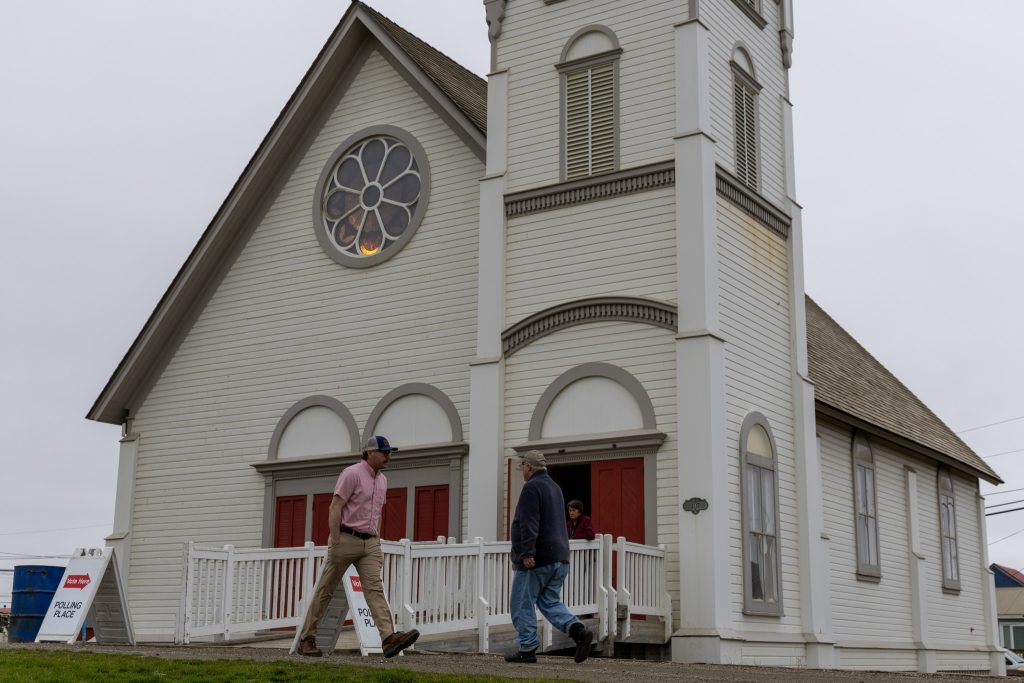
Photo: St. Joe’s Church, one of the main polling places in Nome. (Margaret Sutherland / KNOM)
Several Alaska Native groups, including the Alaska Federation of Natives (AFN), say the constitutional rights of rural voters are in jeopardy.
The organizations are sounding the alarm over staffing shortages at Alaska Division of Election offices and polling stations that serve rural Alaskans.
As Rhonda McBride from our flagship station KNBA reports, these affect mostly Native communities
In a statement Monday, AFN said it was deeply concerned by reports about election worker vacancies in rural precincts, as well as accounts from workers, who say they have waited for months to receive the per diem they were promised after they completed their required training.
Kendra Kloster, AFN’s director of government relations, pointed to the Division of Elections Region IV office in Nome, which did not open at the advertised time for the start of early voting.
“When people are going in with their expectation to vote, they take time out of their day, they show up. And when the office isn’t open when they say they are, I think that is a big deal.”

Voting midday on August 18 at the Yupiit Picaryarait Cultural Center in Bethel. (Photo: Evan Erickson / KYUK)
Kloster says the Nome incident is just the latest example of voter access problems that have persisted for years.
AFN and other groups say some of these problems could have been avoided had Gov. Mike Dunleavy, R-Alaska, not vetoed Senate Bill 64.
Dunleavy said he rejected the measure, because it needed more work and there was not enough time to put it in place before this year’s election.
Alaska state Sen. Bill Wielechowski, D-Anchorage, who is among the bill’s backers, says that just is not true.
He says the legislation not only passed with bipartisan support, but would have improved both voter access and election integrity statewide. Wielechowski says he is glad AFN and other groups are speaking out.
“If you’re making it impossible for people to vote, you’re not opening polling places, then are you really granting them their constitutional right to vote? And I would say a court would probably say you’re not.”
AFN has sent a letter to the Division of Elections, calling on it to take immediate action on a long list of complaints.
Stephen Kirch, a spokesman for the Elections Division, says the division has no comment on AFN’s letter, although he did acknowledge that on election day, two rural precincts opened late.
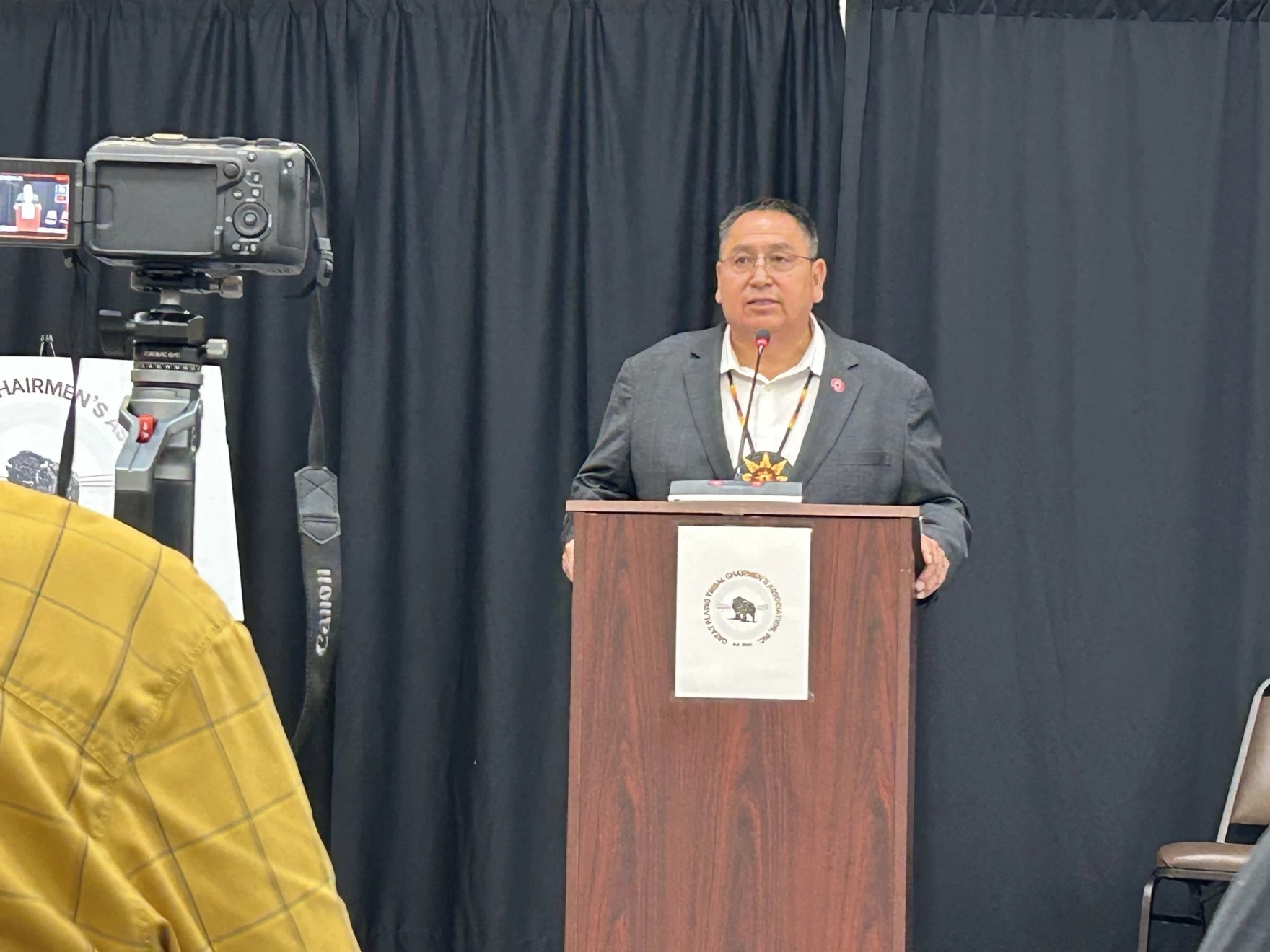
Oglala Sioux Tribe President Frank Star Comes Out addresses the media in Rapid City. (Photo: C.J. Keene / SDPB)
South Dakota tribal leaders say promised services are falling short, especially in law enforcement.
SDPB’s C.J. Keene has more.
South Dakota’s tribal leaders met in Rapid City Wednesday to call for more support to reservation lands from federal and state partners, specifically consistent, mandatory funding of tribal police regardless of administration or status of the government.
According to information from the Great Plains Tribal Chairmen’s Association, funding is about one-quarter of tribal staffing needs and falls far short of the estimated $3.5 billion these entities need to properly maintain public safety standards seen off reservations.
Oglala Sioux Tribe President Frank Star Comes Out says this is reflected in numbers from Pine Ridge.
“The formula is 2.8 officers per 1,000 people. The Oglala Sioux Tribe has 54,000 membership, and 27 officers. What is wrong with that picture?”
That sentiment was echoed by Chelaine Knudsen, chairwoman of the Yankton Sioux Tribe. She says little has changed since the last time this question was asked.
“At the time in 2024 we only had three tribal police officers. Today, we have five tribal police officers, and we have two cadets, I believe, that are in training right now.”
The Yankton Sioux Tribe has a population of 11,500 enrolled members.
Vermillion, a college town with a similar population, reported 20 sworn officers in a phone call with SDPB. That total is about 1.7 officers per 1,000 people and it is before counting campus law enforcement found at the University of South Dakota.
What this boils down to for tribes though, according to Star Comes Out, is serious need for more support.
“Today I encourage tribal nations, not only from the Great Plains but nationwide – it’s time to stand up. Stand up for your nation, voice for your people, come together and join us in the fight for our people.”
The Tribal Chairman’s Association estimates less than 13% of funding compared to the current identified need is met overall.
Get National Native News delivered to your inbox daily. Sign up for our daily newsletter today.
Download our NV1 Android or iOs App for breaking news alerts.
Check out today’s Native America Calling episode
Thursday, August 20, 2026 – Safety vs. privacy with tribal law enforcement surveillance cameras