Podcast: Play in new window | Download | Embed
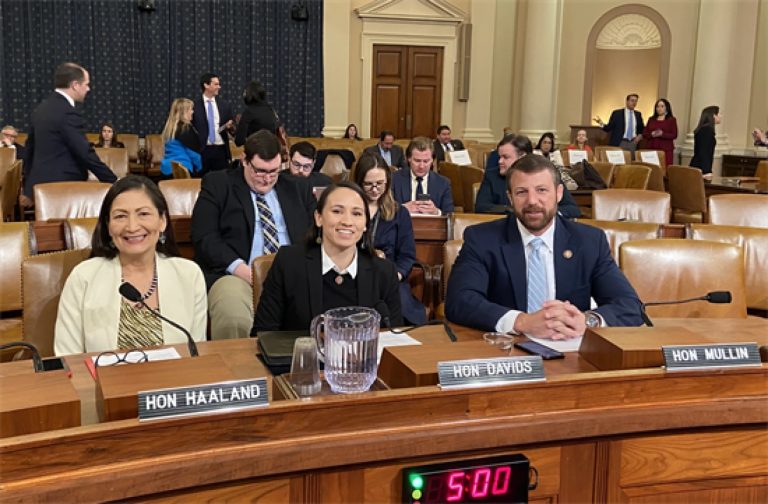
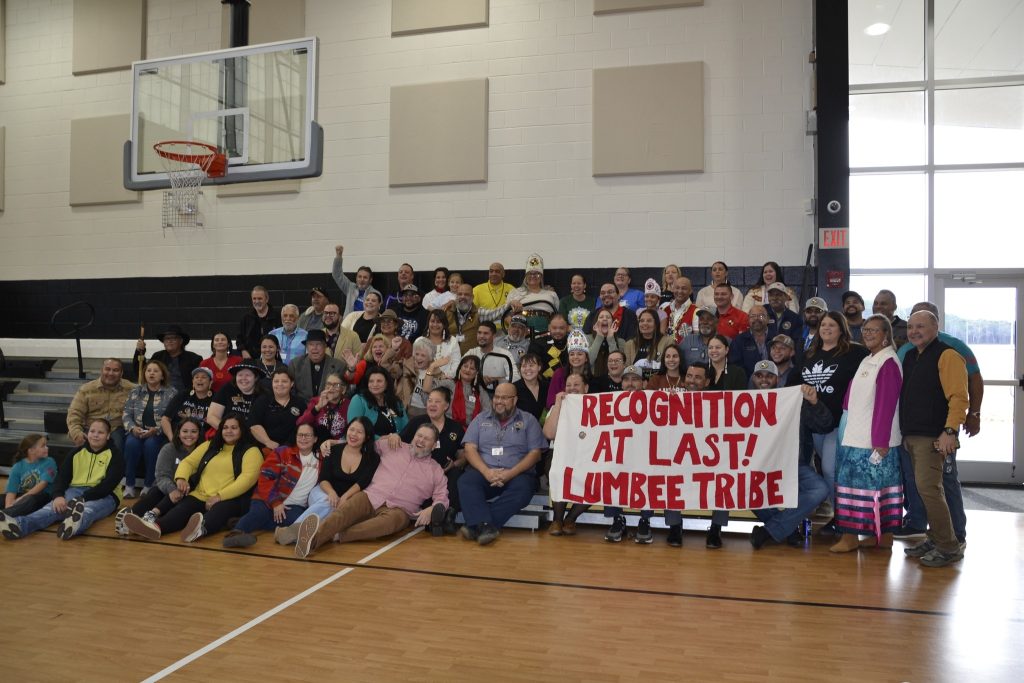
The Lumbee Tribe is celebrating the passage of the National Defense Authorization Act, which includes legislation to grant the tribe federal recognition.
The U.S. Senate passed the defense bill Wednesday, as Lumbee citizens gathered in Pembroke, N.C. for a watch party.
Lumbee Chairman John Lowery was in Washington D.C. for the vote, and shared a short video message saying he’s the last chairman to go the nation’s capital to fight for full federal recognition.
“Now our children and our grandchildren, our great grandchildren can come up here working and fighting and promoting other things for our people.”
The tribe has sought federal status for more than a century.
The Lumbee’s effort has faced opposition, including by the Eastern Band of Cherokee Indians in North Carolina, while President Donald Trump promised the Lumbee Tribe federal recognition.
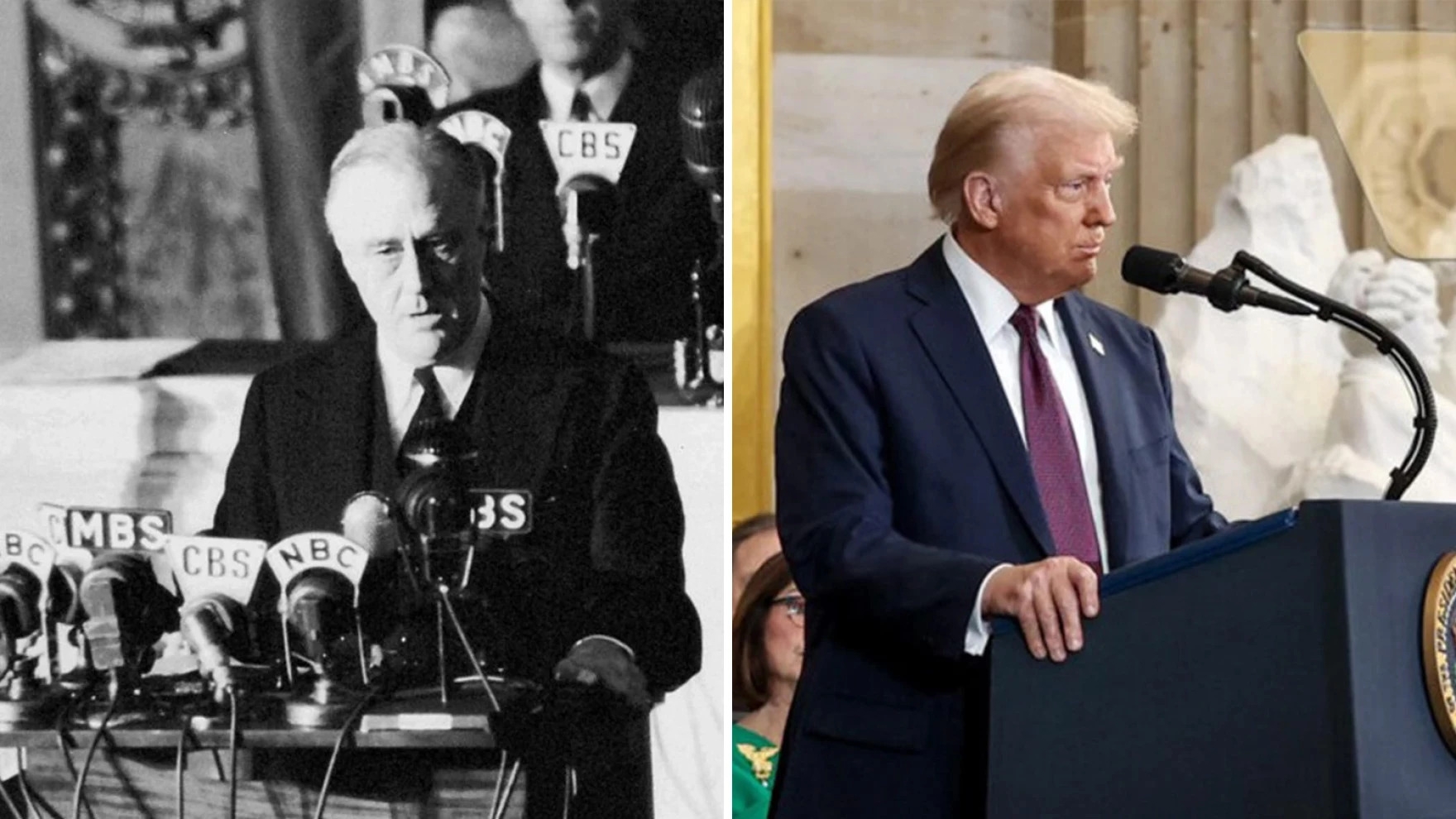
President Franklin Deleanor Roosevelt in 1941 and President Donald Trump in 2025 invoking the Alien Enemies Act.
This December marked the 84th anniversary of the Pearl Harbor bombing – a shocking attack that drew the U.S. into World War II and unleashed a wave of anti-Japanese hysteria.
While the U.S. would join a global fight against fascism and Nazi concentration camps, it was erecting camps of its own at home, forcing tens of thousands of Japanese Americans into internment.
Two of those camps were set up on tribal lands in Arizona.
In the first of a 5-part series, KJZZ’s Gabriel Pietrorazio examines the law that has given presidents power to imprison perceived enemies.
It all began December 7, 1941, a Sunday morning in Hawaii, with the bombing of Pearl Harbor.
More than 2,400 souls were lost at the naval base on the island of Oʻahu.
The U.S. was suddenly swept into the Pacific Theater.
“And we’re going to fight it with everything we’ve got.”
During President Franklin Delano Roosevelt’s “Day of Infamy” speech, he invoked the Alien Enemies Act. It’s a 1798 wartime law authorizing the president to legally detain and deport anyone suspected of engaging in acts like espionage and sabotage.
“Not only must the shame of Japanese treachery be wiped out, but the forces of international brutality wherever they exist, must be absolutely and finally broken.”
Weeks later, President Roosevelt directed the Secretary of War to herd more than 120,000 people with Japanese ancestry into camps in Arizona, California, Wyoming, Colorado, Utah, Idaho, and as far east as Arkansas.
Two-thirds of prisoners were American-born citizens.
First lady Eleanor Roosevelt had empathized with them, even touring a camp south of Phoenix in 1943.
Barbara Perry says Mrs. Roosevelt was simply ahead of her time.
“And certainly on how she viewed Japanese Americans, but she couldn’t convince her husband of that.”
Perry is co-chair of the Presidential Oral History Program at the University of Virginia.
She also points out precedent was set a century prior when President Andrew Jackson signed the Indian Removal Act in 1830 – marching tribes west of the Mississippi River.
“America was pretty discriminatory…”
Despite not being at war, President Trump reinvoked the Alien Enemies Act on day one of his second term.
“…to eliminate the presence of all foreign gangs and criminal networks, bringing devastating crime to U.S. soil, including our cities and inner cities.”
This proclamation wasn’t surprising to John Woolley, co-director of the American Presidency Project at UC Santa Barbara.
“This is a domestic political rallying point that is very powerful with Donald Trump’s base.”
Part two explores why a pair of Arizona reservations were picked to house the camps.
Get National Native News delivered to your inbox daily. Sign up for our daily newsletter today.
Download our NV1 Android or iOs App for breaking news alerts.
Check out the latest episode of Native America Calling