Podcast: Play in new window | Download | Embed
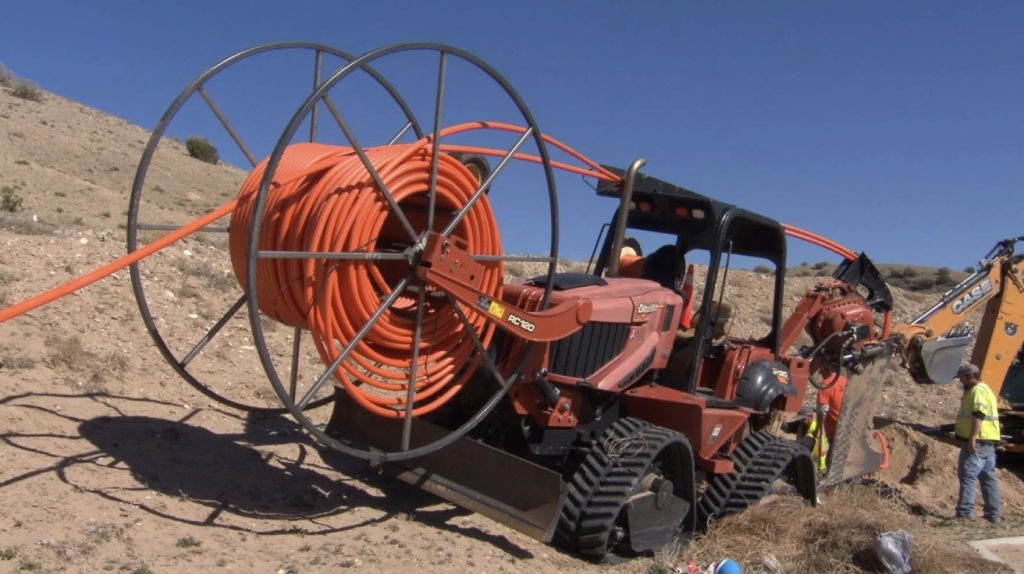
Photo: Crews install the final stages of a new fiber-optic internet network across four tribal nations in northern New Mexico. (Courtesy NMPBS)
The New Mexico Office of Broadband Access and Expansion has announced more than $900 million in investments towards broadband infrastructure, with the help of both federal and state support.
Some of the funds will go to the Navajo Nation. KUNM’s Jeanette DeDios (Jicarilla Apache and Diné) has more.
Among the 17 projects announced, the Navajo Nation was awarded $111 million. That is the largest single supported project from the Broadband Equity, Access and Deployment (BEAD) program.
Sonia Nez manages the Navajo Nation Broadband Office. She says the project will affect 11,000 households across New Mexico’s portion of the Navajo Nation.
She also says an effort to bring broadband to the community like this has never been done before.
“Telehealth, education across the whole spectrum, lifts the people up to a new level where there was no connectivity before, but now they will have connectivity at the home, and so just opens the whole door of opportunity for the people, businesses, entrepreneurship, education, across the whole spectrum.”
Nez says tribal members continue to face challenges without broadband.
“So without internet connection, for example, you have to go either to get college education, you have to go off the reservation, you have to go to the cities, you know. So this will give them opportunity to have school right there at home and not have to leave the Nation.”
Nez says the BEAD program will help more homes have broadband service. She also says Navajo Nation is working to establish broadband in all chapter houses and install 5G towers for mobile internet.
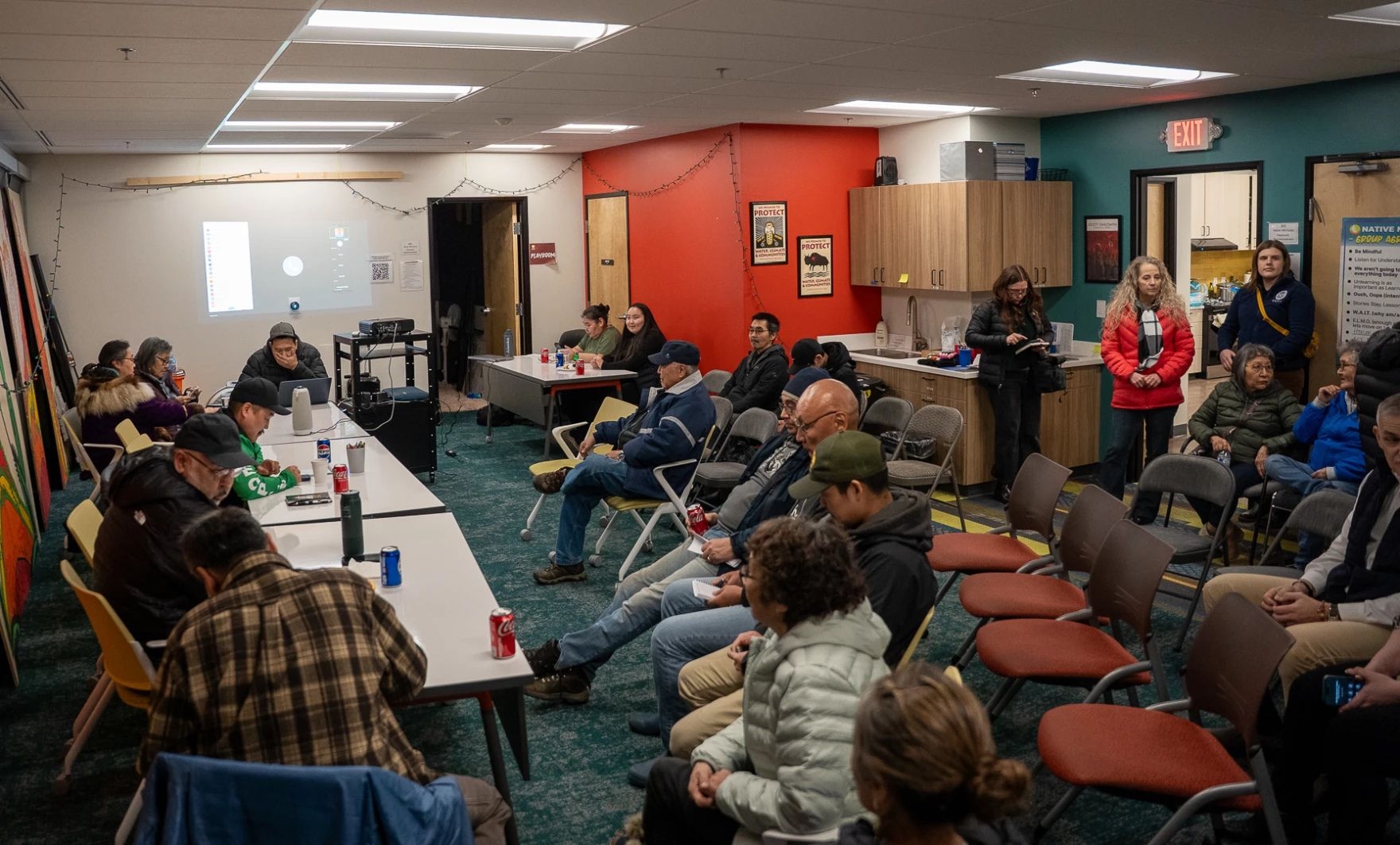
A few dozen people gathered in Anchorage on January 31, 2026, while several dozen more joined virtually, to discuss whether to rebuild or relocate Kipnuk. (Photo: James Oh / Alaska Public Media)
Kipnuk was one of the Western Alaska villages hit hardest by the remnants of Typhoon Halong in October.
Residents are starting to vote on whether they want to rebuild their community, or relocate to higher ground.
The Alaska Desk’s Alena Naiden from our flagship station KNBA reports.
Rayna Paul sits in an Anchorage office, scrolling through a spreadsheet filled with hundreds of names of Kipnuk tribal members.
“We are just on As…” (laughs)
Paul is in charge of the village’s voting process. Over the next several days, she and her team will call every single adult tribal member — that’s about 900 people — and ask them: Do they want to rebuild the village in its current location or move to higher ground?
“It’s very important for us to find out what the tribal members from Kipnuk want.”
Last fall’s disastrous winds and flooding destroyed homes and infrastructure and contaminated land and water. Most of Kipnuk’s residents remain evacuated, including Paul. She says she wants the future Kipnuk to be safe.
“We love our community. We miss our community. We’re doing it for our future generations to come, because they might not know what to do when this happens again. I think we’re just going to be hit with many, many storm events.”
The first community meeting about whether to relocate happened about a week ago. The decision to start voting followed swiftly.
Sheryl Musgrove directs the climate justice program under the Alaska Institute for Justice. She says the village needs to act fast to make the most of both the short construction season and the available funding for disaster recovery.
“They don’t have decades. They need to do it immediately. … That’s my hope is they can show other communities that are going to be faced with this in the future, that you can rebuild someplace else– if that’s what they decide– on a short timeline as the disaster recovery process.”
Right now, Kipnuk leadership is looking at two sites for relocation. Both spots are located on higher ground.
During the voting process, Paul and her team of four are also asking residents if they want to suggest any other sites.
Get National Native News delivered to your inbox daily. Sign up for our daily newsletter today.
Download our NV1 Android or iOs App for breaking news alerts.
Check out today’s Native America Calling episode
Thursday, February 19, 2026 – The growing AI appropriation threat