Podcast: Play in new window | Download | Embed
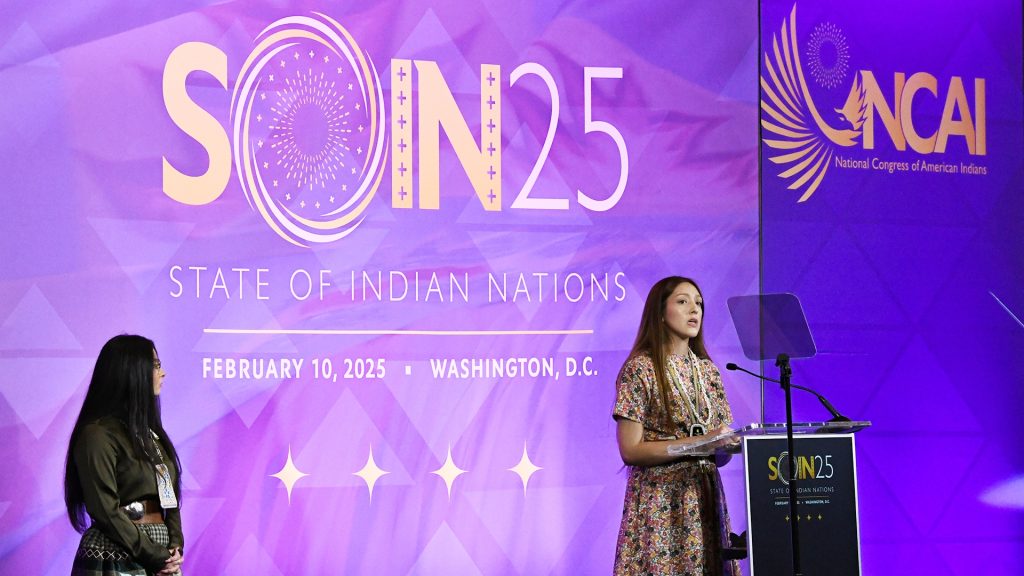
Tribal leaders from across the country are gathered in Washington D.C. this week for the National Congress of American Indians (NCAI) 2026 Executive Council Winter Session and State of Indian Nations Address.
NCAI Youth Commission Co-Presidents Jonas Kanuhsa (Gila River Indian Community) and Angelina Serna (Oneida Nation and Turtle Mountain Band of Chippewa Indians) kicked off Monday morning’s assembly by delivering the youth commission speech.
Serna says her message to tribal leaders is to recognize the contributions being made by Native youth.
“I really talk about tokenism when it comes to Native and really putting youth at the forefront and having youth at these tables, at these conversations, giving youth that opportunity to really learn, and for the adults to be learners and teachers as well, and incorporating language and culture in everything that we do because what we do has spirit, has purpose.”
Kanuhsa says his message to attendees is to help find ways for Native youth to get more opportunities, especially for those who live in remote areas.
“Opening roles for more Native youth. I think Native youth on rural reservations have a hard time maybe connecting to maybe internships, fellowships, maybe just early on new jobs, entry jobs, because of those location barriers.”
The Youth Commission co-presidents also touched on safety concerns when it comes to Native people and recent federal immigration actions across the U.S.
They also talked about the commission’s work this week on Capitol Hill to advocate for funding, harm reduction, treatment, and recovery models for substance abuse.
NCAI President Mark Macarro (Pechanga Band of Luiseno Indians), who delivered the State of Indian Nations address, followed the youth commission’s remarks by saying young Native people are an important part of NCAI.
“In my time here at NCAI, the youth started to say we have a voice, you know, what we have to say matters, and it matters in this moment. And, you know, we took stock of that and been making strides to have them be more inclusive. They’re right and their take on the world or take on issues in Indian Country is different than ours, and so we need to allow ourselves to hear that. but we also need to create those opportunities for us to mentor them.”
NCAI’s winter session continues Tuesday with updates from federal agencies including the departments of justice, transportation, and housing.
Leaders will also hear from some members of Congress from New Mexico and Washington state.
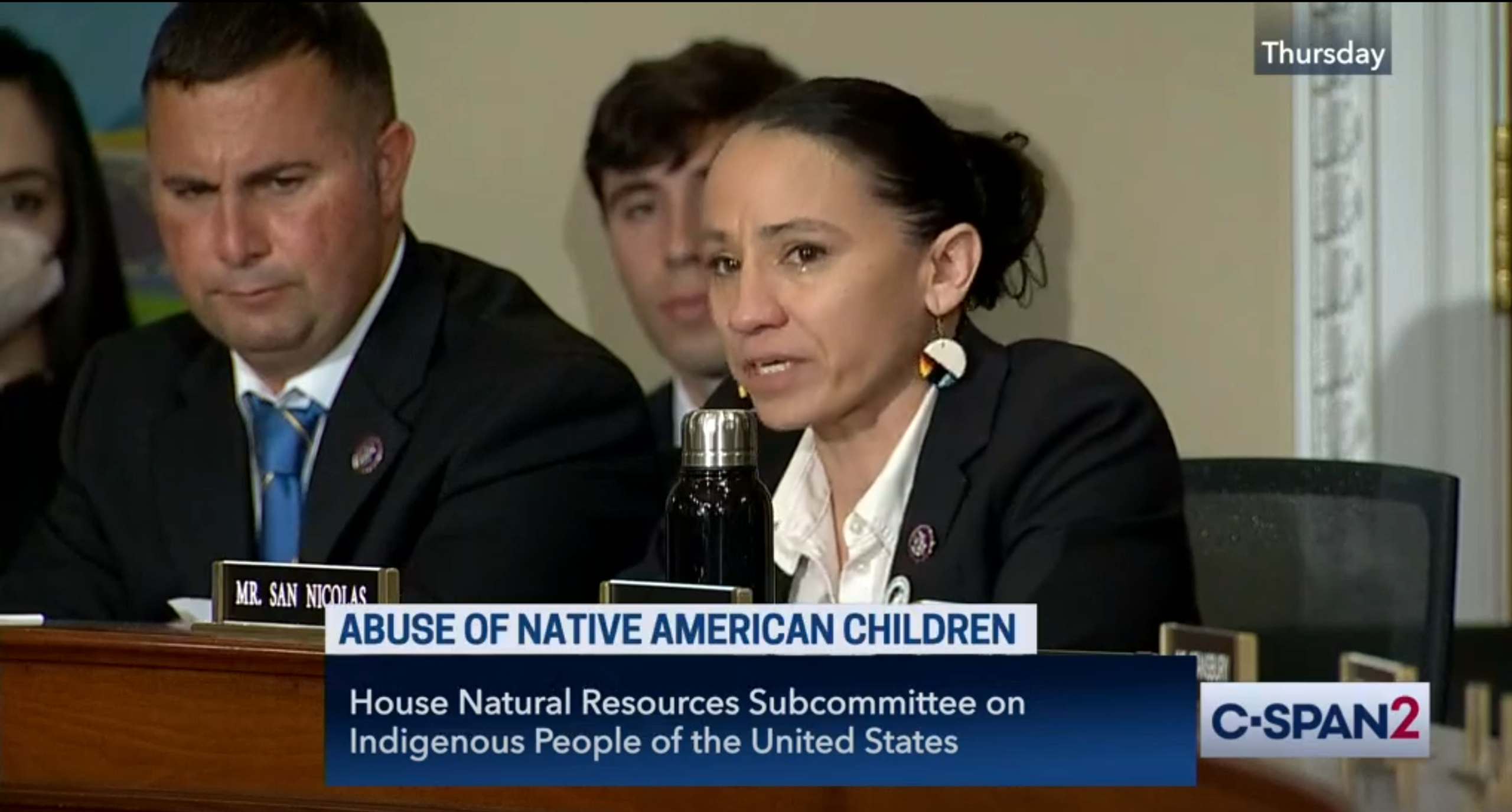
U.S. Rep. Sharice Davids during a 2022 hearing. (Courtesy C-SPAN)
The history and effects of Indian boarding schools would be investigated and documented under legislation re-introduced by U.S. Reps. Tom Cole (Chickasaw/R-OK) and Sharice Davids (Ho-Chunk/D-KS).
Rep. Davids is one of the first two Native women elected to Congress, and has long spoken of the boarding school era, including on C-SPAN in 2022.
“The policies and assimilation practices of the United States had the sole purpose of culturally assimilating American Indian, Alaska Native, and Native Hawaiian children in residential boarding schools across the country. Children were coerced and compelled to attend boarding schools away from their home. Many children did not return to their families or their communities. Those that did return lost generations’ worth of cultural knowledge, stories and traditions, and communities lost their language keepers, cultural practitioners and future leaders.”
H.R. 7325 would establish a commission to investigate and report on the histories of more than 500 federally run boarding schools, which operated between 1819 through the 1970s.
President Joe Biden formally apologized for the schools in 2024.
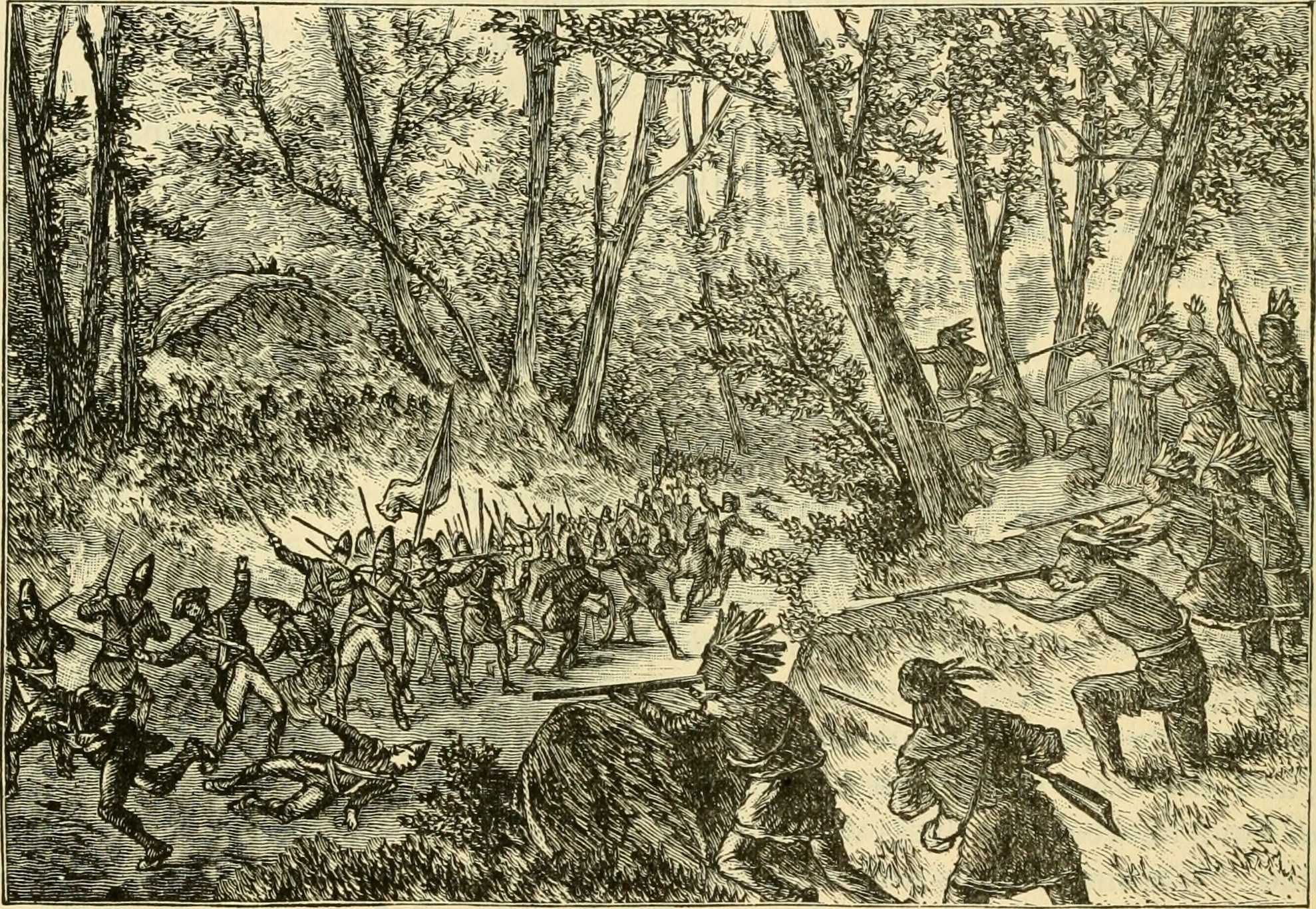
British forces under fire from the French and Indian forces at Monongahela, when the Braddock expedition failed to take Fort Duquesne.
And on this day in 1763, the French-Indian War officially ended.
The armies of France and England wrestled for territory in the Americas, with both sides swaying Native tribes to help their efforts.
Some, including the Ojibwe and Winnebago, helped the French, while the Iroquois helped England.
While the outcome was favorable for the British, the cost of the war compelled England to raise taxes on the 13 colonies, eventually spurring the American Revolution.
Get National Native News delivered to your inbox daily. Sign up for our daily newsletter today.
Download our NV1 Android or iOs App for breaking news alerts.
Check out today’s Native America Calling episode


Leave a Reply