
Podcast: Play in new window | Download | Embed
This year marks the 150th anniversary of the Battle of Little Bighorn, which is also called the Battle of the Greasy Grass or Custer’s Last Stand.
Ahead of commemorative events planned in late June near Crow Agency, Mont. are reports that the National Park Service (NPS) is removing signs sharing the Native perspective on the battle.
Brian Bull (Nez Perce) of Buffalo’s Fire reports.
In late January, the Washington Post reported that President Trump ordered the removal of signage through his so-called “restoring truth and sanity to American history” directive, which pushes an ideology that the U.S. has an “unmatched record of advancing liberty, prosperity, and human flourishing.”
The Battle of Little Bighorn Battlefield National Monument is on the list of sites.
Wallace Bear Chum is chairman for the Northern Cheyenne Cultural Commission.
Along with the Lakota Sioux and Arapaho, his tribe defeated Lieutenant Colonel George Armstrong Custer and 7th Cavalry Regiment in 1876. Bear Chum says federal officials and tribes need to discuss any changes per their government-to-government relationship.
“We’re still finding out what exact changes that they’re going to make. And the Northern Cheyenne, it was a victory for us there. And our story’s there, I mean how can you change that story? Y’know, there’s no way you can do that. And what exactly are they trying to change?”
The Northern Cheyenne Tribe unanimously approved a resolution last month to prevent any changes to markers, signage, and monuments that recognize Native people at Little Bighorn, a direct challenge to the Trump administration.
Meanwhile, an email from the U.S. Secretary of the Interior’s Office denies any signage has been taken down at the battlefield monument.
It says parks are complying through an ongoing review process with subject-matter experts, tribal partners, and park leadership.
Courtesy NPS
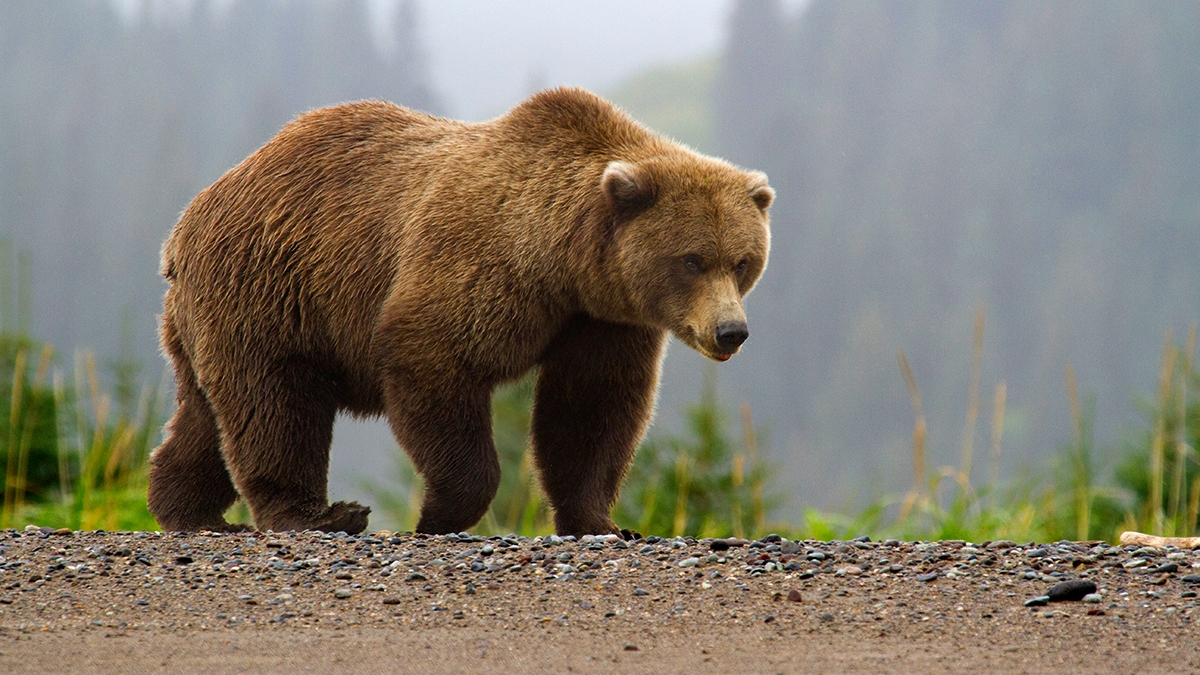
An Alaska doctor has documented the first case of a rare and potentially risky infection from contact with a brown bear.
Alaska Public Media’s Rachel Cassandra reports.
The infection is known as “seal finger” and people typically get it handling seals, especially during seal hunting and processing, but in 2024, Dr. Benjamin Westley diagnosed it in a man who had cut his hand skinning a brown bear hunted on the Alaska Peninsula.
He had three days of redness and painful swelling that didn’t resolve with standard antibiotics.
Dr. Westley says early tests “did not find anything definitive, so eventually he sent a tissue sample to a lab for more comprehensive analysis.
“What was particularly shocking about this patient was he had a finger infection after skinning a brown bear that was not responding properly to antibiotics. So I sent special PCR tests, but I did not expect this bacteria.”
Seal finger is not uncommon in Alaska and circumpolar regions, but Westley says this is only the second time this potentially more serious strain of the infection has been identified in the state.
He diagnosed the first case too, in a patient whose finger infection had spread to his hip.
“So when the report came back, I was shocked, because the first case was my own patient 10 years prior, and now it was the exact same bacteria for the second time in Alaska, but from a brown bear exposure, not from a seal exposure.”
The infection is only a risk through direct or indirect animal contact.
Other cases outside the state have been tied to a polar bear and a domestic cat.
Scientists do not know if those animals caused seal finger because they had contact with a seal or through other means.
In this case, the patient was treated at first with the wrong type of antibiotics used for bacterial infections. That allowed the infection to worsen and ultimately caused dead tissue, a damaged tendon and a bone infection.
He recovered, but still has lingering finger stiffness.
Seal finger is often misdiagnosed and a delay in treatment can cause serious problems, so Westley urges health care providers to consider treating patients for seal finger if they have an infection and had contact with seals, bears, or cats. That is even before getting bacterial test results.
Westley says Alaskans can also protect themselves when hunting and processing seals or bears.
“Try not to get injured through the skin, cut or let bacteria from an animal you’re working with into the tissue, because that can result in a manner of weird infections that can be hard for doctors to sort out.”
And he says to wash your hands with soap if you get a wound.
Get National Native News delivered to your inbox daily. Sign up for our daily newsletter today.
Download our NV1 Android or iOs App for breaking news alerts.
Check out today’s Native America Calling episode
Tuesday, March 3, 2026 — Proximity and family outreach hold promise for tribal addiction treatment

Leave a Reply