Podcast: Play in new window | Download | Embed
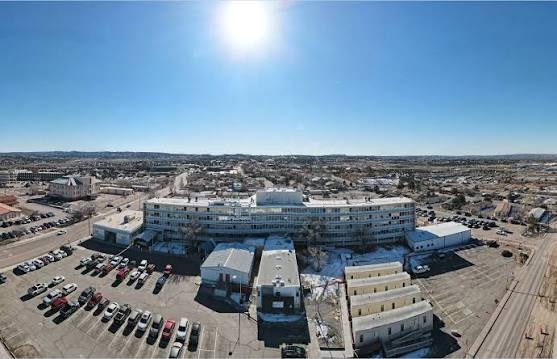
Photo: Gallup Indian Medical Center, where some of the forced sterilization took place. (Francine K. Smith / IHS/NAV)
A new group of 34 experts is working on a report about the forced sterilization of Indigenous women.
As KUNM’s Jeanette DeDios (Jicarilla Apache and Diné) reports, this comes after the passage of a Senate Memorial in this year’s New Mexico legislative session.
The memorial directs the state’s Indian Affairs Department and New Mexico Commission on the Status of Women on how to lead a study with the goal of identifying all cases of forced sterilization in New Mexico.
According to the memorial, between 25 and 50% of Indigenous women of childbearing age were sterilized. Some of the highest concentrations of procedures were in the Indian Health Service regions of Albuquerque, New Mexico and the Southwest.
State officials told members of the legislative interim Indian Affairs Committee last week that experts will gather survivor testimony, evaluate access to reproductive health care, and develop policy, education, and recommendations for reparations.
State Rep. Patricia Roybal Caballero (Piro Manso Tiwa Indian Tribe of the Pueblo of San Juan de Guadalupe), D-New Mexico, shared her own experience of being nearly sterilized against her will in 1975.
“Had my husband not been there and asking the questions on a form that was being given to me with a checklist, and I being traumatized, I would have exited that very common post miscarriage procedure, fully sterilized at a very young age of 25.”
Roybal Caballero said that the brave women who shared their stories is what encouraged her to share hers and it is horrific that these practices are still occurring.
State Rep. Michelle Paulene Abeyta (Navajo), D-New Mexico, hopes the results will yield efforts to bring the topic of forced sterilization among Native Americans to school curriculums within the state.
“I think that’s an important thing that needs to be in our school curriculum. I, for one, did not learn that until I was in a Native American Studies higher education program, unfortunately.”
The Indian Affairs Committee has until December 2027 to publish a report.
Support for this coverage comes from Thornburg Foundation.
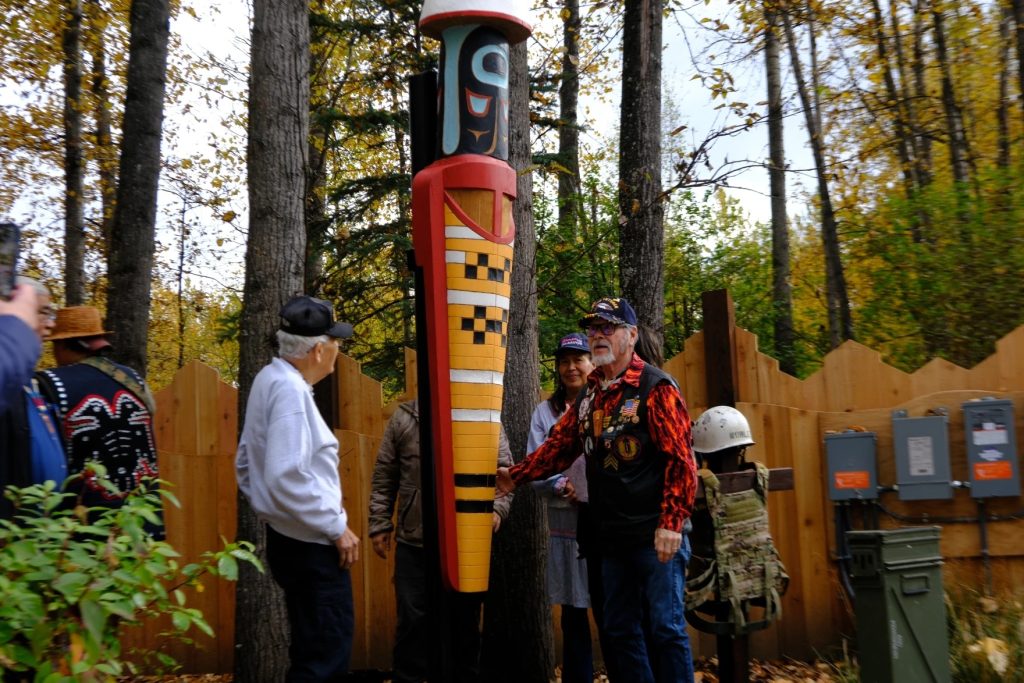
Alaska Native veterans unveil a new monument at the Alaska Native Heritage Center’s Ngíisdla Garden on Sunday, September 27. (Photo: Alena Naiden)
A monument honoring Alaska Native veterans was unveiled at the Alaska Native Heritage Center last month.
The Alaska Desk’s Alena Naiden from our flagship station KNBA reports that the monument was shaped through months of meetings between the artist and a group of veterans.
The Alaska Native Heritage Center’s garden was glowing with fall foliage last month as dozens of veterans gathered for the unveiling of a new monument honoring their service and healing.
Kelsey Wallace is the center’s president and CEO.
“This monument creates a permanent place here at the Heritage Center to recognize that service – your service, sacrifice, strength, and your legacy.”
The monument depicts a large Tlingit dagger in a sheath covered with quilt-style Athabaskan designs.
Yéil Ya-Tseen Nicholas Galanin (Tlingit and Unangax̂), an artist from Sitka, hand-carved the sculpture.
“The intention of this work is to have this dagger in the sheath, so it’s representing peace in that sense, not really violence, but maybe vigilance, memory and resilience.”
The day started with veterans posting the colors and lighting a seal oil lamp. Some reflected on their service and shared memories of friends and family who died in wars.
Chief Bill Smith (Valdez Native Tribe), a Vietnam Veteran, says he wears a Vietnam hat … “to find other brothers and sisters and welcome them home.”
Smith says coping with his experiences has been a slow and complicated process.
“We’ll never be cured, but we can always walk that healing journey.”
Tlingit elder George Bennett from Sitka also served in Vietnam. He spoke about the importance of healing through culture and remembering to treat your loved ones right.
“You know who else got hurt? We don’t speak of them. It’s the family of that veteran. Their veteran came home – they didn’t recognize him. The military changed you. It changed how you think. … The way we live as you interact with each others, treat each others good, how we speak to one another is like medicine to your soul.”
Organizers say a group of Alaska Native veterans met every month over the past year to discuss the monument and offer feedback to Galanin. They say more monuments will be developed in the coming years and placed in the garden.
Get National Native News delivered to your inbox daily. Sign up for our daily newsletter today.
Download our NV1 Android or iOs App for breaking news alerts.
Check out today’s Native America Calling episode

Leave a Reply