Podcast: Play in new window | Download | Embed
The Iñupiaq village of Shungnak in Northwest Alaska likely has the questionable distinction of having the most expensive gasoline in the United States.
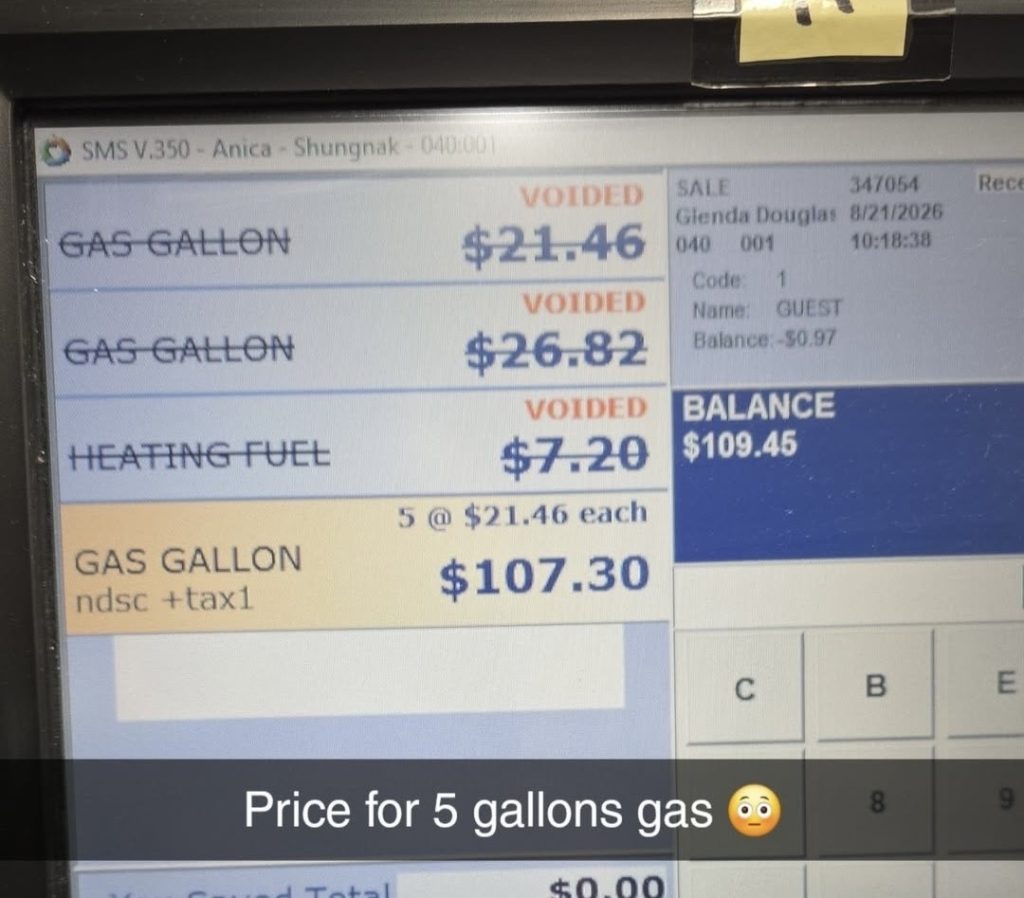
The Alaska Beacon reports that the price climbed to $26.82 a gallon last week — more than six times the national average of $4.10 a gallon for regular unleaded gasoline.
Glenda Douglas, who manages the village store, posted a photo of the price she paid for gas on Facebook. People questioned whether it was real.
“It’s very much real.”
As a Native corporation shareholder, Douglas received a hefty discount, but still paid more than $107 for five gallons of gas.
Shungnak is a remote community on the Kobuk River east of Kotzebue. There are only three ways to reach the village: by snowmachine in the winter, boat in the summer, or by air.
Flying is the only reliable year-round transportation.
This summer, low water levels disrupted barge deliveries, which forced fuel to be flown in. Those transportation costs came on top of already high prices due to the conflict with Iran.
Douglas said gas had to be flown in twice to Shungnak this summer, when barges could not get in. She says the spike comes as subsistence hunters prepare for their fall hunts – and need gas to harvest food for their families.
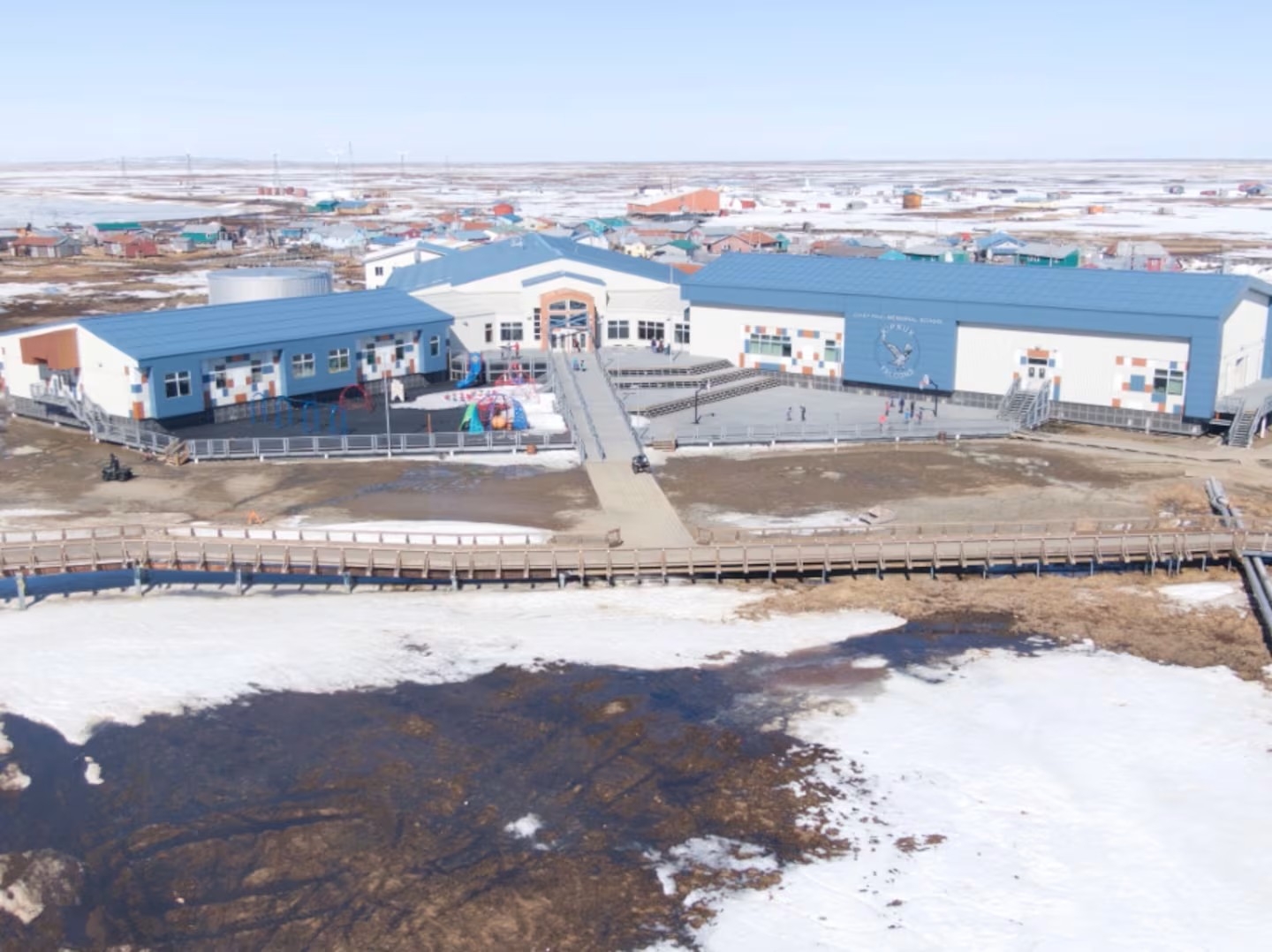
Chief Paul Memorial School in Kipnuk, Alaska. (Courtesy Lower Kuskokwim School District)
With classes underway in schools across the Yukon-Kuskokwim Delta, the Lower Kuskokwim School District has announced that it will not be re-opening schools in the two communities hit hardest by ex-typhoon Halong last October.
KYUK’s Evan Erickson has more.
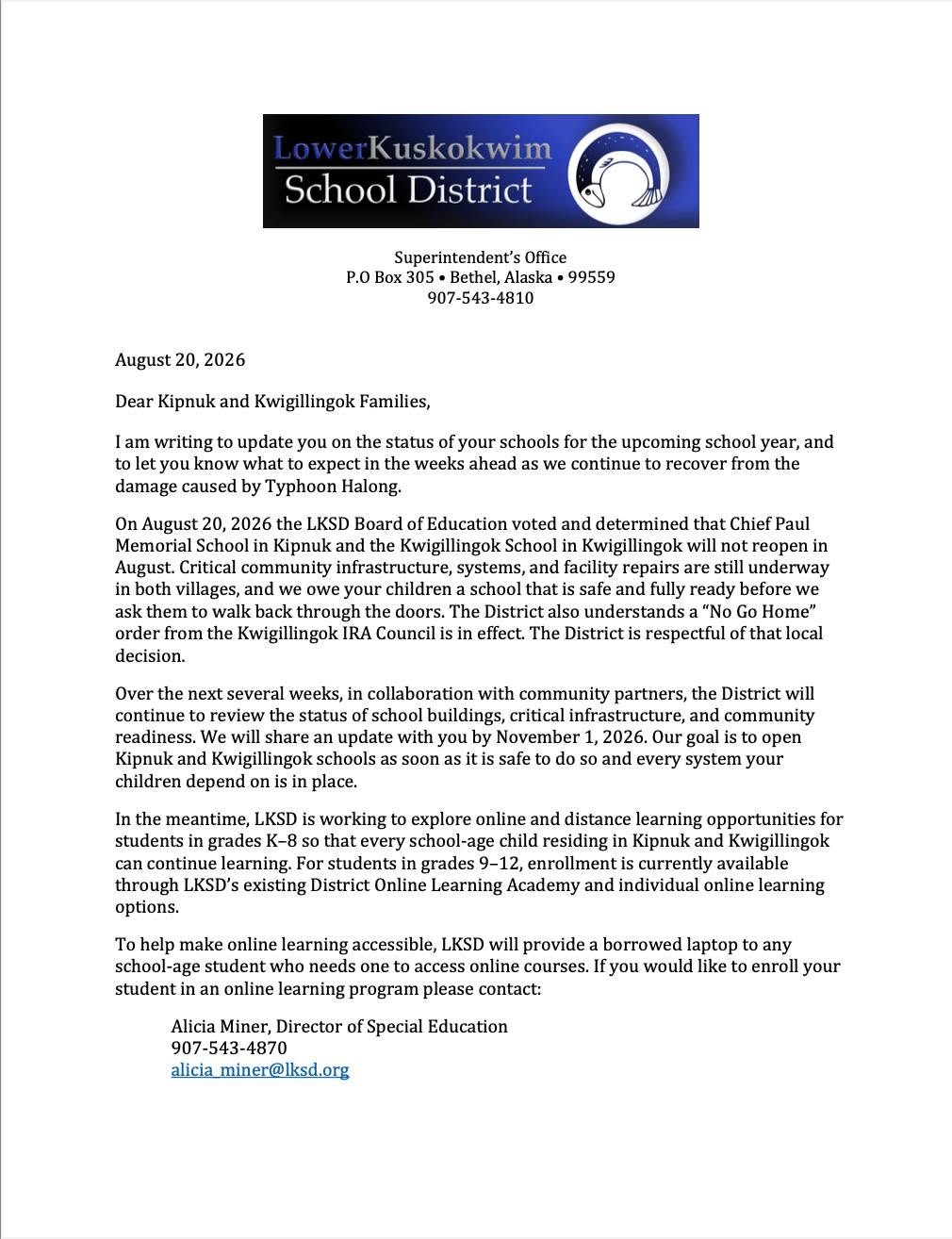
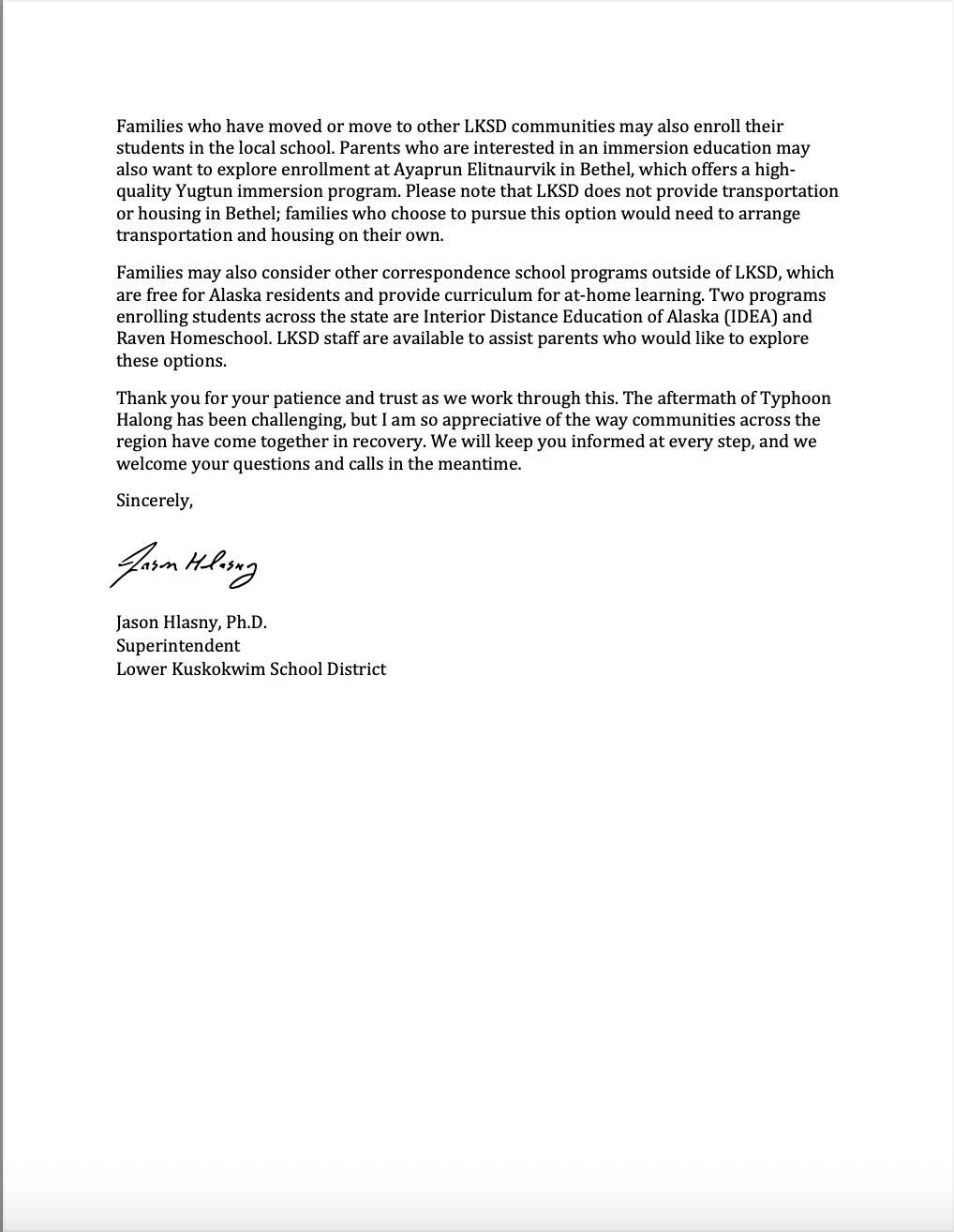
In a letter to families sent following the board’s regular meeting last week, the district said the Chief Paul Memorial School in Kipnuk and the Kwigillingok School will not reopen until critical infrastructure and facility repairs are completed.
“We owe your children a school that is safe and fully ready before we ask them to walk back through the doors.”
In Kipnuk, where around 90% of structures were damaged or destroyed, the school was one of the few buildings to come through ex-typhoon Halong relatively unscathed. It has since served as a base for locals and outside contractors working to rebuild the community.
According to Native Village of Kipnuk President Daniel Paul, around 190 people were in the community as of Monday, a mix of people practicing subsistence and shoring up infrastructure.
Nearly 1,000 people lived in Kipnuk prior to its near-total evacuation in the days following the storm.
In the case of the Kwigillingok School, the letter to families also cites a “no go home” order put in place by the tribe’s governing body that remains in effect.
A representative from the Native Village of Kwigillingok did not respond to a request for comment about the status of the order for this story.
Nearly all of the 400 residents of Kwigillingok were airlifted to Bethel after Halong damaged or destroyed an estimated 35% of structures. As of Tuesday, around 40 people remained in the community, according to the tribe.
LKSD Superintendent Jason Hlasny said by email on Tuesday that the district had enrolled 60 students from Kipnuk and 55 students from Kwigillingok in schools in the district as of last week.
The district says it is exploring online and distance learning opportunities for any K-8 students currently residing in the communities.
For high school students, the district says enrollment is available through the district’s existing online learning academy and individual online learning options.
An Anchorage School District spokesperson said on Tuesday that about 145 students from Kipnuk and Kwigillingok are currently enrolled in Anchorage schools.
Both communities’ tribal members have voted to relocate since the storm.
LKSD says it plans to share an update on the status of the Kipnuk and Kwigillingok schools by November 1.
Get National Native News delivered to your inbox daily. Sign up for our daily newsletter today.
Download our NV1 Android or iOs App for breaking news alerts.
Check out today’s Native Ameica Calling episode
Wednesday, August 26, 2026 — Arizona’s dramatic SNAP ordeal may be a bellwether for other states