Podcast: Play in new window | Download | Embed
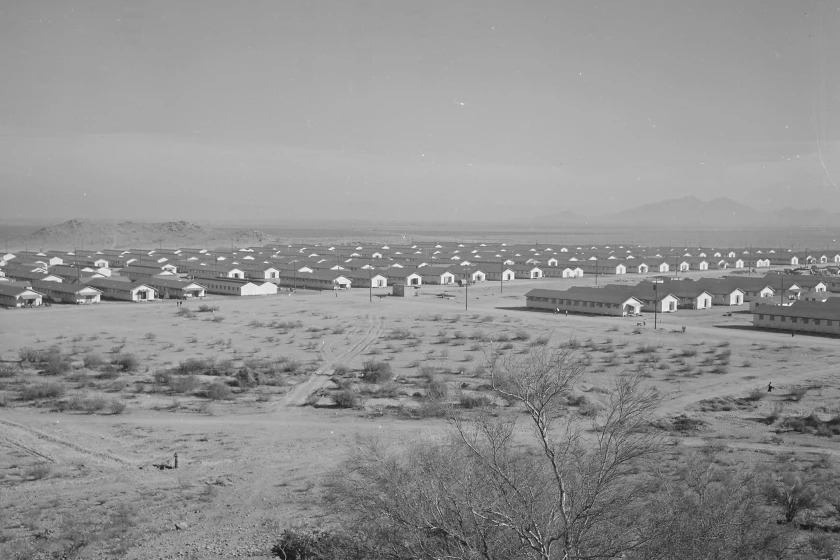
Long before World War II, the U.S. forced Native Americans onto reservations. After the Pearl Harbor bombing in 1941, the U.S. forced Japanese Americans into camps.
In Arizona, the federal government once again looked to Indian reservations.
In part two of his series on World War II internment camps in Arizona, KJZZ’s Gabriel Pietrorazio has more.
None of the eight other internment camps in the U.S. were on tribal lands, so why here in Arizona?
UCLA anthropology professor Koji Lau-Ozawa has an answer.
“John Collier, who was the commissioner of Indian Affairs at the time, advocated for all of the camps to be put on reservation lands. He thought that the Office of Indian Affairs was well suited to this task of managing these confined racialized populations.”
The “Indian New Deal”, as FDR called it, was part of the Indian Reorganization Act of 1934 and tried making amends for past treatment by investing in tribal infrastructure. That was, until the war effort began.
“Funds were starting to dry up. This presented an opportunity.”
An opportunity to turn Japanese Americans into a source of prison labor to develop tribal resources, as shown by a 1943 propaganda film narrated by Gen. Dwight Eisenhower’s brother, Milton, about an internment camp in western Arizona.
Brian Niiya says the U.S. embraced a stereotype.
“Japanese Americans, with their supposed expertise and farming and agriculture, could help build up the land that would allow for the Native Americans to benefit from – without the consent of the tribes themselves, of course.”
Niiya is editor of Densho Encyclopedia, which chronicles the camps’ history.
Without much legal representation or political clout at that time, the Gila River Indian Community and Colorado River Indian Tribes both tried fighting camp construction, but failed.
“Through the Office of Indian Affairs, I think there was just a thought that we could bulldoze our way through.”
Once again, today’s federal government is butting up against tribal land. The Trump administration’s “Alligator Alcatraz” is being built near the Big Cypress National Preserve and Everglades National Park.
“We’re right in the middle of it. We have members that live within 500 feet of the detention center. You know, it’s not like this distant thing that it is for a lot of Floridians in Naples or Miami.”
Talbert Cypress is chairman of the 600-member Miccosukee Tribe, which brought Alligator Alcatraz to a halt.
“We don’t go to war anymore with the tomahawk or anything like that. You know, we go to courtrooms now, and we go to meetings with politicians.”
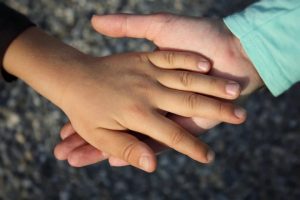
(Photo courtesy Maxpixel / Boise City Archives, John Hardy Family Collection, MS084)
Children across the country are being raised by relatives or close family friends.
The Mountain West News Bureau’s Daniel Spaulding has more on a new report highlighting the challenges facing these kinship families, which are more common within Indigenous communities.
According to the U.S. Government of Accountability Office (GAO), these households are more likely to experience poverty and mental health issues.
Kinship families are common in Mountain West states with high Indigenous populations like New Mexico and Arizona.
Kathy Larin at GAO says kin caregiving is an important part of tribal culture, but because many Indigenous caregivers are outside the formal foster care system, they often receive less financial support.
“One of the biggest challenges that we heard across the board for grandparents and other relatives that are raising, you know, their relative children is just the financial burden of it.”
Larin says states could adopt standards and programs designed to better support kinship families.
Get National Native News delivered to your inbox daily. Sign up for our daily newsletter today.
Download our NV1 Android or iOs App for breaking news alerts.
Check out the latest episode of Native America Calling
https://www.nativeamericacalling.com/wednesday-december-24-2025-2025-in-native-books/