Podcast: Play in new window | Download | Embed
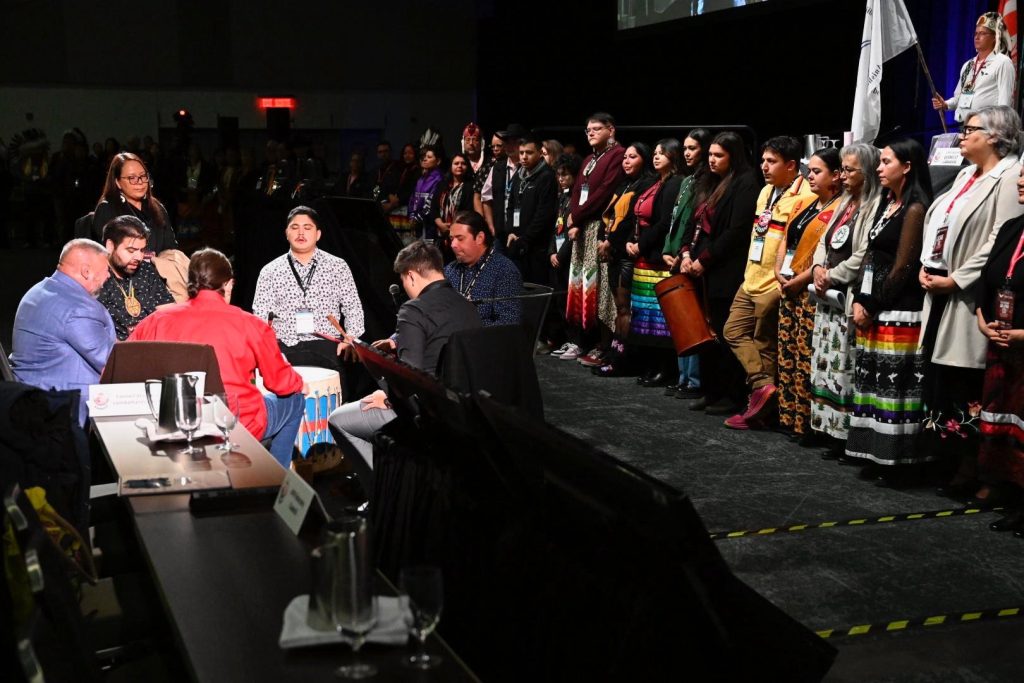
Canada’s Assembly of First Nations (AFN) chiefs have voted unanimously to reject any changes to the oil tanker ban off the northern coast of British Columbia.
As Dan Karpenchuk reports, the resolution came during a First Nations meeting in Ottawa, and less than a week after the federal government and Alberta signed a Memorandum of Understanding (MOU) about a future pipeline.
The chiefs also voted in a favor of requesting that Ottawa withdraw the MOU, since it could pave the way for a new pipeline through BC.
But the national chief of the AFN, Cindy Woodhouse Nepinak, says Native leaders are united.
“Canada can create all the MOU’s, project offices, advisory groups that they want, the chiefs are united. When it comes to approving large national projects on First Nations lands, there will not be getting around rights holders.”
Prime Minister Mark Carney also addressed the AFN meeting, saying he plans to meet with coastal British Columbia First Nations.
Merle Alexander is lawyer who represents two of those bands.
“First Nations in Canada are feeling overwhelmed. They’re feeling as though there is, that the duty to consult is being undermined. There also is a push back against this regression on environmental and climate change policies.”
Last week, PM Carney and Premier Danielle Smith (C-AB) signed an MOU to co-operate one energy. That opens the way for an exemption from the coastal tanker ban to support a new pipeline to the west coast and easier access for Canadian oil to Asian markets.
The ban has been in place for about 50 years.
It bars oil tankers carrying more than 12,500 tonnes of crude oil from stopping or unloading at ports from the north end of Vancouver Island to Alaska.
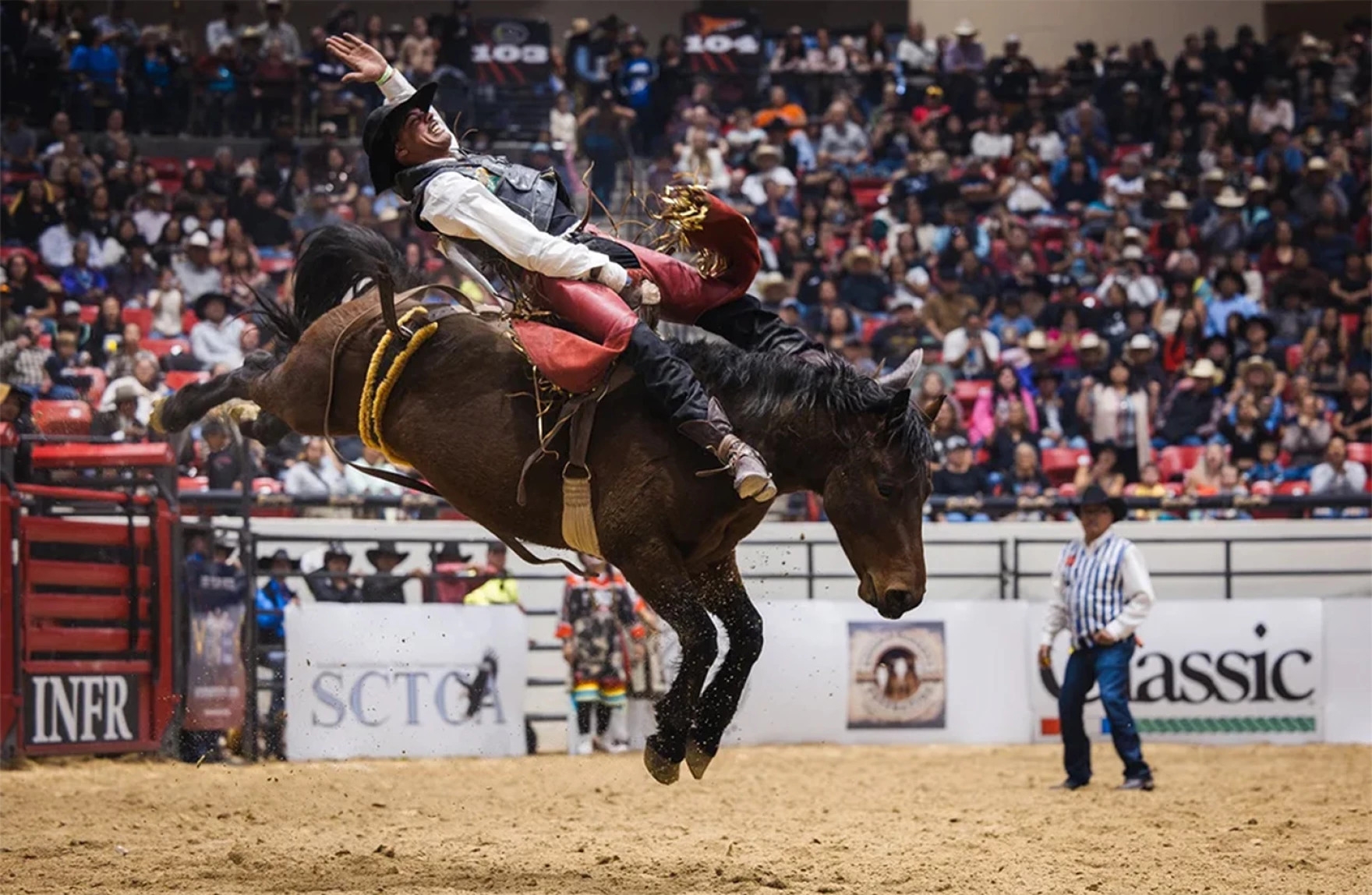
(Courtesy Indian National Finals Rodeo)
For five days, the Indian National Finals Rodeo (INFR) is held in October in Las Vegas.
The older generation passes the torch to the new one as up and coming riders compete for a shot at a world title.
KNPR’s Jimmy Romo attended the rodeo and has this story.
Behind the bucking chute at the Indian National Finals Rodeo in Las Vegas, young riders suit up in their protective gear.
There’s a good chance a 2,000-pound bull could step on them after they hit the ground.
Rodeo hands funnel the bulls from their pens to the chute through a series of gates, then they set them one-by-one to let the riders get on. When it’s time, the gate opens and the animal bucks repeatedly, trying to throw the rider off its back.
A junior bull rider has to hold onto a bull with one hand for at least six seconds to score points.
Cashes Thomas, 17, held on long enough to secure his win in the junior bull riding INFR world championship.
“I just love the feeling, love the adrenaline, and, sure, love the money.”
Cashes’ father, 52-year old Daniel Thomas, was also a bull rider in his youth.
Both are enrolled members of the Navajo Nation.
“The Navajo Nation, I believe, this is the way of life, how we’re given the horses, the livestock, the sheep. So it all goes back to that.”
Children are inspired by watching their older relatives participating in the sport. That was the case for Cashes.
It was also the case for bronc rider Ethan Heisman Yazzie.
The 18-year-old finished at the top of his category to win the rookie saddle bronc riding INFR world championship.
Young cowboys like Cashes and Ethan are the next generation of athletes.
Daniel Thomas was in the stands watching other junior bull riders get thrown before scoring any points. Then it was time to watch Cashes take his turn.
“The feeling of while the bull was bucking, I could kind of anticipate what it felt like, so I was moving back and forth, back and forth, I was like moving around like I was dancing or something,”
Ethan and Cashes will go home with belt buckles and cash prizes, making the trip to Vegas worth the gamble.
Get National Native News delivered to your inbox daily. Sign up for our daily newsletter today.
Download our NV1 Android or iOs App for breaking news alerts.
Check out the latest episode of Native America Calling
Wednesday, December 3, 2025 – Tribal colleges see an uncertain federal funding road ahead