Podcast: Play in new window | Download | Embed
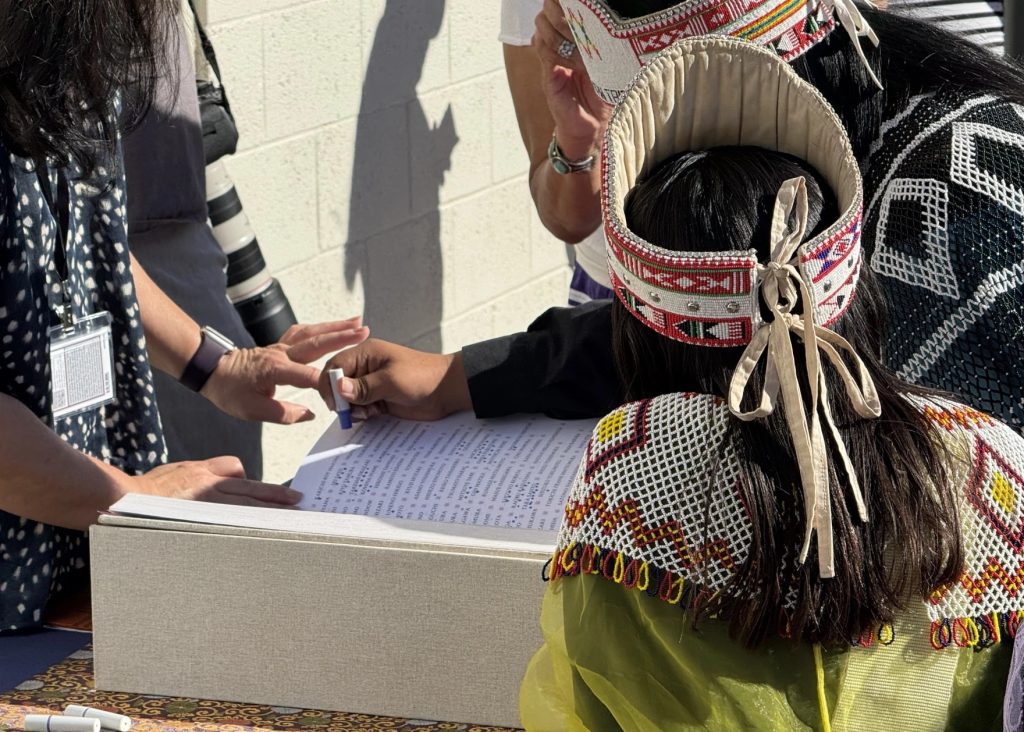
Photo: Youth royalty from the Colorado River Indian Tribes stamp the Ireichō – or Book of Names – in Parker, Ariz. on October 25, 2025. (Gabriel Pietrorazio / KJZZ)
The internment of Japanese Americans during World War II is among the chapters of U.S. history that the Trump administration is actively working to erase.
It is part of a sweeping campaign to remove so-called “disparaging” signs and markers of the country’s past and focus only on “American greatness”.
In the final installment of his series on the camps, KJZZ’s Gabriel Pietrorazio visits the Colorado River Indian Tribes (CRIT) to see how others are making sure victims are highlighted in – not erased from – the history books.
Inside a strip mall owned by the tribe, hundreds flock to its museum in Parker, Ariz.
Director Valerie Welsh-Tahbo says her space used to be an old swimwear shop.
Tucked in one teal-hued corner is an exhibit dedicated to the Poston camp’s 18,000 internees.
“This was already up here, this structure in this store and I said, ‘Let’s hang onto this … just because of where it was situated, and that design, it just spawned that idea.”
To honor Poston’s past. another way the museum is paying respect is by welcoming Soto Zen Buddhist priest Duncan Ryūken Williams and his Ireichō.
“Chō, chō means like a book or a registry, and so we created a book with everybody’s names in it, and said, ‘How do we honor everyone?’ And we came up with this idea of stamping or placing this mark under people’s names.”
The Japanese word Irei essentially means “to console the spirits”, and that’s what Wiliams hopes his book does by bringing forth personhood and dignity – one name at a time.
“A lot of government camp rosters mangle Japanese names, and so we can’t honor people if their names are misspelled.”
And their goal?
“To make sure all 125,284 people whose names are printed in this book get at least one mark of acknowledgement.”
There’s still 30,000 names unmarked, but Williams has a plan.
“We’ll just systematically, from the beginning of the book, invite the general public to come and place a mark under the next name in the sequence of names that doesn’t yet have a mark.”
“I think this person – Hisayo Kotsubo – does not yet have a stamp. She’s born in the year 1897 so if I could ask you to just place this stamp right under the letter H.”
Their blue-tipped stamp is no bigger than your thumb. Some even practiced that art of dotting with Susan Kamei.
“It’s a personal story.”
Her parents, grandparents, and one set of great-grandparents were internees.
Her dad’s side was brought to Poston, while her mom’s ended up in Heart Mountain, Wyo.
“I try to put myself in their shoes.”
84-year-old Janet Brothers doesn’t have to imagine, because she lived it.
“I was here at camp as a baby. I was six months old … feeling the heat, looking around, and seeing the desert and the mountains, knowing that’s what my parents saw every day, was very emotional for me.”
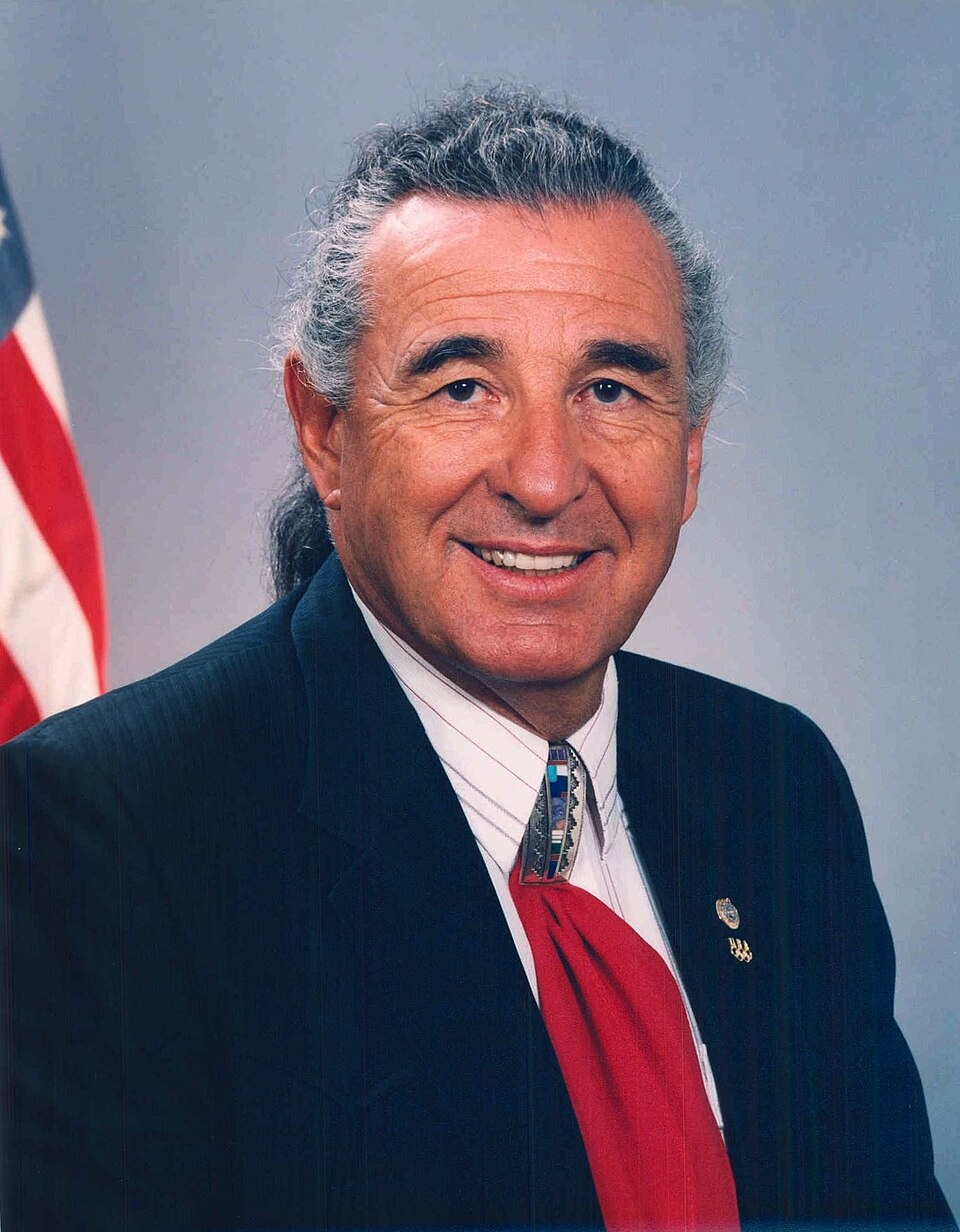 The National Congress of American Indians (NCAI) is remembering the life of former U.S. Sen. Ben Nighthorse Campbell (Northern Cheyenne/R-CO), who died Tuesday at age 92.
NCAI President Mark Macarro in a statement said Campbell broke barriers and left a path for those who seek to follow as leaders in Indian Country and in America.
Sen. Campbell is being remembered for his work on Indian policy and elevating Indian Country issues, serving on the U.S. Senate Committee on Indian Affairs.
The Associated Press reports, his daughter said Campbell died of natural causes surround by family.
Get National Native News delivered to your inbox daily. Sign up for our daily newsletter today.
Download our NV1 Android or iOs App for breaking news alerts.
Wednesday, December 31, 2025 – Memorable moments in Native film and TV in 2025