Podcast: Play in new window | Download | Embed
Protecting tribal sovereignty is a top discussion at the National Congress of American Indians (NCAI) 2026 Executive Council Winter Session, which is taking place this week in Washington, DC.
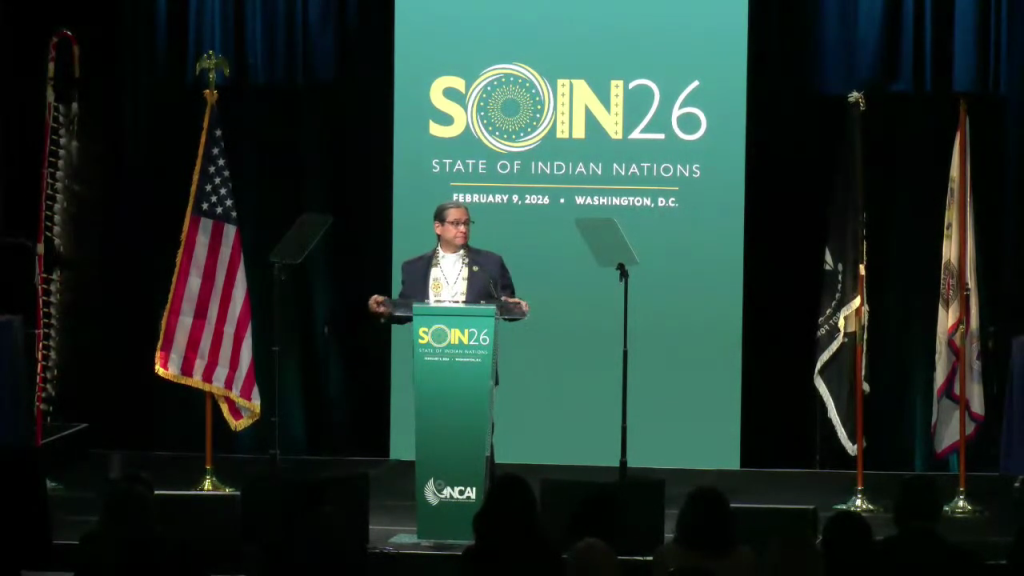
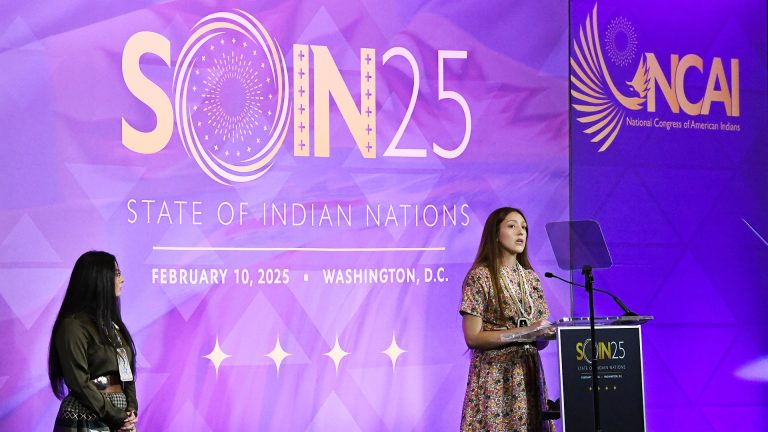
NCAI President Mark Macarro (Pechanga Band of Luiseño Indians) highlighted the importance of tribal sovereignty in his State of Indian Nations address.
Macarro says before there was a U.S., there were sovereign tribal nations.
“Our sovereignty was not created by treaties, nor granted by Congress. It is inherent and existed before colonization. Treaties did not give us sovereignty. They recognized it. The Constitution did not define us it acknowledged us. Federal laws did not create our rights, it memorialized them. And yet for centuries, our sovereignty has been attacked and attempts continue to constrain and diminish it. Yet our nations continue to govern, continue to lead, to teach, to resist, and to rise.”
Macarro says recent attacks include calls by Gov. Kevin Stitt (Cherokee/R-OK) to limit tribal sovereignty, which Macarro says is appalling.
Tribal leaders in Oklahoma agree with Macarro’s sentiment.
Reggie Wassana is governor of the Cheyenne and Arapaho Tribes of Oklahoma.
“This day and age, we shouldn’t have to ask why tribes have a sovereignty. We shouldn’t have to ask what the tribe’s capabilities are, how they can function, how they can prosper, and who are tribes.”
Wassana and Macarro say tribal leaders are often educating elected officials about American Indian history, tribal sovereignty and the U.S. government’s trust and treaty responsibilities.
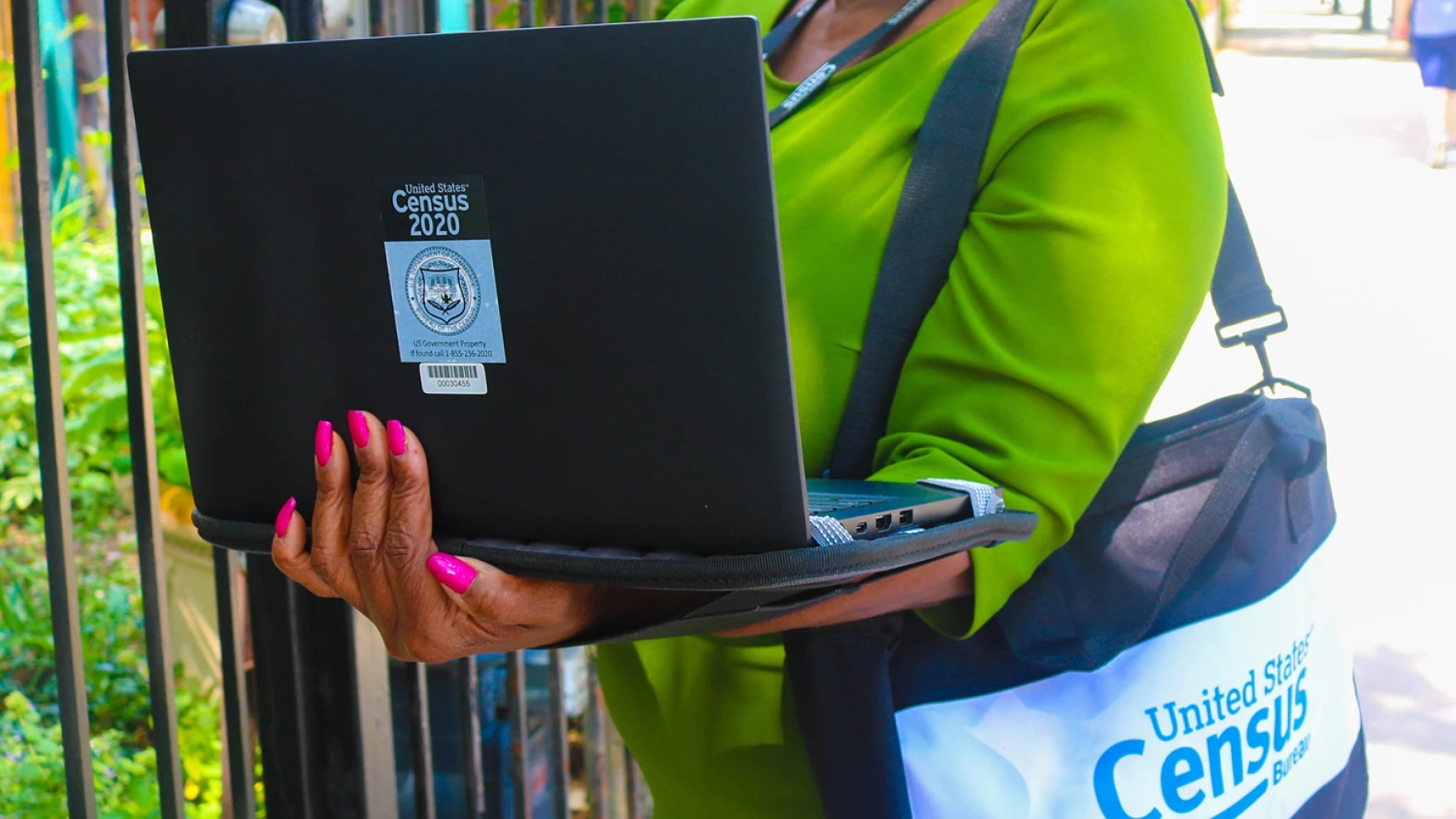 Before every census, the federal government picks several test sites, focusing on hard-to-reach areas, but the bureau has cancelled that testing at four of the six regions, including two that cover Arizona tribal lands.
As KJZZ’s Gabriel Pietrorazio reports, this is not the first time the Census has changed course with Indian Country.
In fact, this also happened in 2016 when two reservations in Washington and South Dakota were nixed, citing budget uncertainty and funding shortages.
Census consultant Saundra Mitrovich (Berry Creek Rancheria of Maidu Indians of California), co-leads the Natives Count Coalition.
“In the last two decennials, not only have we had the undercount, but we’ve had this cancellation of test sites for tribal areas twice.”
Mitrovich says one concern is that the Trump administration is considering to use postal service staff to replace temporary census workers to conduct the count and cut down on costs.
“A lot of the households are left invisible to the census, and they also have non-traditional addresses.”
In 2020, the nonprofit Native American Rights Fund reported that more than 80% of all registered Indigenous voters in Arizona – outside of metro Phoenix and Tucson – rely solely on P.O. boxes.
This time around, San Carlos and White Mountain Apache homes in Arizona as well as Cherokee households in North Carolina are being left out.
The Census Bureau would not say why.
“How are we gonna say that we’re going to carry out this fair and full representation that the survey is supposed to provide of the country?”
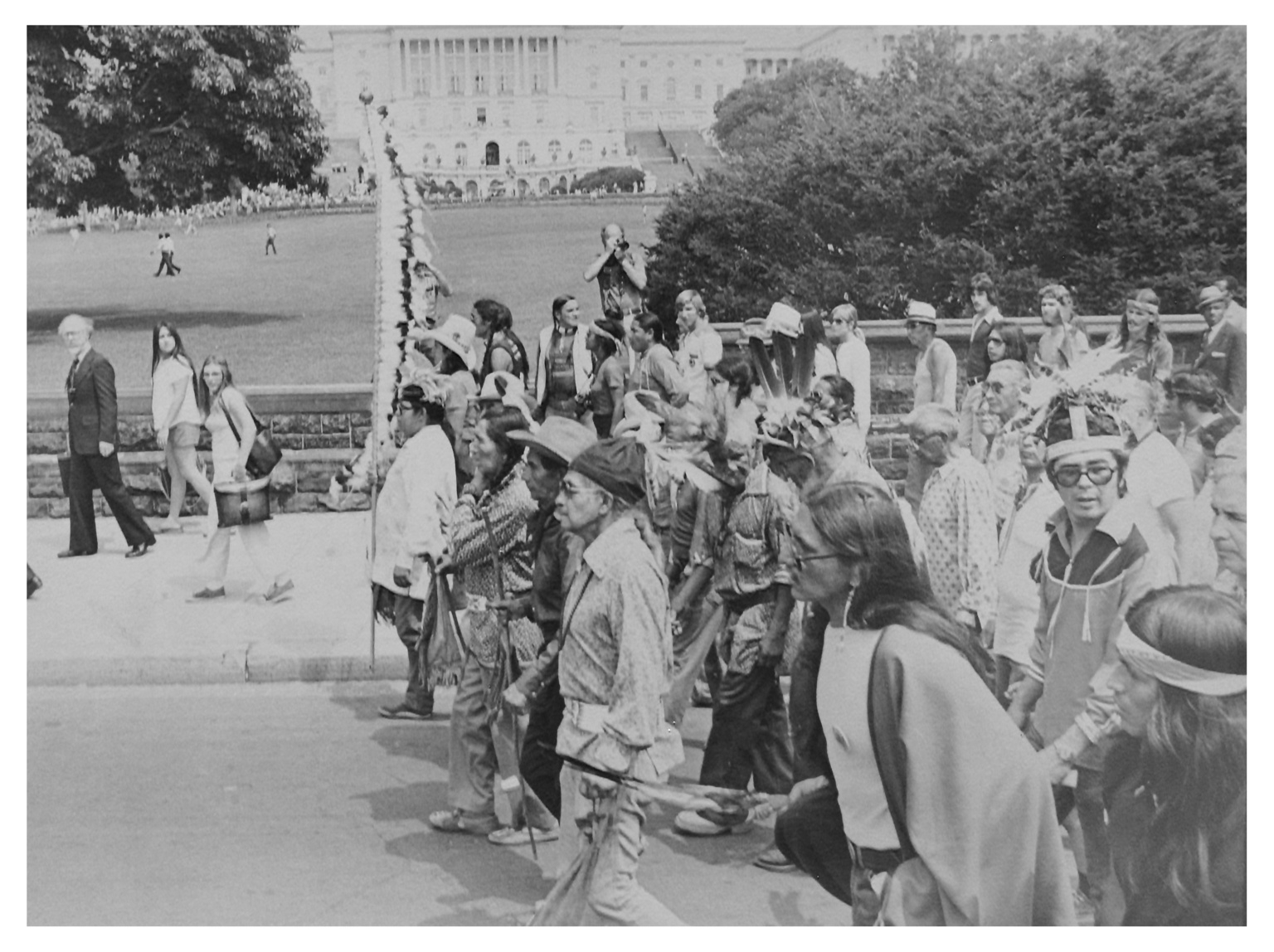 And on this day in 1978, the “Longest Walk” by Native activists began.
A start-up ceremony took place on Alcatraz Island, where the group then proceeded to travel by foot from Sacramento to Washington D.C. to build awareness of treaty rights and injustice.
Get National Native News delivered to your inbox daily. Sign up for our daily newsletter today.
Download our NV1 Android or iOs App for breaking news alerts.
Check out today’s Native America Calling episode
Wednesday, February 11, 2026 – Route 66 changed tribes’ connections and culture

Leave a Reply