Podcast: Play in new window | Download | Embed
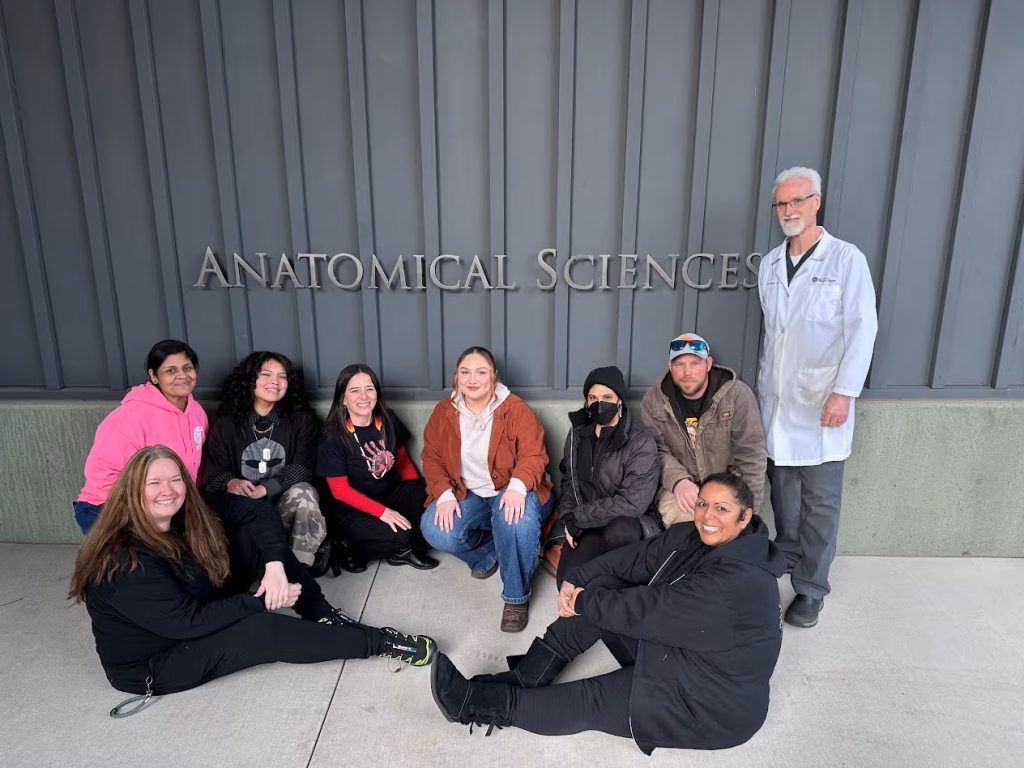
Photo: Members of the MMIW Search & Hope Alliance attend a cadaver session led by Dr. William Borman, in Portland, Oreg. Thursday, January 22, 2026. (Brian Bull / Buffalo’s Fire)
Search teams working on Missing and Murdered Indigenous People (MMIP) cases must prepare themselves for the likelihood they will come across a body.
One group based in Portland, Oreg. is proactively preparing volunteers for that encounter, as Brian Bull of Buffalo’s Fire reports.
Inside an anatomy lab, William Borman, professor of basic sciences for the University of Western States, carefully turns a cadaver over on a metal table.

Metal canopies cover human cadavers inside Linfield University’s anatomy lab in Portland, Oreg. Thursday, January 22, 2026. (Photo: Brian Bull / Buffalo’s Fire)
A tinge of formaldehyde fills the air.
Seven volunteers with the group, MMIW Search & Hope Alliance, examine its tendons, nerves, and organs.
Kimberly Lining is the group’s founder. She says she has seen death up close many times.
“And I think through my years of traumatic experiences with violent death, I’ve seen a lot, it’s prepared me. I think just due to fire, like steel is forged through fire.”
But for most people, exposure to death and corpses is not a recurring thing, so Lining reached out to Borman to arrange a visit.
Not only does it gird people for when they find a body, but it helps them discern between human and animal remains.
Two volunteers, Sabrina Griffith and Isabella Regalado, say they would recommend this experience.
“Just seeing the veins, the actual ligaments, the bone, the muscles, it was quite surprising to see it and feel it in real life. I’ve only touched bones and stuff like that, so it’s very interesting to actually feel the inner part of our body.”
“It’s actually been better than anticipated. I thought it would be a little bit more gruesome, but everyone has been very professional and understanding, and everyone has been doing their best to educate everyone else.”
Lining and Borman remind people that viewing cadavers is not the same as coming across a corpse, whether that is in the wilderness or city.
Such bodies are not preserved, and beyond what the cause of death inflicted, would be subject to the elements and scavengers.
“If it’s in the wilderness, in the forest, bears, cougars, wolves … they’re gonna tear at stuff and leave the bone. So definitely pieces more than together.”
Near the end of the visit, Borman sprayed a blue hydrating liquid to keep the cadavers from drying out and developing mold. He said everyone in Lining’s group was respectful and asked great questions.
“I’m pleased that we were able to make this happen. If she were interested in doing it again, I’d be open to doing it again.”
Lining and her volunteers gave small gifts of gratitude to Borman and thanked him for his time.
MMIW Search & Hope Alliance is preparing for two search efforts in the next few weeks.
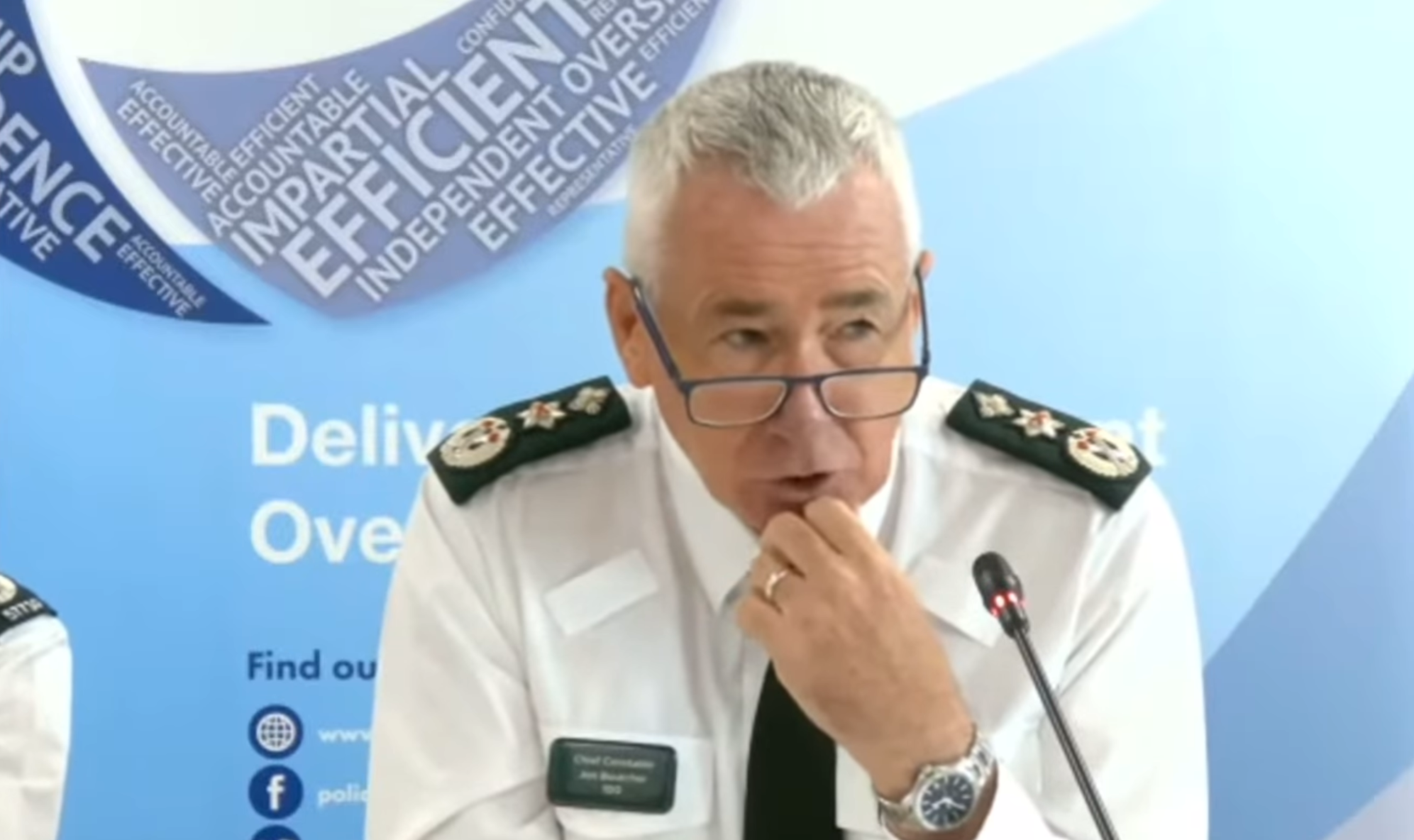
Jon Boutcher, Chief Constable of the Police Service of Northern Ireland, is asked about the arrest of Máire Mhic an Fhailí during a Policing Board meeting in September 2025. (Courtesy Policing Board / Facebook).
An Irish language activist has won a landmark decision in Northern Ireland following her arrest during a protest.
Seo McPolin has more from Ireland.
Seventy-four-year-old grandmother Máire Mhic an Fhailí attended a peaceful protest in support of the Palestinian people last August in Belfast.
She was among those arrested under the UK’s controversial Terrorism Laws because of her t-shirt.
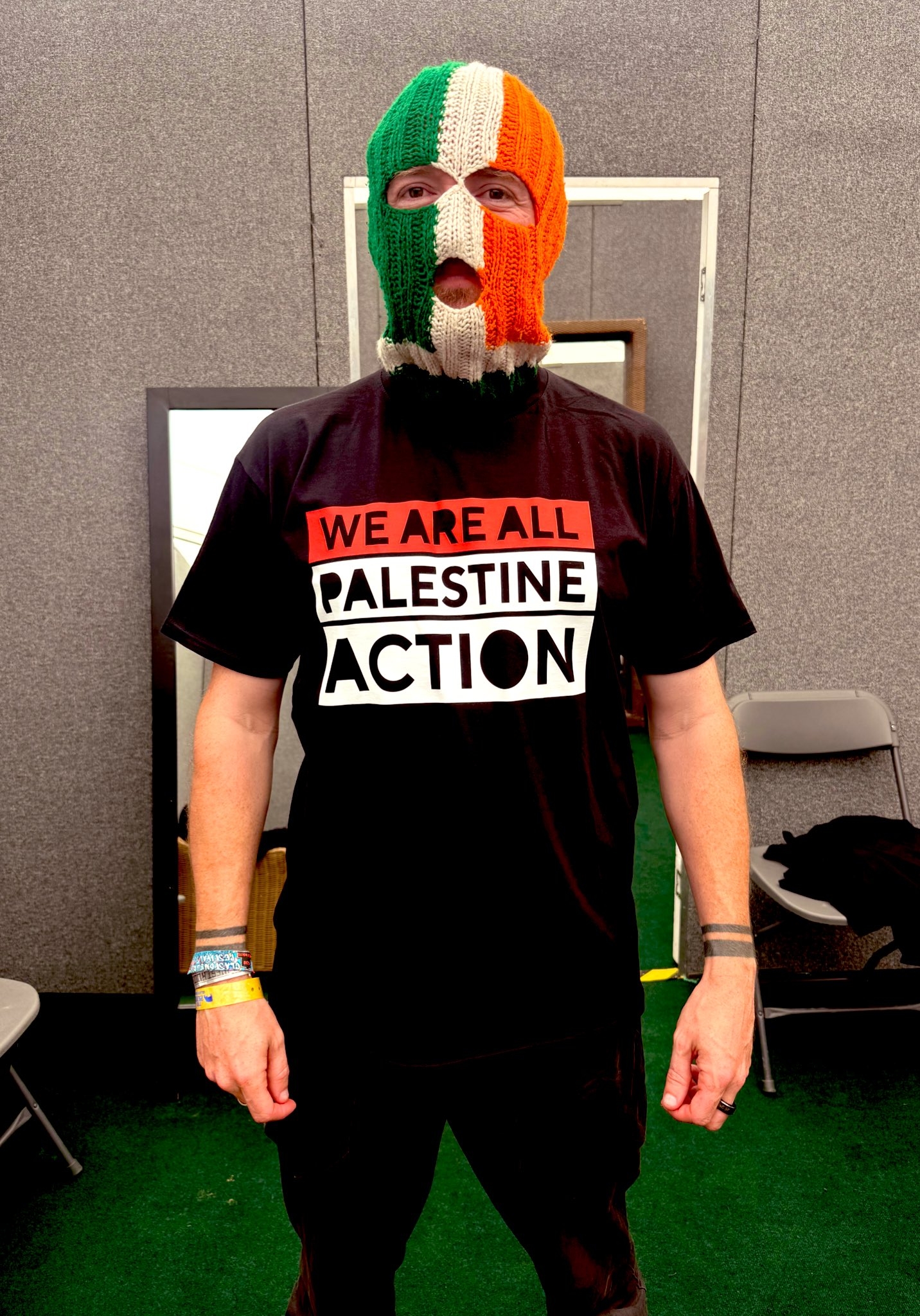
JJ Ó Dochartaigh from the Irish language band Kneecap wore the same T-shirt as Máire Mhic an Fhailí ahead of the band’s 2025 Glastonbury set. (Courtesy Kneecap / X)
During the arrest, English-speaking police officers were unable to understand her as she gave them her address – because she spoke in her Indigenous language of Irish.
The Police Ombudsman ruled last week that the arresting officer should have taken reasonable steps to arrange a translation service – and that Mhic an Fhailí experienced “oppressive behavior”.
The police watchdog also issued a policy recommendation for future engagements with Irish-language speakers.
Mhic an Fhailí’s lawyer says this decision “puts a marker down” for how the police service must respect the Irish language moving forward.
Get National Native News delivered to your inbox daily. Sign up for our daily newsletter today.
Download our NV1 Android or iOs App for breaking news alerts.
Check out the latest episode of Native America Calling
Wednesday, February 4, 2026 – College Native American Studies programs map their next steps