Podcast: Play in new window | Download | Embed
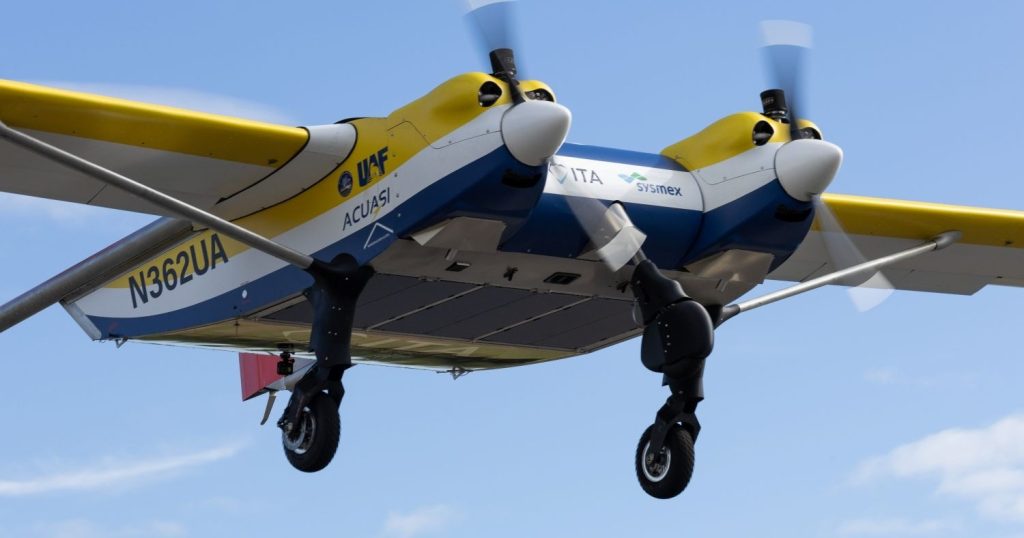
Photo: The Alaska Center for Unmanned Aircraft Systems Integration Windracers ULTRA drone, carrying chilled human blood samples, takes off from Nenana Municipal Airport on Aug. 19, 2026. (Pietr Buttelmann / Sysmex)
Researchers at the University of Alaska Fairbanks have completed a 620-mile drone test flight to see if human blood stays stable in transit.
The new means of delivery could dramatically reshape health care services in the most remote reaches of the state, many of which can become inaccessible during extreme weather, as Mark Moran reports.
Scientists in Alaska have successfully carried the human blood samples for the International Testing Agency, which investigates doping by athletes at the Olympics and other major sporting events.
The Alaska Center for Unmanned Aircraft Systems Integration’s nearly nine-hour flight near Nenana, Alaska tested whether unmanned aircraft can rapidly transport blood samples without them degrading.
The Center’s Cathy Cahill says using the technology in the future can make delivering medicine and other essential healthcare safer and more efficient.
“A community can get fogged in, they might need blood because of a crash victim or some other emergency. How do we get that blood into that community safely and not put manned aircraft and pilots at risk?”
Teams of emergency medical services workers collected small blood samples from volunteers the day before the test flight, which were tested by an international agency for stability.
Cahill says commercial use of the technology is still a few years off, but scientists will continue to make test flights with the drones and work with the Federal Aviation Administration to ensure drones can interact safely with commercial air traffic.
Alaska has become a leader in drone research, mostly because of its vast geography, challenging landscapes, and harsh weather, but in addition to making medicine and other services safer and easier to deliver, Cahill says drones can also create economic benefits in a state where, right now, it is more expensive to transport remote people to healthcare services than the actual healthcare.
“So if we can get the healthcare into the communities so they don’t have to fly out, that is a huge savings of time, effort, money, and it lets people be treated in their home community.”
Alaska has come a long way since 1925, when mushers used sled dogs to deliver serum to Nome during a diphtheria outbreak, which prompted the genesis of the now storied 1,100-mile Iditarod sled dog race.
Cahill says while there are no planned routes yet for medicine delivery by drone. If and when that happens, researchers may create a ceremonial run from Nenana to Nome – and call it the “Flyditarod.”
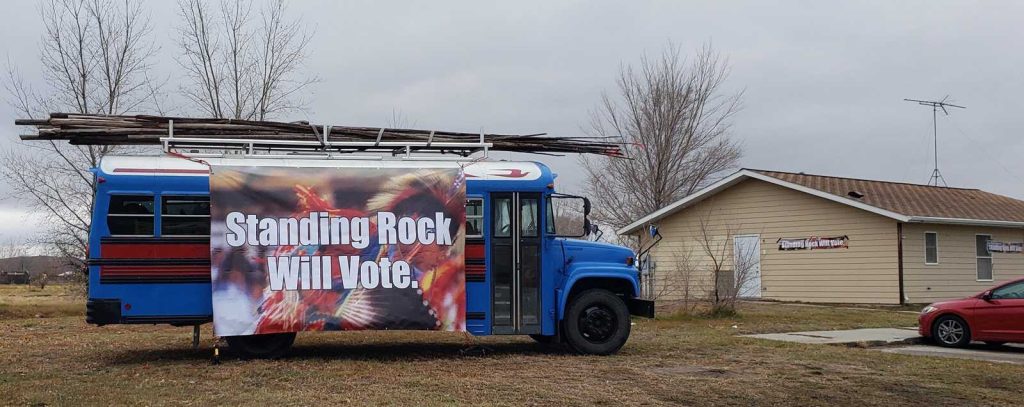
To get voters on Standing Rock Reservation to the polls in 2018, the Lakota People’s Law Project commissioned a bus. (Courtesy Nicole Donaghy / North Dakota Native Vote).
With less than five weeks until the midterm elections, new data shows Native voters in North Dakota could face potential barriers at multiple points in the voting process, as Judith Ruiz-Branch reports.
The new report from the Native American Rights Fund examines data from the past three federal elections in four North Dakota counties where Native Americans make up between 28-84% of the population.
Allison Neswood with the group says the findings confirm what Native communities have long known to be true.
“Their registration is getting denied, their ballots [are] getting rejected, and all of this really adds up to the systemic disenfranchisement of our people in our own homelands.”
The report finds voting barriers can compound – from registration and mail delivery to polling place access and ballot processing.
Mail-in voting is a major part of North Dakota’s elections. Forty-one percent of ballots cast in the state’s June primary were either absentee or early votes, even as the state requires absentee ballots to be received by the close of polls on Election Day.
While North Dakota counties reported relatively low numbers of rejected ballots, the state did not provide the number of rejected provisional ballots for the years included in the report.
The findings come as the U.S. Supreme Court blocked efforts from the Trump administration for the U.S. Postal Service to oversee mail-in ballots, a move plaintiffs successfully argued would have severely restricted voting by mail. But the administration says it will continue to verify voter eligibility and prevent illegal voting.
A recent MIT study found no evidence of fraud at a scale that actually impacted election outcomes.
Neswood believes partisan actors are intentionally pushing a false narrative.
“It feels like an effort to sow doubt. What impacts the outcome of elections is the systematic disenfranchisement of groups that are already disempowered in our society.”
To curb potential barriers for Native voters, the report recommends expanding voting options on or near Tribal lands.
Neswood also says election officials should consult Tribal governments before making changes that could affect access to the ballot.
“Making sure that our Native communities have polling locations in a reasonable distance from where they live, making sure they have registration opportunities, making sure that they can participate in mail voting.”
Get National Native News delivered to your inbox daily. Sign up for our daily newsletter today.
Download our NV1 Android or iOs App for breaking news alerts.
Check out today’s Native America Calling episode
Wednesday, October 7, 2026 — Native Playlist: Jeremy Dutcher and Mali Obomsawin

Leave a Reply