Podcast: Play in new window | Download | Embed
The online marketplace Etsy plans to ban products made out of fur as well as threatened or endangered animals. In Alaska, many Indigenous artists say they do not use the platform, but several said they were frustrated with the decision.
The Alaska Desk’s Alena Naiden from our flagship station KNBA has more.
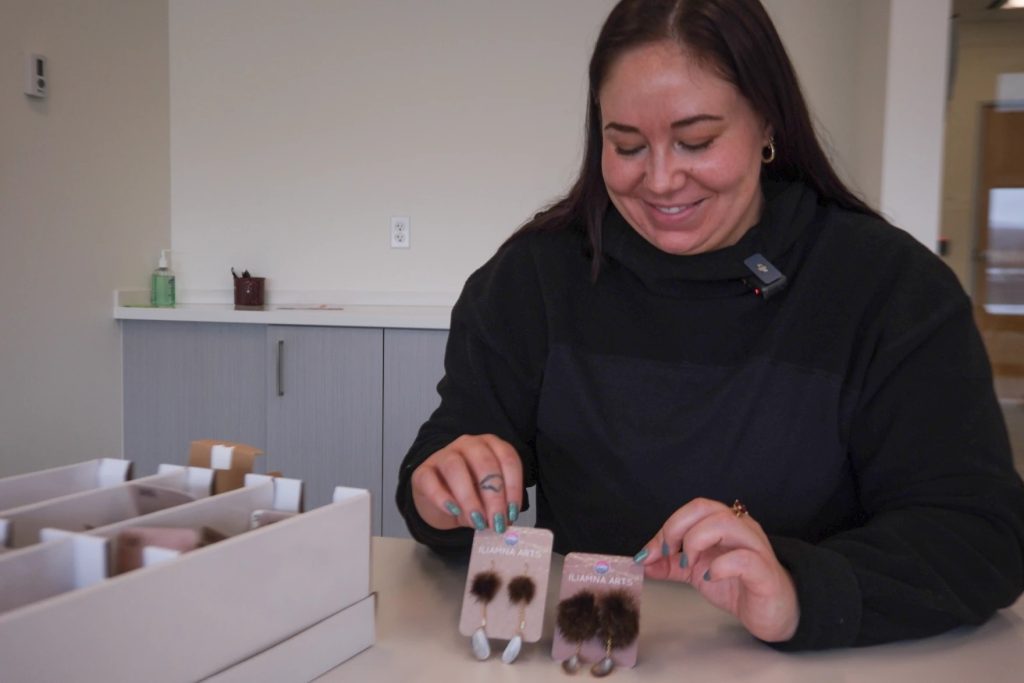
Cheyenne Nelson (Aleut and Tlingit) pulls a pair of earrings from a box stacked with her creations.
Nelson is an owner of Iliamna Arts based in Anchorage. She uses fur from otters, rabbits, lynx, and foxes to make jewelry.
She sells her art to customers from California to Chicago, and from Canada to the Netherlands, but this might change: Etsy emailed artists like Nelson in early April to notify them it will ban fur products starting August 11.
“It was like the worst case scenario … I really like being able to have my art reach people that in no other way it would have reached.”
The new Etsy policy says that it will apply to fur from animals killed primarily for their pelts, to protect wildlife from extinction.
It was not clear how the company would establish that animals were killed for fur and not for sustenance. There do not appear to be exceptions for Indigenous artists.
Etsy did not respond to emailed questions for this story.
Nelson and several others say the new policy will disproportionately harm Indigenous artists.
“You’ve ostracized the entire Indigenous population that wants to share their art through Etsy.”
Jamie Nurauq Stallings is Yupik and Athabaskan who makes earrings, using fur and feathers from her family’s hunts – ducks, beavers, and rabbits.
She sells her art at local markets, as well as Etsy.
“Historically, there’s been a lot of shame put on certain parts of our lives, like our language, and now it’s fur. … we have the highest regard for animals.”
When Stallings was small, she was a part of her father’s Indigenous dance group. Between the performances, she would sit with her mom at a table, selling earrings and talking to guests.
“Earrings were the one thing that we were able to share with people. … I really love that – being able to connect to people from everywhere. It’s unifying.”
Stallings says she hopes the ban can motivate Indigenous artists to come together and create their own platform that sells traditional art – on their terms.
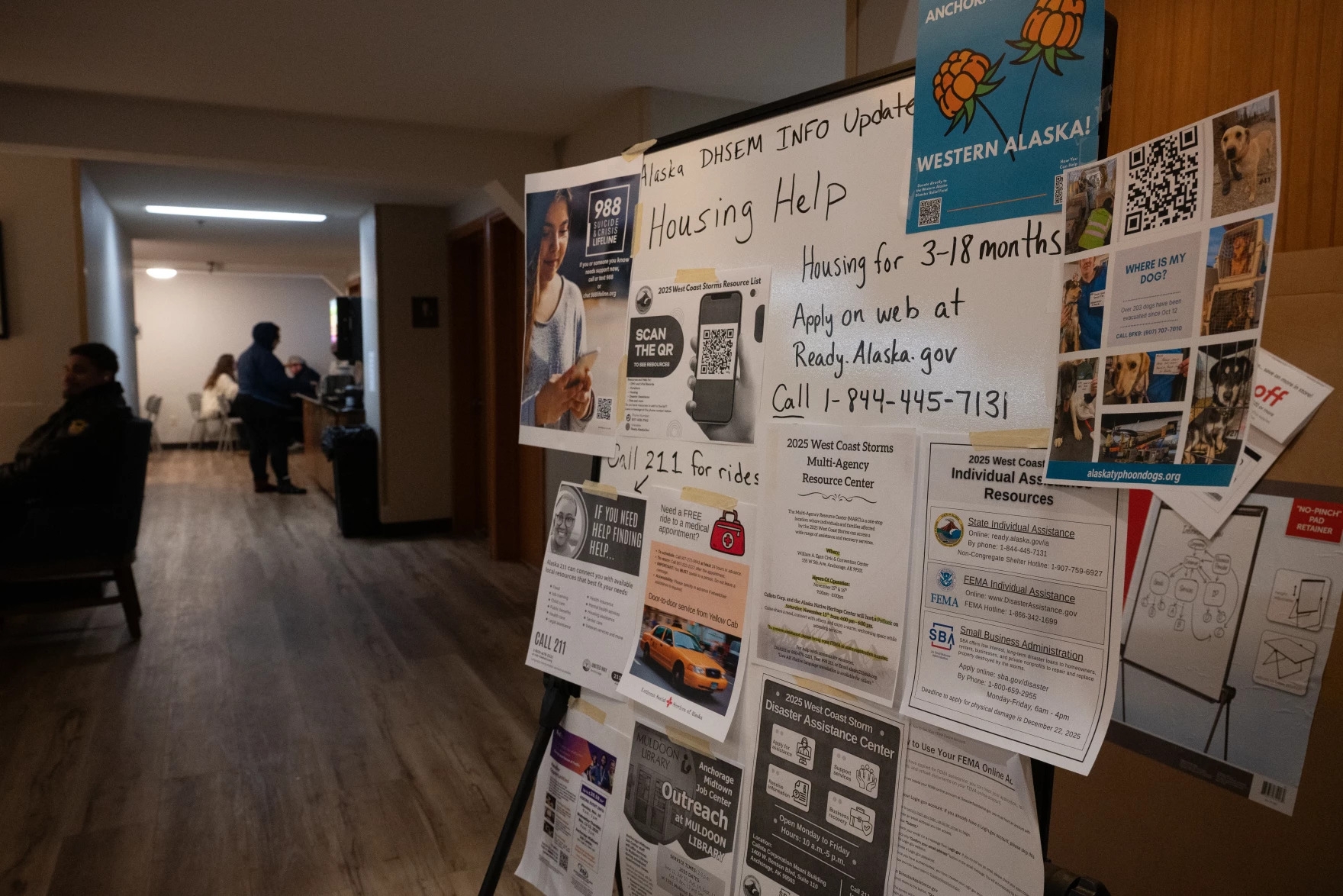
Until recently, evacuees in Anchorage were staying at hotels like the Wingate, pictured here on November 14, 2025. (Photo: Matt Faubion
/ Alaska Public Media)
Six months after arriving in Anchorage, evacuees from Western Alaska have moved from hotels into temporary housing.
Hundreds of people have been unable to return to their homes after ex-Typhoon Halong devastated villages in October of last year.
Jeremy Zidek, a spokesperson for the state’s emergency response, says it gives people a chance to return to a slightly more normal way of life.
“They’re cooking their own foods. They have more privacy, more room within the units. They’re also have places where they can host celebrations for their family members, or have people come over and visit and not just be in kind of one hotel room.”
Evacuees stayed in five hotels around Anchorage through the winter. They received meals from various assistance teams and on-site staff helped them register for disaster relief and connected them to assistance programs.
Zidek says the state will continue to help people with paperwork and bureaucracy hurdles.
“We’re working with the every applicant on a case by case basis to make sure that they’re they’re not kind of lost in the shuffle, and they don’t get so frustrated that they just lose interest in pursuing this assistance that they’re eligible for.”
As of April 17, 165 households have moved into temporary housing in and around Anchorage.
The housing is funded through the Federal Emergency Management Agency (FEMA).
Zidek says the state and FEMA are working together to identify ways to rebuild in Western Alaska so that those who want to return home can do so as soon as possible.
This story was provided by Alaska Public Media’s Hannah Flor
Get National Native News delivered to your inbox daily. Sign up for our daily newsletter today.
Download our NV1 Android or iOs App for breaking news alerts.
Check out today’s Native America Calling episode
Friday, May 1, 2026 – Efforts to improve Native student achievement under fire