Podcast: Play in new window | Download | Embed
After bison were nearly driven to extinction in the late 1800s, Native nations across North America have been working to restore them to their ancestral lands.
A nonprofit on the Pine Ridge Indian Reservation recently celebrated a milestone in its own bison reintroduction efforts.
Delainey LaHood-Burns has more.
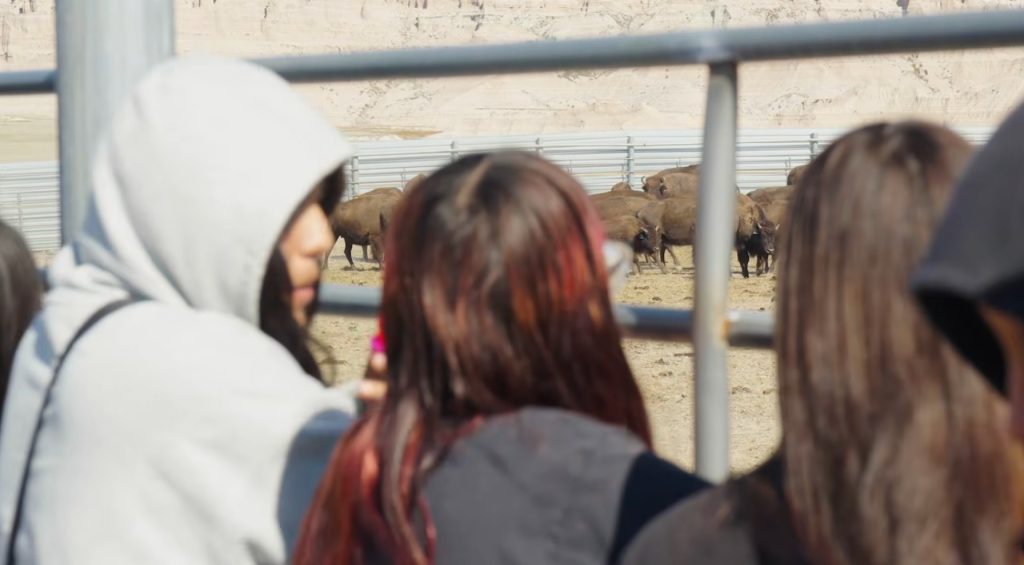
Hundreds of people gathered in the Stronghold District of South Dakota’s Badlands to witness the release of 50 bison on the Pine Ridge Indian Reservation.
The vast space where the herd roams is leased from the Oglala Sioux Tribe by Thunder Valley Community Development Corporation, the nonprofit working to restore bison to this culturally significant area.
Brandon Big Eagle is the Lakota Land Systems Director for Thunder Valley. Big Eagle says this part of the Badlands, known as the Oonakijin, or Stronghold, was once used as a bombing range by the U.S. military.
“So I like to share the history of this land too, as, as one that’s experienced its own trauma through bombings and target practices that happened out here. We can see a lot of that scarring traveling through here. And so what, you know, what better place can we start than here in that reintroduction?”
Tens of millions of bison once roamed North America, but the systematic slaughter of the animals during the 19th century cut their numbers to fewer than a thousand.
Over recent decades, federal agencies, conservation groups, and Native nations have worked to rebuild bison herds.
The American Bison, also known as the American buffalo, is a keystone species. That means they have a major effect on the ecosystem where they live.
Brandon Big Eagle says reintroducing bison to the Stronghold is part of a larger land restoration effort.
One of the organizations partnering with Thunder Valley is the World Wildlife Fund, which has supported Native-led bison programs throughout the Northern Great Plains since the early 2000s.
The organization’s Dennis Jorgensen says the fund has seen positive impacts in landscapes where its helped reintroduce bison.
“When you bring the buffalo back, their unique ways of grazing on the land, their unique ways of wallowing, their unique behaviors bring back a number of native species. On one site, where we’ve only been working for about six years, already they’ve seen a doubling of the native plant species in that time.”
Beyond grassland and ecological conservation, Brandon Big Eagle says the bison restoration initiative is also intended to strengthen the community’s connection with their relatives, the Pte Oyate or Buffalo Nation.
“Historically, they play a huge significance within the Indigenous Plains tribes here in this area, and I’m sure many others. But for us, it’s part of our creation stories. So our people, we began in what is now Wind Cave and the first of our relatives, the Lakota people to emerge from Wind Cave, when they came out that’s the form that they took on was buffalo. And so when we reference them as relatives, we mean it, you know, they truly are relatives in every aspect.”
Many of the people at the bison release were students from local schools.
Beau LeBeaux is a founder and board chairman of Thunder Valley Community Development Corporation.
“We want to get our our young people to understand that those are our relatives, and they’ll take care of us if we take care of them and reestablish that connection, not only, you know, to, you know, to survive, but there’s a lot of lessons that buffalo can teach us, have been trying to teach us. We just lost that for a bit because they were slaughtered, taken away from us. And I’m so thankful for organizations across the country that are fighting to return Buffalo to their lands.”
Brandon Big Eagle says the bison release event was not only a powerful experience for the community members who witnessed it, but also an important moment for the animals themselves.
“Also kind of trying to place myself in, you know, in their minds and what that means to them to be able to come back to something that their, their ancestors may have called home at one point, an area that they historically have not been able to return back to. And so […] honor that homecoming for them as well. You know, this day is as much of their day as it is ours.”
The 50 bison that Thunder Valley released came from the Wolakota Buffalo Range on the Rosebud Indian Reservation in south central South Dakota.
It is home to the largest Native-owned bison herd in the world.
The Thunder Valley team says it plans to reintroduce more bison to the Stronghold range unit in the future.
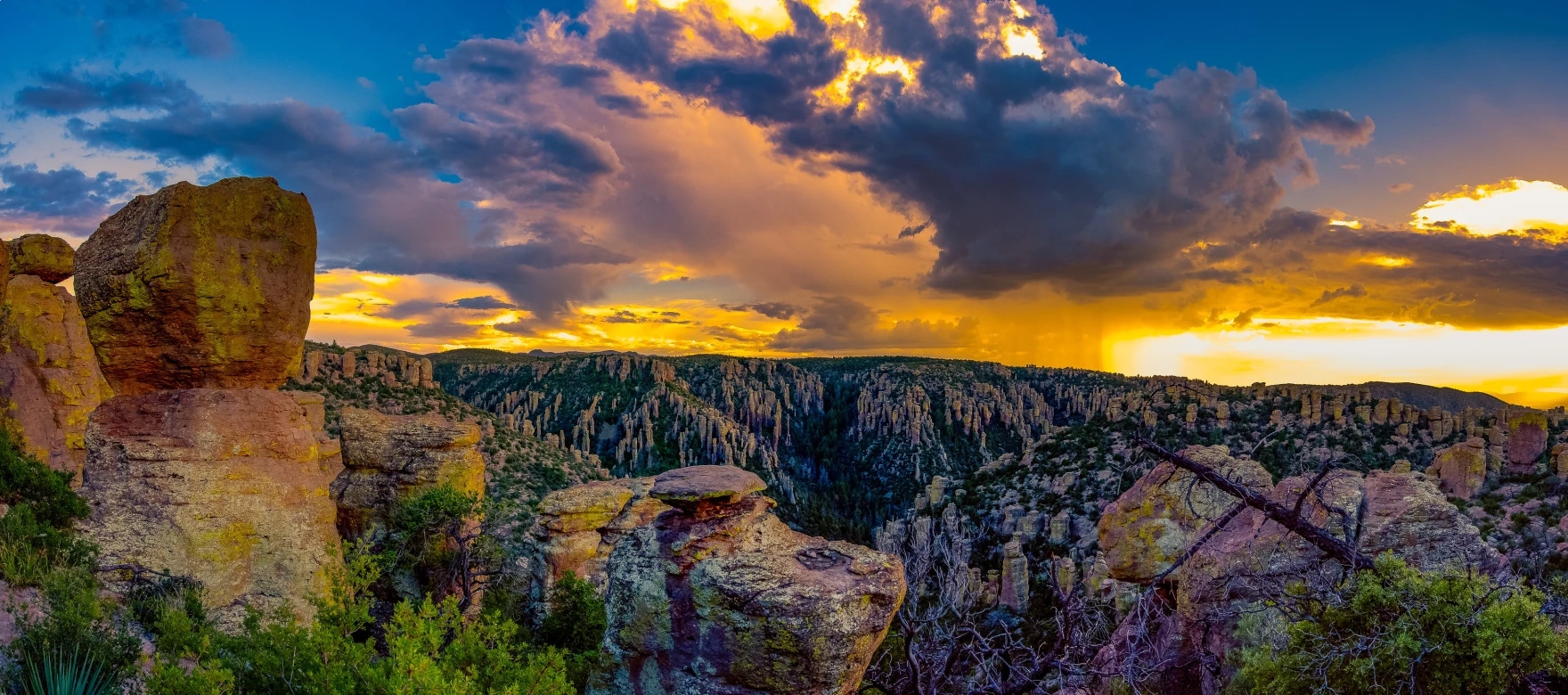
A moonson sunset at Massai Point inside Chiricahua National Monument in southeastern Arizona. (Photo: Ron Stewart / National Park Service)
A landscape in southeastern Arizona with deep ties to Apache history has become America’s newest national park.
President Donald Trump signed legislation Tuesday designating Chiricahua National Monument as the nation’s 64th national park.
The roughly 19-square-mile area is known for its towering volcanic rock formations and lies within the historical territory of the Chiricahua Apache. The area contains evidence of thousands of years of human activity.
The legislation preserves tribal access for traditional ceremonies and allows temporary closures to protect cultural practices.
The site was originally designated a national monument in 1924.
Federal officials say the new designation will bring greater attention to the area’s natural landscape, Apache heritage and biodiversity.
The legislation received bipartisan support in Congress.
Get National Native News delivered to your inbox daily. Sign up for our daily newsletter today.
Download our NV1 Android or iOs App for breaking news alerts.
Check out today’s Native America Calling episode


Leave a Reply