Podcast: Play in new window | Download | Embed
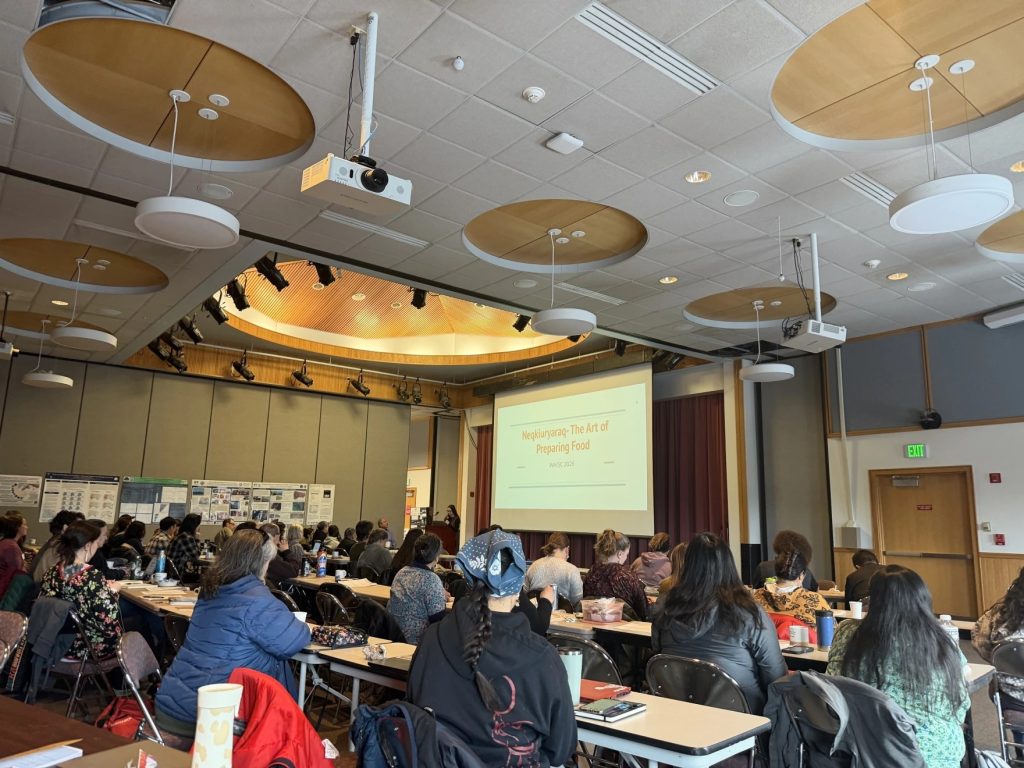
Photo: Researchers and community members gather for a presentation by Robin Masterman at the Western Alaska Interdisciplinary Science Conference at the Yupiit Piciryarait Cultural Center in Bethel on April 9, 2026. (Samantha Watson / KYUK)
Researchers and local experts gathered in Bethel last week to share environmental knowledge.
As KYUK’s Samantha Watson reports, the conference highlighted the power of linking Indigenous knowledge with Western science across the Yukon-Kuskokwim Delta.
It is the beginning of the Western Alaska Interdisciplinary Science Conference, but before everyone gets down to work – organizer Katie Basile asks them to stop and …
“Think about resilience and abundance in Western Alaska. What does that look like?”
Basile, with the Alaska Sea Grant which organized the conference, says it is hard not to get bogged down by the difficult issues the region is facing.
Many of those problems are informing research presented this week: salmon fisheries in decline, permafrost erosion, and the devastation of Typhoon Halong.
Basile says this gathering is also an opportunity to imagine what things could lead to a better future.
“What conversations can we have this week that will connect us to a narrative of abundance and resilience?”
The conference is in its 18th year and it rotates between Western Alaska communities.
Bridging Indigenous knowledge with Western science took center stage.
Joann Slats, mayor of Napakiak, spoke about growing up in the village — when permafrost was close to the surface.
“The permafrost was about two feet, July, June.”
Today, Slats says stronger fall storms, including October’s ex-Typhoon Halong, have been a new piece of the village’s relationship with its environment.
“90% in our community, 90% of the homes experienced water getting into their homes.”
Much of the research that was presented had similar firsthand accounts and testimonies around the changing environment.
Nicole Herman-Mercer with the U.S. Geological Survey presented a project that couples collecting interviews with data surrounding extreme weather events in Y-K Delta communities.
“We set out to develop finer scale climate data coupled with community narratives to create storylines of change.”
Organizers said a record-breaking 160 people registered to participate in the conference this year.
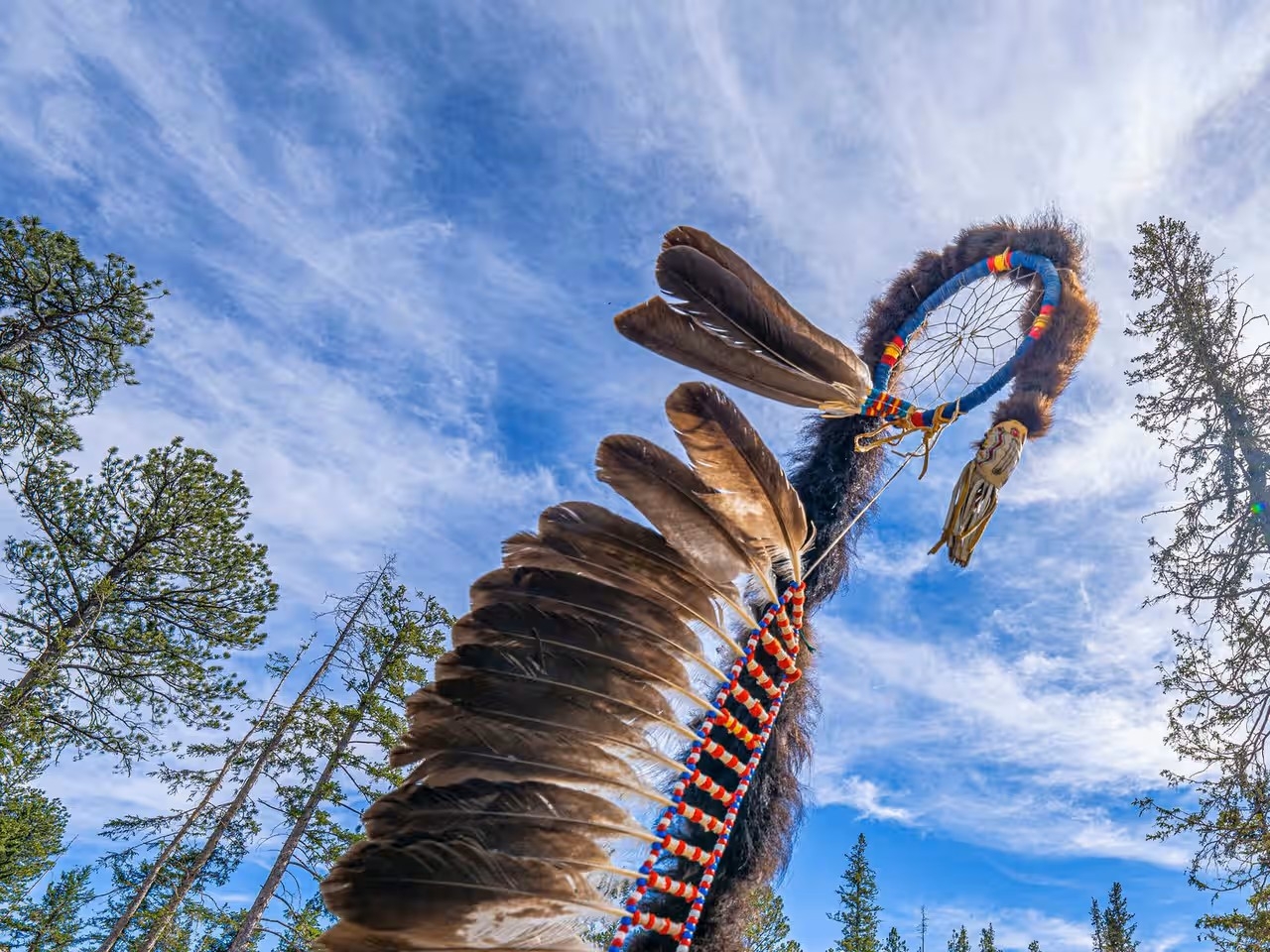
An eagle staff stands among the trees in the Black Elk Wilderness on March 21, 2026. (Photo: Preston Keres / U.S. Forest Service)
A Memorandum of Understanding (MOU) has been signed by Great Sioux Nation Tribal leaders and the U.S. Forest Service (USFS), that allows collaborative stewardship of the Black Elk Wilderness in South Dakota.
Brian Bull of Buffalo’s Fire reports.
Last month, members of both parties signed the MOU, in an event that also included a hike up Black Elk Peak.
The wilderness comprises more than 13,000 acres of forest in the Black Hills National Forest and was created in 1980.
Boyd Gourneau is chairman of the Lower Brule Sioux Tribe, one of the 11 tribes represented in the agreement. He says this is an especially important development for Native youth.
“Our children are one of the most important resources for the future of our nation. We want our kids to have a chance to visit the sacred lands, our ancestors roamed free at one time.”
Gourneau said he wished the parties would have signed a MOU, as he considers that more binding. Ultimately he would like to see all the land returned to tribes.
In a release, the USFS said the MOU “enhances opportunities for tribal guidance, knowledge, and consultation regarding wilderness management, resource protection, recreation, and cultural interpretation.”
Get National Native News delivered to your inbox daily. Sign up for our daily newsletter today.
Download our NV1 Android or iOs App for breaking news alerts.
Check out today’s Native America Calling episode
Thursday, April 16, 2026 – Eklutna: a trailblazer on gaming and climate change action in Alaska