Podcast: Play in new window | Download | Embed
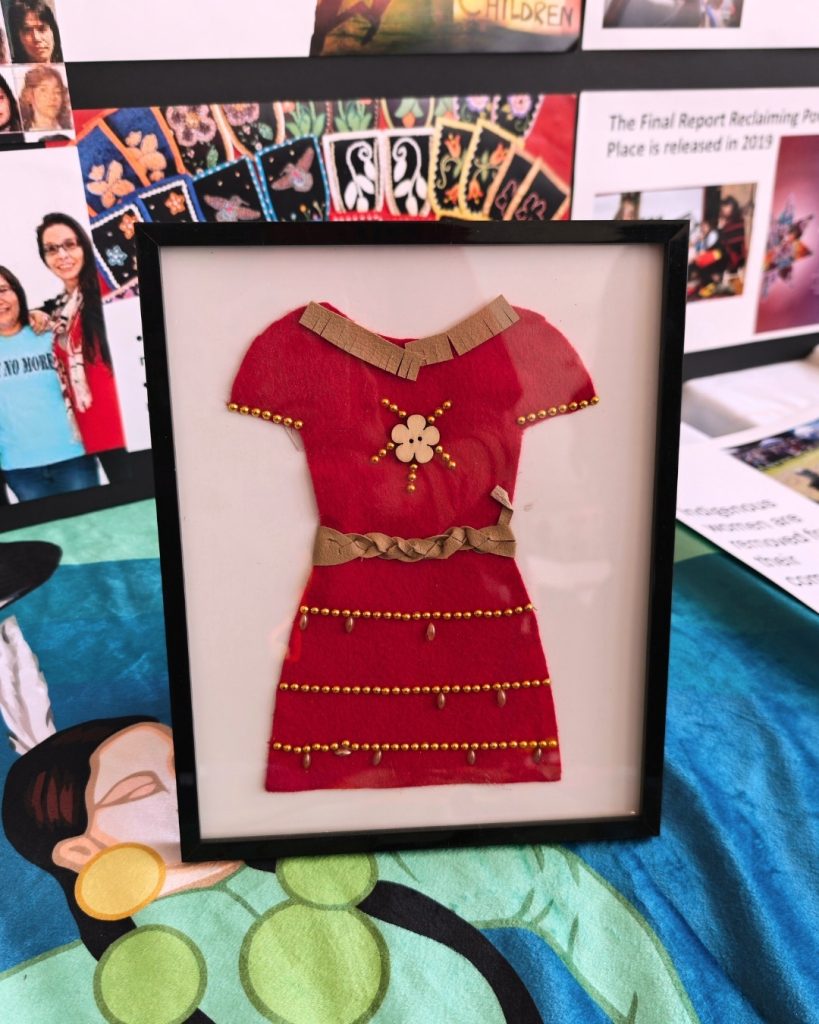
Photo: Artwork featured as part of the Ottawa Aboriginal Coalition’s installation and community gathering at City Hall, May 4, 2026. (Courtesy The Ottawa Mission / Facebook)
Across Canada this week, communities commemorated Red Dress Day with ceremonies.
As Dan Karpenchuk reports, the annual day on May 5 has become a national day of awareness for Missing and Murdered Indigenous People (MMIP).
On Parliament Hill in Ottawa and cities and towns across the country, people gathered for the fifteenth anniversary of Red Dress Day.
They come to heal, to remember, and to honour the Indigenous people who were murdered or who have disappeared.
Mary Daoust is the co-chair of the Ottawa Aboriginal Coalition.
“Their voices can no longer be heard, but they can be heard through us. And that’s why we’re here today, is to speak and honour, and respect the ones that didn’t have those voices and the ones that went missing, and the ones that aren’t coming home. That we are still here and we have not forgotten them.”
People took part in ceremonies and educational exhibits – and created activities to honour the lives the legacies of Indigenous people.
The events also included drum groups and throat singers, a sacred fire and honour songs, and, of course, people wearing a red dress.
Jenny Sawanohk is an Indigenous healer and member of the Cree First Nation.
“I’ve seen violence. I’ve been in communities that have been impacted by this directly. I’ve had family members that have been victims of violence. A lot of us are in mourning. And we will be in mourning until this gets properly addressed. And we needed this day to really bring awareness and attention to it.”
Vigils and marches were also held across the country.
This year also marks the tenth anniversary of the launch of the national inquiry into MMIP. That resulted in an action plan with 231 calls for justice.
According to the federal government, Indigenous women are twelve times more likely than non-Indigenous women to be murdered or end up missing.
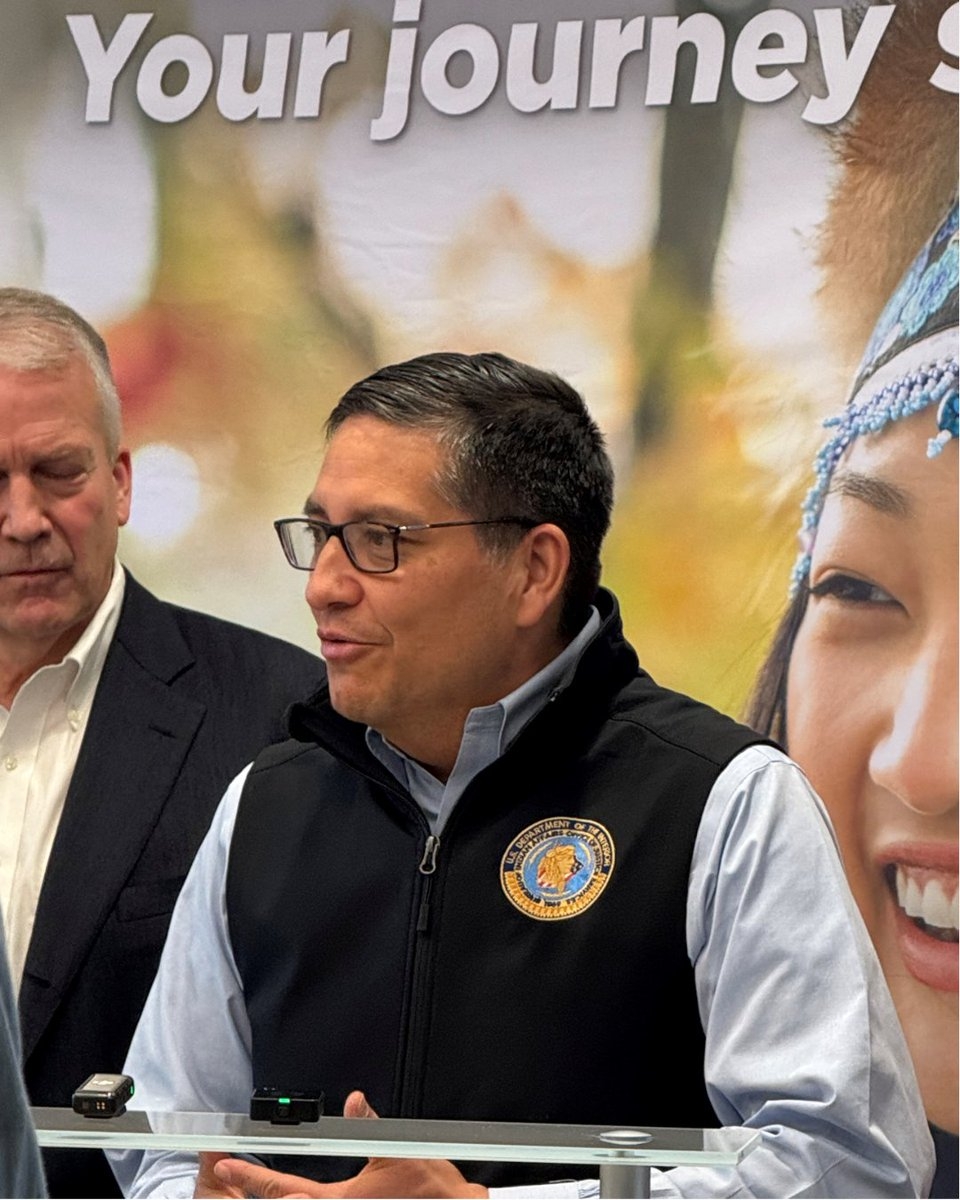
Billy Kirkland in Anchorage, Alaska. (Courtesy U.S. Department of the Interior Bureau of Indian Affairs / X)
May is when the federal VIP season in Alaska really gets going – when high ranking federal officials tour the state to roll out new policies, hand out grants, or just simply listen to what people have to say.
The Department of Interior sent some of its top people to Anchorage Tuesday for a closed-door meeting on Missing and Murdered Indigenous People (MMIP).
As Rhonda McBride from our flagship station KNBA reports, they acknowledged that the number of Alaska cases has reached a crisis point.
In the Cook Inlet Tribal Council’s meeting room, more than two dozen Alaska Native and government leaders looked across tables at each other.
U.S. Sen. Dan Sullivan (R-AK) led the discussion.
“The two top guys in America on these issues are here in this room right now.”
Those top guys were Assistant Secretary for Indian Affairs Billy Kirkland (Navajo) and Bryan Mercier (Confederated Tribes of the Grand Ronde Community of Oregon), the head of the Bureau of Indian Affairs (BIA).
They came to announce the re-introduction of Operation Lady Justice, launched by Tara Sweeney (Iñupiaq) during President Donald Trump’s first administration.
The initiative created a task force that brought law enforcement, data collection and justice teams together, an effort that led to a Missing and Murdered Unit within the BIA.
“All of our law enforcement are working collectively on an issue not being in silos.”
This renewed federal push comes through an executive order from Interior Secretary Doug Burgum.
Kirkland says it expands efforts to solve new and cold cases and emphasizes prevention.
“It’s great that we’re focused on these cases that haven’t been solved. You know, what would be even better is that we didn’t even have to solve these cases in the first place.”
A crisis U.S. Sen. Lisa Murkowski (R-AK) says needs to be addressed with urgency.
“I would suggest to you that that is a crisis.”
Some of the Native leaders and MMIP advocates at the meeting, like Charlene Apok (Iñupiaq) with Data for Indigenous Justice, say hope now hinges on whether funding follows — and if tribes are empowered to lead the work.
“We’re hoping that we see the return on investments and that it trickles down to real changes. But I also know that no matter what, tribes in Alaska are going to keep working on this. And that gives me a lot of hope.”
The gathering and the Interior Secretary’s Executive order was timed to coincide with a national day of awareness for MMIP.
Get National Native News delivered to your inbox daily. Sign up for our daily newsletter today.
Download our NV1 Android or iOs App for breaking news alerts.
Check out today’s Native America Calling episode
Thursday, May 7, 2026 – Native Fashion Week takes root in Santa Fe