Podcast: Play in new window | Download | Embed
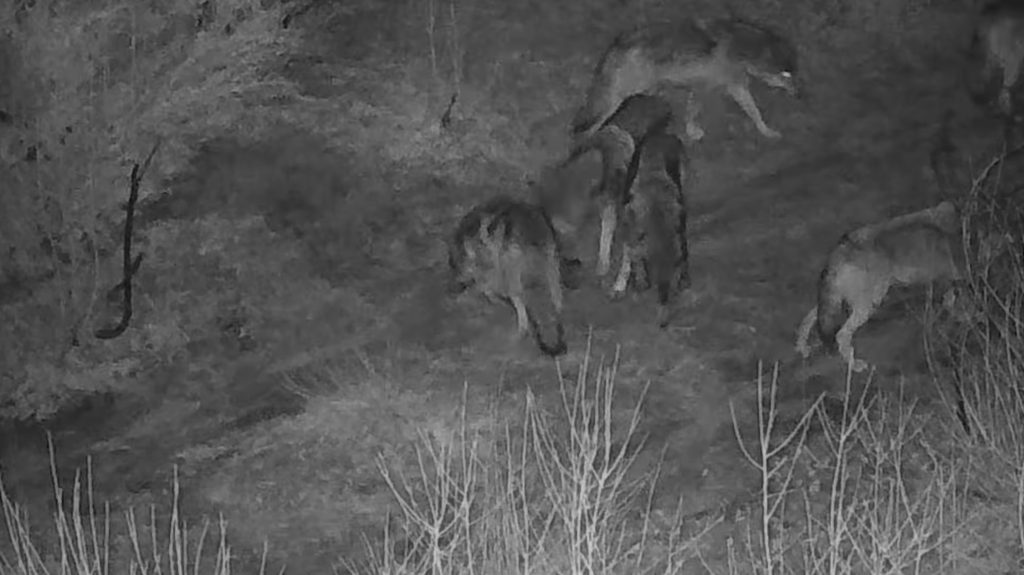
Gray wolves are making a comeback in California, more than a century after disappearing from the state.
The California Department of Fish and Wildlife reports at least 55 wolves at the end of 2025, with 10 confirmed packs now identified across the state, as Roz Brown reports.
Their return began in 2011, when a wolf nicknamed Journey crossed the border from Oregon and a successful reintroduction followed.
This is National Wolf Awareness Week, established in 1996 to educate the public about wolf ecology, their vital role as keystone predators, and the importance of peaceful coexistence.
Kaitie Schneider with Defenders of Wildlife says educating the public about wolves is important to understanding their role in maintaining healthy ecosystems.
“So I hope Wolf Awareness Week will give folks the chance to get more curious about what’s really going on. Where have we come? Where do we still need to go to really see wolves be recovered in the United States?”
California’s gray wolves live primarily in the state’s north and northeast regions, with activity areas and pack ranges extending into parts of the southern Sierra Nevada.
Alaska has the highest wolf population of any U.S. state, estimated between 7,000-11,000 wolves.
Schneider says wolves often are a lightning rod for disagreements about wildlife versus livestock, but most people fear losing them, and support maintaining their populations. She believes shared goals are needed between agencies, stakeholders, and wildlife advocates.
“Two steps forward, two steps back, I feel like is where we’ve been for a couple decades now, and it’s hard on the wolves, it’s hard on the people, and it’s hard on the agencies. And so we need to come together under some shared goals and objectives so we know what recovery does look like.”
Four-hundred years ago, the North American gray wolf population was around 2,000,000, compared to current estimates of 65-thousand. They were the first animals to be placed on the U.S. Endangered Species Act list in 1973.
Defenders of Wildlife initiated National Wolf Awareness Week in 1996, one year after the historic wolf reintroduction in Wyoming’s Yellowstone National Park.
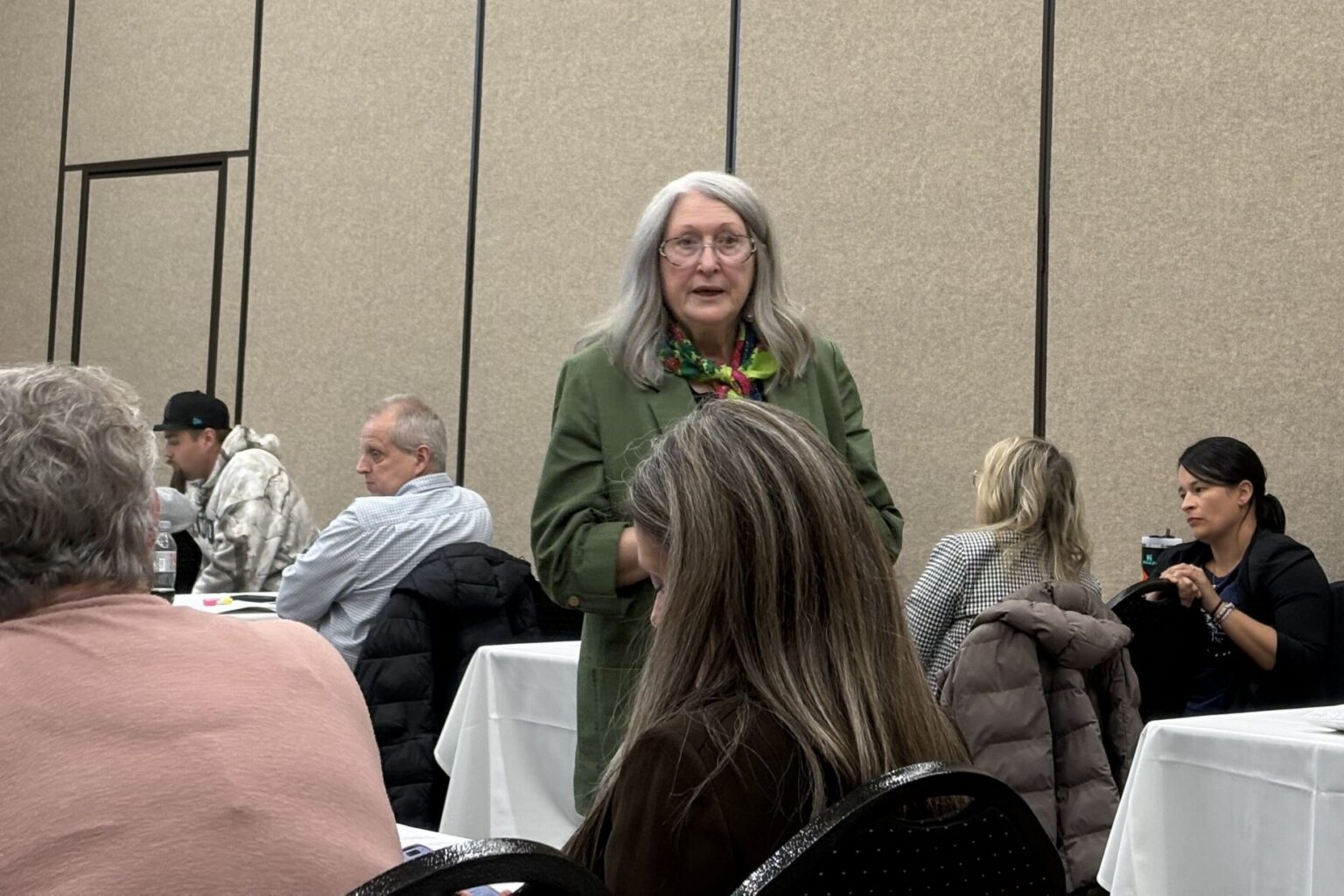
Dorothy Aguilera-Black Bear speaks to attendees during a breakout session at the annual Indian Education Summit in Pierre, South Dakota, on November 12, 2026. (Photo: Meghan O’Brien / South Dakota Searchlight)
Principals who lead schools with at least one Native American student say there is a need for mental health support services, but a lack of funding makes it difficult to provide them.
South Dakota Searchlight’s Meghan O’Brien has more.
The data comes from a team of researchers who surveyed South Dakota principals earlier this year. The group is working in partnership with the state Department of Tribal Relations and state Office of Indian Education.
While a majority of responders said funding is a key need to provide wellness services, a lack of connection with community elders or knowledge keepers was also mentioned.
Dorothy Aguilera-Black Bear is a member of the research team. She says the goal was collecting information on needs and a school’s availability to provide those needs for Native students.
“We also don’t feel like it’s our authority to give recommendations because we’re not in the communities, we’re not the Lakota and Dakota folks who are living in the communities.”
The team presented the research to the annual Indian Education Summit in Pierre, South Dakota.
One of the attendees was Martina Moves Camp, a transition specialist at Crazy Horse School on the Pine Ridge Reservation. She sees the lack of resources for students in everyday life while teaching at the school.
Moves Camp says seeing educators invested in the research gives her hope for finding solutions.
“I can’t wait for the day for our school to be where we are creating those culture bearers, where they are able to be teachers to their next generation.”
Researchers will take feedback from educators and connect with tribal education directors to help with resource sharing and response planning.
Get National Native News delivered to your inbox daily. Sign up for our daily newsletter today.
Download our NV1 Android or iOs App for breaking news alerts.
Check out today’s Native America Calling episode
Thursday, November 26, 2026 — Shifting preservation policies pose risks to Native history

Leave a Reply