Podcast: Play in new window | Download | Embed
An Indigenous-led conservation group in Massachusetts is reclaiming ancestral land on Cape Cod, marking a significant victory for the Land Back movement.
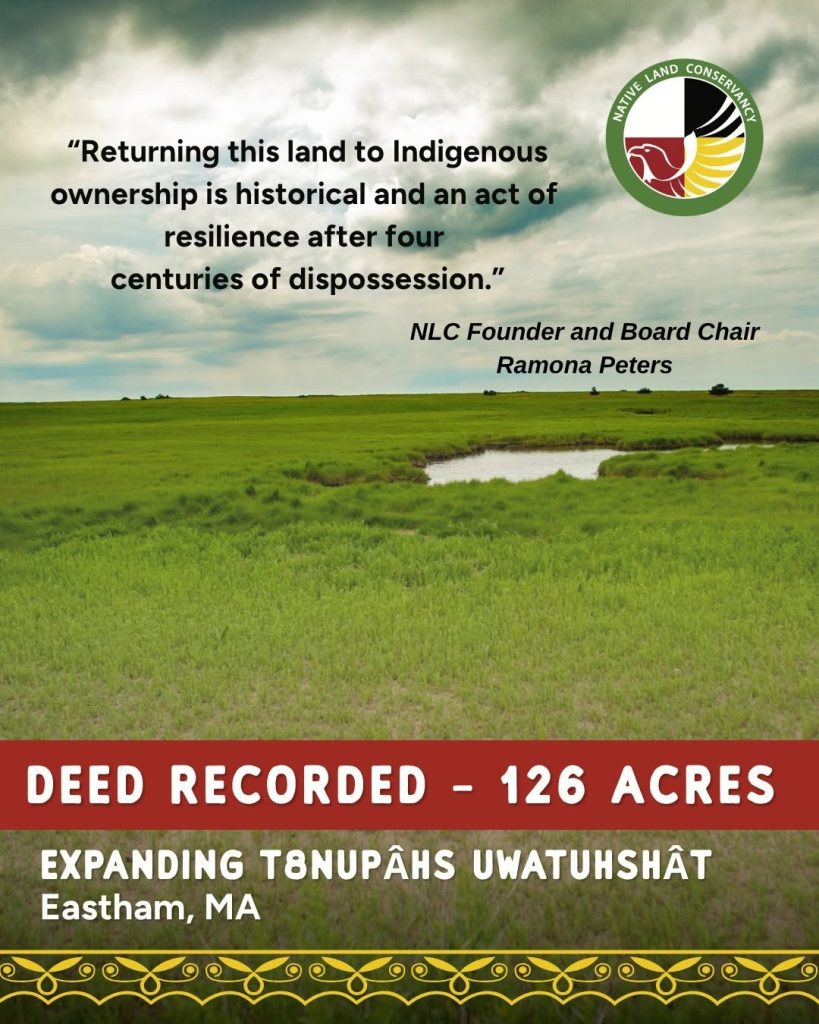
The Nature Conservancy has transferred approximately 120 acres overlooking First Encounter Beach to the Native Land Conservancy, based in Mashpee.
The property carries deep historical significance for the Wampanoag people. It is near the site where the Nauset people encountered English colonists in 1620, during the early days of European settlement.
The land transfer was completed October 30, following years of collaboration between Indigenous leaders and conservationists.
The Native Land Conservancy plans to protect the property from development while preserving its natural habitat, including marshlands used by vulnerable turtles.
The transfer also represents a broader effort to return Indigenous ancestral lands to Native ownership and stewardship.
As development continues across Cape Cod, conservation leaders say protecting remaining open spaces is increasingly important.
For Indigenous communities, the return of the property represents more than environmental conservation. It reconnects Native people with land that holds generations of cultural and historical significance.
Gray wolves are making a comeback in California, more than a century after disappearing from the state.
The California Department of Fish and Wildlife reports at least 55 wolves at the end of 2025, with 10 confirmed packs now identified across the state, as Roz Brown reports.
Their return began in 2011, when a wolf nicknamed Journey crossed the border from Oregon and a successful reintroduction followed.
This is National Wolf Awareness Week, established in 1996 to educate the public about wolf ecology, their vital role as keystone predators, and the importance of peaceful coexistence.
Kaitie Schneider with Defenders of Wildlife says educating the public about wolves is important to understanding their role in maintaining healthy ecosystems.
“So I hope Wolf Awareness Week will give folks the chance to get more curious about what’s really going on. Where have we come? Where do we still need to go to really see wolves be recovered in the United States?”
California’s gray wolves live primarily in the state’s north and northeast regions, with activity areas and pack ranges extending into parts of the southern Sierra Nevada.
Alaska has the highest wolf population of any U.S. state, estimated between 7,000-11,000 wolves.
Schneider says wolves often are a lightning rod for disagreements about wildlife versus livestock, but most people fear losing them, and support maintaining their populations. She believes shared goals are needed between agencies, stakeholders, and wildlife advocates.
“Two steps forward, two steps back, I feel like is where we’ve been for a couple decades now, and it’s hard on the wolves, it’s hard on the people, and it’s hard on the agencies. And so we need to come together under some shared goals and objectives so we know what recovery does look like.”
Four-hundred years ago, the North American gray wolf population was around 2,000,000, compared to current estimates of 65-thousand. They were the first animals to be placed on the U.S. Endangered Species Act list in 1973.
Defenders of Wildlife initiated National Wolf Awareness Week in 1996, one year after the historic wolf reintroduction in Wyoming’s Yellowstone National Park.
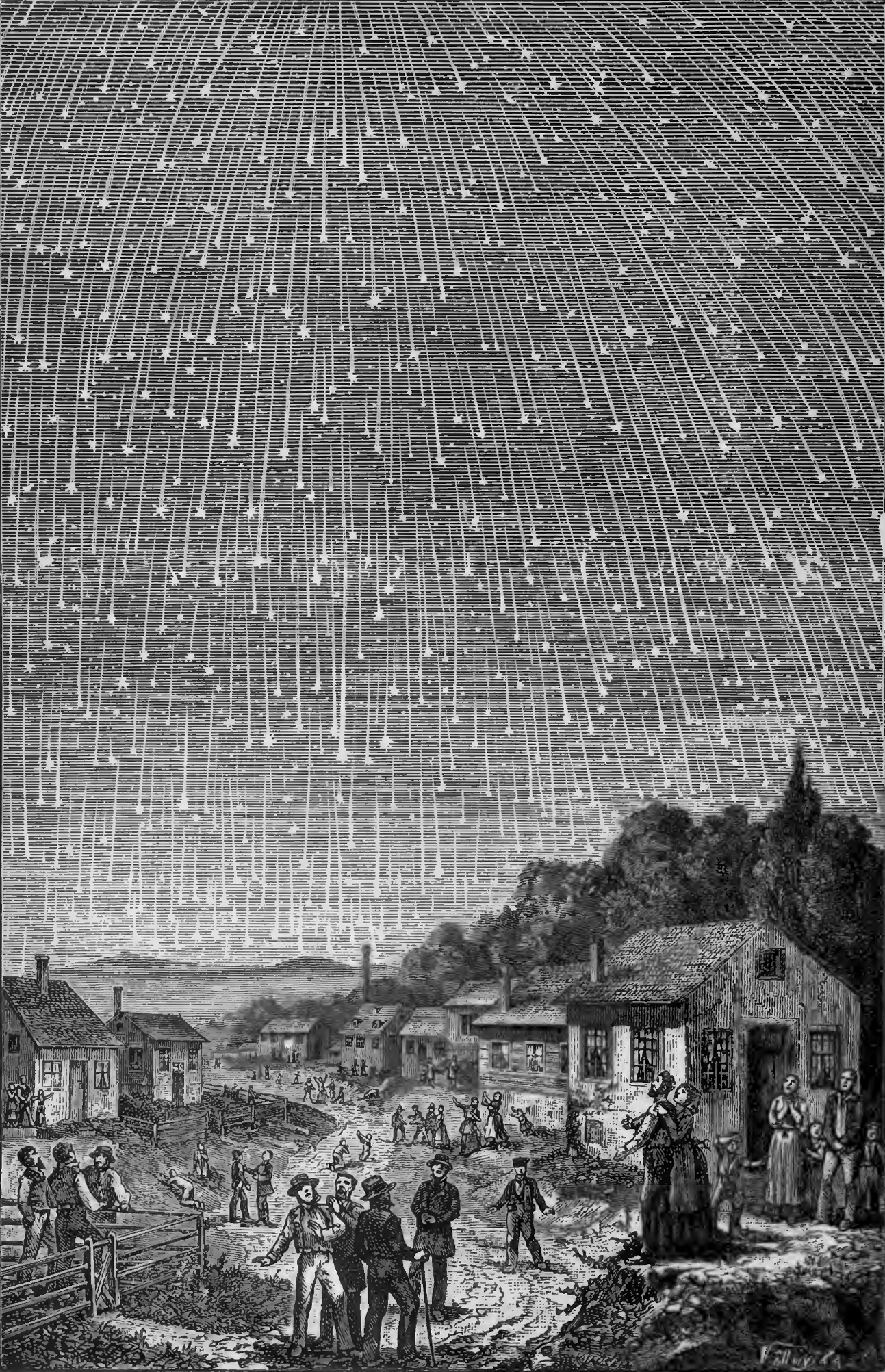
A famous depiction of the 1833 meteor storm, produced in 1889 for the Seventh-day Adventist book Bible Readings for the Home Circle.
And on this day in 1833, a spectacular meteor shower lit up the skies across North America.
The celestial event was so remarkable that the Kiowa people recorded it in their traditional picture calendars, preserving the historic night for generations.
Get National Native News delivered to your inbox daily. Sign up for our daily newsletter today.
Download our NV1 Android or iOs App for breaking news alerts.
Check out today’s Native America Calling episode
Friday, November 13, 2026 — What’s next? Newly elected Native leaders chart their next moves


Leave a Reply