Podcast: Play in new window | Download | Embed
Veterans Day was marked across the United States Wednesday. For one Kotzebue, Alaska family, military service spans three generations.
Last month, one family member received an award from the Alaska Federation of Natives, as KOTZ’s Desiree Hagen reports.
Back in the fall of 2024, a storm flooded Kotzebue, forcing about 80 people from their homes and damaging dozens of houses. Within days, members of the Alaska National Guard flew in to help with repairs before freeze-up.
Kotzebue resident Thomas Baker was sent to the airport to pick them up.
“I saw this real tall guy coming off the jet, and I thought we’re going to be okay.”
That tall guy was Baker’s cousin, Dempsey Woods Jr. He had just come home from a nine-month National Guard deployment in Kuwait, trading sand for snow.
Woods says he volunteered for the flood response as soon as he heard.
“I went home to see my community. It was another welcome home, but also I was heartbroken for some of the houses that were affected.”
Woods and the rest of the Guard team spent the next week getting flooded homes ready for winter. They stabilized fuel tanks, cleared storm debris, and repaired the outside of Kotzebue’s rec center.
Woods says the community made sure the soldiers were taken care of, with Native food, housing and vehicles.
“We were very spoiled in Kotzebue because of how the community loves the military.”
When Kotzebue flooded again the next fall, Woods was put in charge of the Guard’s response in town, leading Army and Air Force members in assessing affected homes along with Village Public Safety Officers.
Days later, the remnants of Typhoon Halong hit the Yukon-Kuskokwim Delta.
Woods and his cousin Baker, who serves in the Alaska State Defense Force, flew together to Bethel on a military C-17 cargo jet and worked in villages affected by the storm, including Kongiganak and Oscarville.
Woods says the damage was heartbreaking.
“But knowing that I was out there to provide help, it also gave me motivation to help these people in this tough time.”
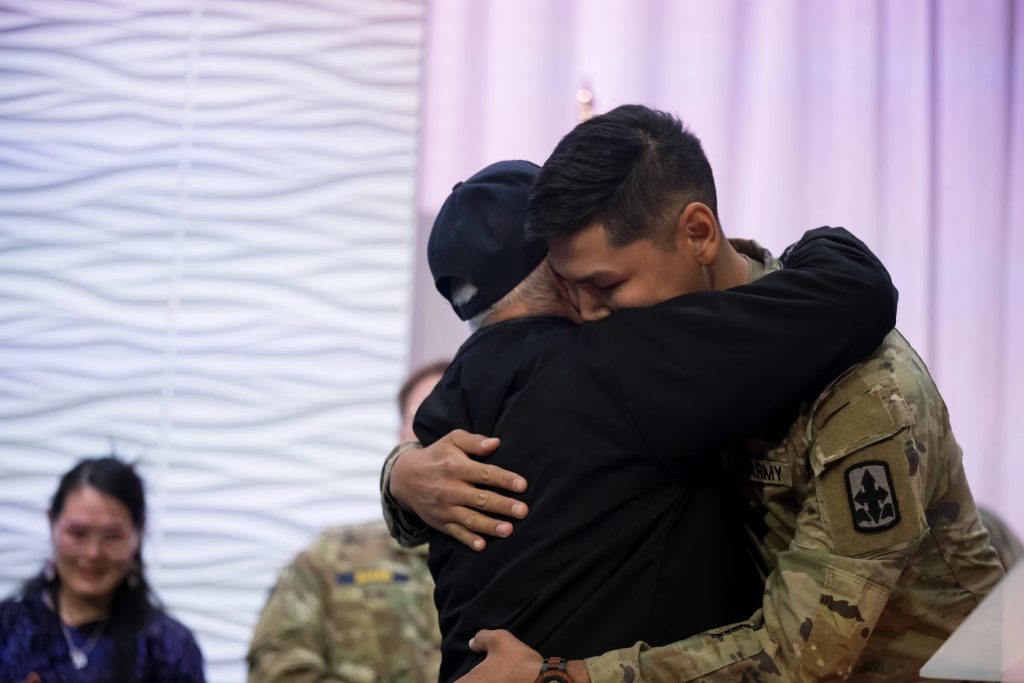
Just this past October, a year after Halong, Woods received the AFN Richard Frank Military Award for his service helping Western Alaska recover from devastating storms. At the ceremony, Woods’ wife and parents stood beside him on the AFN stage, along with leaders from the Northwest Arctic.
Woods was not the region’s only honoree. AFN also recognized Lee and Heaney Staheli for their small business award. The family has run Lee’s Sea Air in Kiana for more than 50 years.
Service runs in the Woods family. His father, Dempsey Woods Sr., served in the Guard for 22 years, and his grandfather, Wesley Woods Sr., told him stories about his own service in 1942. But joining was not his idea.
The December after he graduated from high school, Woods was Christmas shopping in Anchorage when his phone rang. It was his dad.
“My dad called me. Here’s a number. You better go in and enlist. Do something with your life. Said love you, son.”
Woods grew up in Kotzebue. His family ran sled dogs in the winter and fished in the summer, sharing their catch with Kotzebue and nearby villages.
At the AFN ceremony, Woods joked that a subsistence lifestyle and growing up mushing got him ready for the military.
“I was already ready for the yelling before I went to basic training, because I grew up dog mushing with my father.”
Woods now works full time repairing small arms for the Guard. He has two sons, Wesley and Dempsey III. He says it is up to them, but he hopes they will serve too.
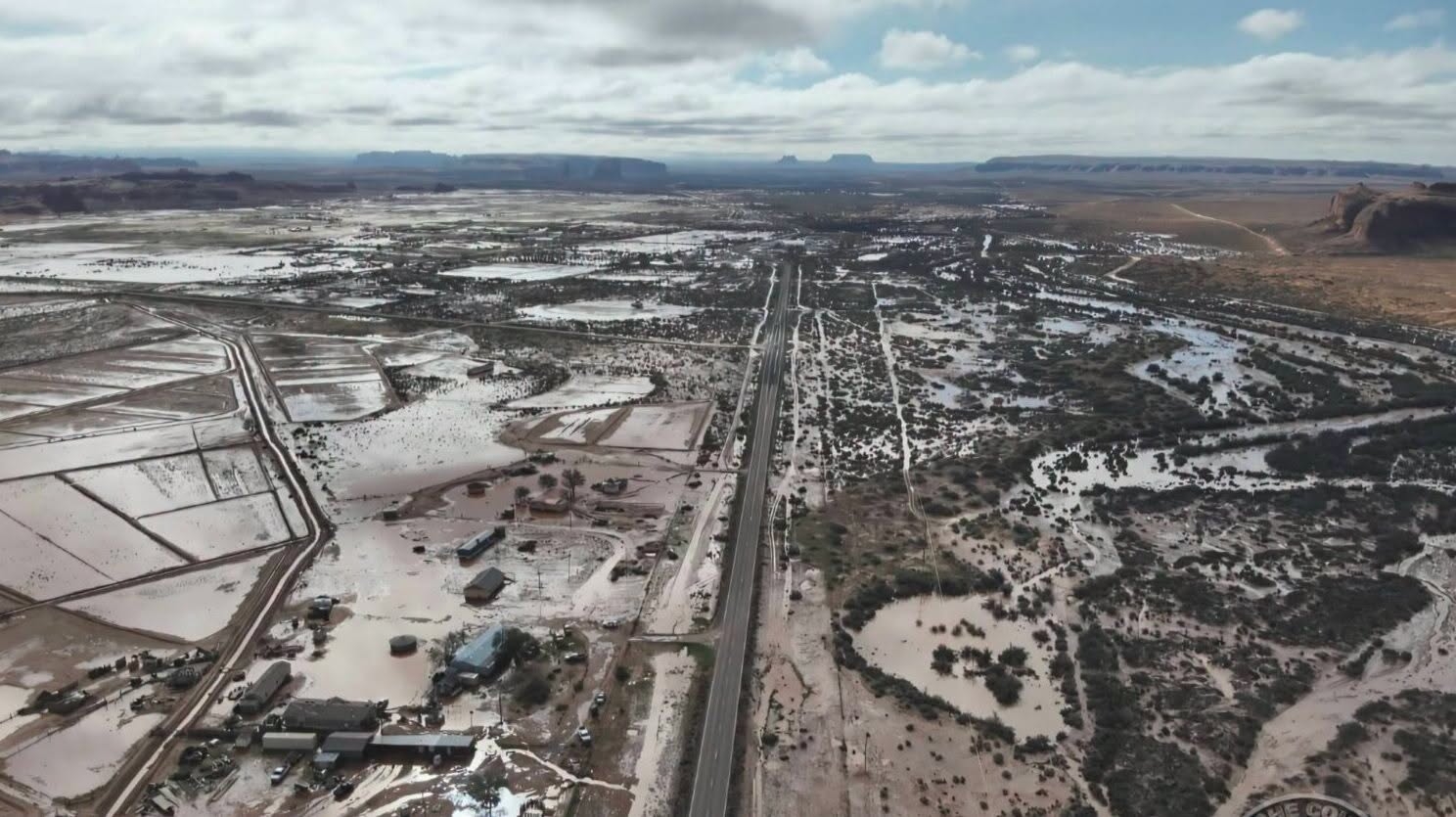
Flooding in Rock Point, Arizona before election day. (Courtesy Apache County Emergency Management and Preparedness / Facebook)
Severe weather washed out roads on Arizona tribal lands just days before the election, but tribal leaders launched an emergency response to help Native voters cast their ballots, as Mark Moran reports.
Those living on reservations already face geographical challenges when trying to cast a ballot in Arizona – which can include having no physical address, long distances to reach polling places, or a lack of transportation.
Adding to the difficulty, several inches of rain fell prior to the November 3 election on the Navajo and Hopi reservations, washing out roads and bridges, but Arizona Native Vote Executive Director Jaynie Parrish says workers were ready – and many of them stepped in to help well before Election Day.
“Early voting, educating people on tracking their ballot, educating people about their signatures, getting their families to do the same, and encouraging people to check their family’s status, trying to do as much upfront as we can, even giving folks rides to early voting locations.”
The unexpected severe weather meant Arizona Native Vote became an Election Day information and transportation hub, helping indigenous voters get to a polling place, which can often be 30 miles away.
While some severe weather throughout the month was forecast, the series of rogue thunderstorms just prior to Election Day was not. That meant get-out-the-vote groups also functioned as emergency response teams – helping people cross washed out bridges and navigate roads that were underwater to cast their ballots.
“Roads and bridges got washed out, and that happened with several communities on the Navajo Nation, and Hopi got major flooding. Many of the village’s crops were done.”
Arizona Secretary of State Adrian Fontes commended Arizona Native Vote for going above and beyond to help Indigenous communities cast their ballots via social media.
Get National Native News delivered to your inbox daily. Sign up for our daily newsletter today.
Download our NV1 Android or iOs App for breaking news alerts.
Check out today’s Native America Calling episode
Thursday, November 12, 2026 — How the treaties divided tribes and took their land

Leave a Reply