Podcast: Play in new window | Download | Embed
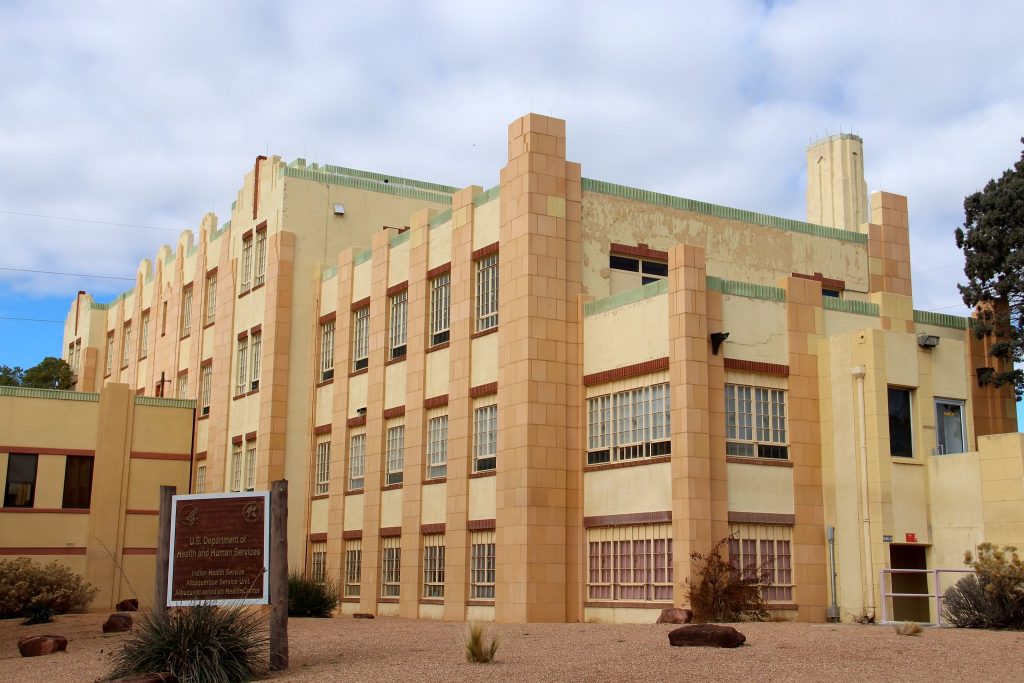
Photo: Albuquerque Indian Health Center. (cmh2315fl / Flickr)
A new congressional resolution is confronting a painful chapter in federal health care for Native women.
Lawmakers are formally condemning the non-consensual sterilization of thousands of Native women by the Indian Health Service in the 1970s. as Jeanette DeDios (Jicarilla Apache and Diné) reports.
Sterilization abuse against Native women is at the center of a congressional resolution introduced this week.
U.S. Reps. Sharice Davids (Ho-Chunk Nation), D-Kansas, and Brian Fitzpatrick, R-Pennsylvania, introduced a resolution officially condemning the non-consensual sterilization of Native American women by IHS during the 1970s.
According to Davids’ office, a federal investigation found that between 1973 and 1976, IHS performed sterilization procedures on more than 3,400 Native women in four service areas without fully complying with informed consent requirements.
The Government Accountability Office, then known as the General Accounting Office, found problems including inadequate consent forms, improper waiting periods, and procedures performed on women under the age of 21.
The resolution acknowledges the lasting harm caused by the practice and calls for greater awareness of the federal government’s role in the abuse.
Davids says the history is personal for Native communities and that acknowledging what happened is necessary to rebuild trust.
The resolution also calls for continued efforts to protect informed consent and reproductive autonomy for Native people receiving health care.
Davids is one of the first two Native American women elected to Congress.
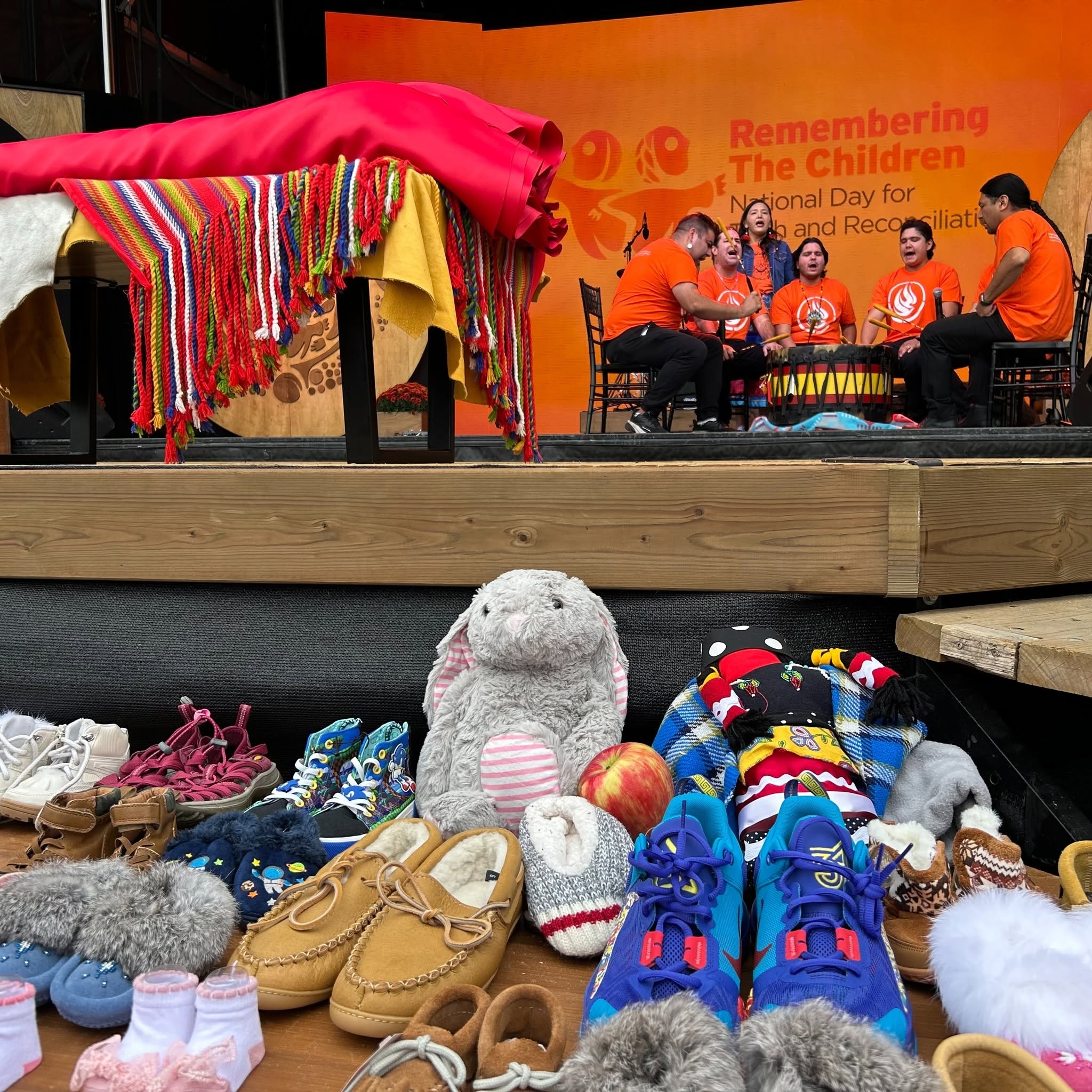
(Courtesy National Centre for Truth and Reconciliation / Facebook)
Across the country, Indigenous and non-Indigenous Canadians marked the National Day for Truth and Reconciliation this week.
As Dan Karpenchuk reports, September 30, also known as Orange Shirt Day, has become an important day of survivors of Canada’s notorious residential school system.
It is also known as Orange Shirt Day and was declared by the Canadian government following the discovery of more than 200 unmarked gaves at the site of a former residential school in British Columbia.
The National Centre for Truth and Reconciliation says more than 150,000 First Nations, Métis, and Inuit children attened the schools between the mid 1800’s to the late 1900’s. Many of them never returned to their homes and families.
The children were taken from their families and communites and sent the residential schools which were run by churches and financed by the government.
Canadian Prime Minister Mark Carney spoke in Edmonton about the sixth National Day for Truth and Reconcialiation. He said the day is about the children – those who survived and those who did not.
“And this is not a distant chapter in Canada’s past, but a truth that endures. And truth is the foundation of justice. We shouldn’t choose, as we used to here, in Fort Edmonton, which parts of our history to remember. We shouldn’t admire the bead work, and foreget the children that were forced into uniforms. We shoudn’t honour the drum and ignore the years that it was made to fall silent. And we should not hear the truth of residential schools and fail to act on it.”
Across Canada, survivors of the schools told their stories of abuse and loss of culture. In Ottawa, Governor General Louise Arbour said it is important for all Canadians to face their unsettling past.
She said truth does not change the past; it is a reminder that memory carries responsibility, to recognize the injustices to learn from them, and to ensure that they are never repeated.
Get National Native News delivered to your inbox daily. Sign up for our daily newsletter today.
Download our NV1 Android or iOs App for breaking news alerts.
Check out today’s Native America Calling episode
Friday, October 2, 2026 — Indigenous design as visual sovereignty

Leave a Reply