Podcast: Play in new window | Download | Embed
Anchorage, Alaska police have identified the person found deceased last week in the Spenard area of the city as 19-year-old Kelly Hunt from the Alaska Native community of Shaktoolik.
Police say Hunt was discovered outdoors on April 20 near the 3500 block of Lois Drive. Next of kin have been notified.
According to investigators, Hunt had arrived in Anchorage on January 6 and was staying at a residence on Oregon Drive. She left that home the following morning, January 7.
Four days later, on January 11, Hunt was reported missing to Anchorage Police. Detectives were assigned to investigate her disappearance.
More than three months later, officers responded to a call just before 9 a.m. on April 20, where Hunt’s body was found outside.

Members of the crowd at the 2026 ASAA 1A/2A Basketball State Championships in March hold signs with a photo of Kelly Hunt printed on them. (Photo: Waatsasdiyei Apayakuk Yates)
The Anchorage Police Department says the death remains under investigation. The State Medical Examiner will determine the official cause of death.
No arrests have been made at this time.
In a statement, Police Chief Sean Case acknowledged the impact of the loss.

Police are asking anyone with information related to the case to come forward as the investigation continues.
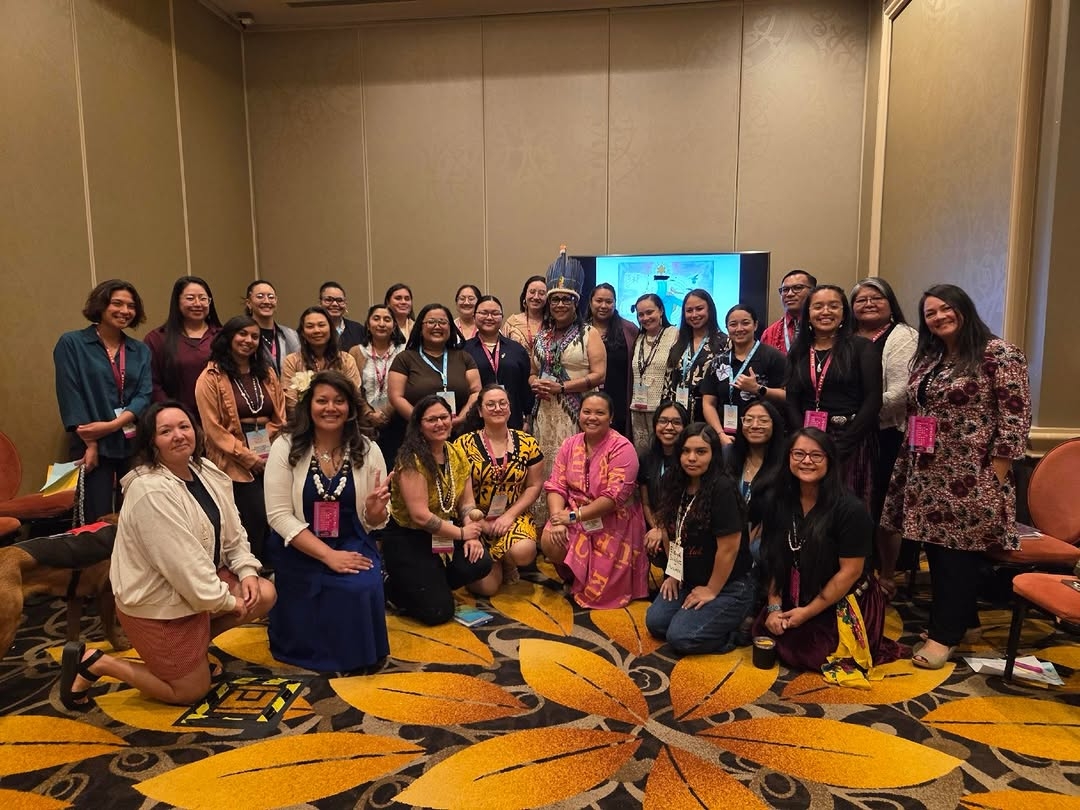
2026 U.S. Indigenous Data Sovereignty & Governance Summit. (Courtesy Indigenous Data Alliance / Instagram)
With the rise of AI, Indigenous people around the world are growing more concerned about data sovereignty.
The Mountain West News Bureau’s Hanna Merzbach has more on a recent conference on the topic in Tucson, Ariz.
One attendee was Burt Dillabaugh, a member of the Cheyenne River Sioux tribe, who works for an organization focused on Indigenous data sovereignty.
He says at the last conference in 2024, people were still trying to understand the concept. Now, as AI scrapes data from the internet including traditional knowledge, they are ready to take action.
“Since AI is here to stay, now is the time to be planning for it before it’s too late.”
The mission is to protect Indigenous data – everything from genetics to language – from being exploited.
“It’s some outside entity, whether it be the federal government or a university or some corporation, wanting … to get data from tribes.”
He says tribes can protect their data with policies that govern access. Or by creating systems to store it within Indigenous nations.
The Indigenous data sovereignty movement is gaining steam with the growth of AI. Indigenous members from across the world recently gathered in Tucson, Arizona to discuss how to keep control of their data.
That includes Burt Dillabaugh, who is with an organization trying to do just that. He says attendees at the recent event were more familiar with the movement.
“It was less like introducing this new concept to people and more like, We know what’s going on. Here’s some ideas, let’s get down to work, do something.”
Ideas include having tribal nations create policies to govern data access and prevent exploitation.
Dillabaugh says this often happens when the federal government or universities want to collect genetic data about tribes. He wants tribes to have more of a say about how that data is used.
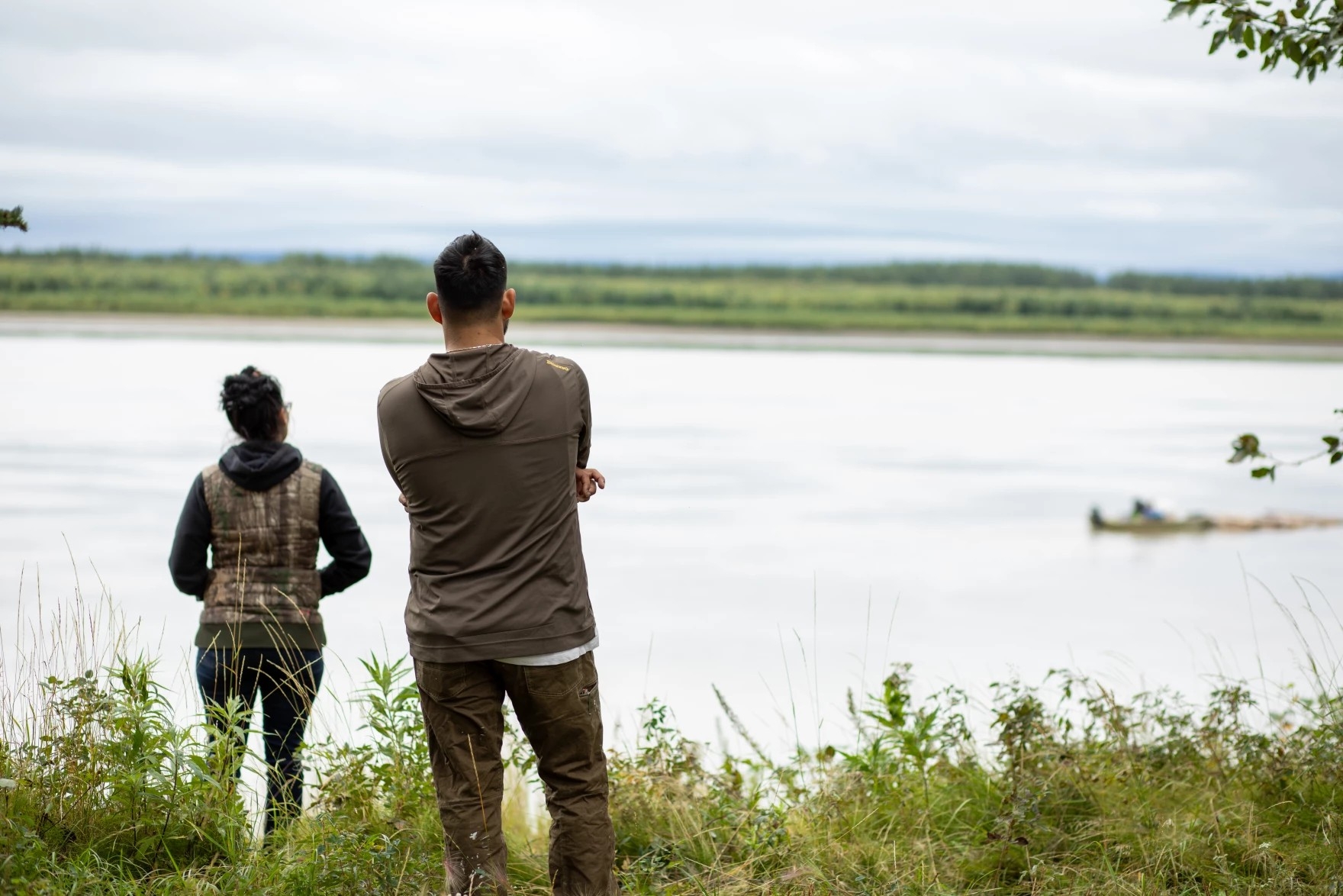
Two community members in Galena, Alaska stand on the shore of the Yukon River, which no longer feeds their families. (Courtesy Arctic Yukon Kuskokwim Tribal Consortium)
Three tribal organizations from the Yukon-Kuskokwim Delta have launched a new resource page for their ongoing salmon advocacy partnership.
The Association of Village Council Presidents, the Yukon River Inter-Tribal Fish Commission, and the Kuskokwim River Inter-Tribal Fish commission launched a partnership called the Arctic Yukon Kuskokwim Tribal Consortium (AYKTC) in 2002.
A press release from the organization says the goal is to protect the ways of life associated with salmon, by focusing on policy and advocacy rooted in science and Indigenous knowledge.
The tribal organizations have shown public support for a state Board of Fisheries proposal that would reduce salmon fishing time in Area M, and have advocated for bycatch caps and migratory corridor closures in the Bering Sea pollock trawl fishery.
Its new website salmonpeople.org serves as a center for testimonials and resources for salmon advocacy.
It features a collection of news stories and accounts documenting the impact of Western Alaska salmon crashes on the lives of the people who live in the region. It also aims to be a landing page where people can learn about current fisheries policies and engage in advocacy.
This story was provided by KYUK’s Samantha Watson
Get National Native News delivered to your inbox daily. Sign up for our daily newsletter today.
Download our NV1 Android or iOs App for breaking news alerts.
Check out today’s Native America Calling episode
Monday, April 27, 2026 – Wide disparities persist when encountering ancestors’ remains