Podcast: Play in new window | Download | Embed
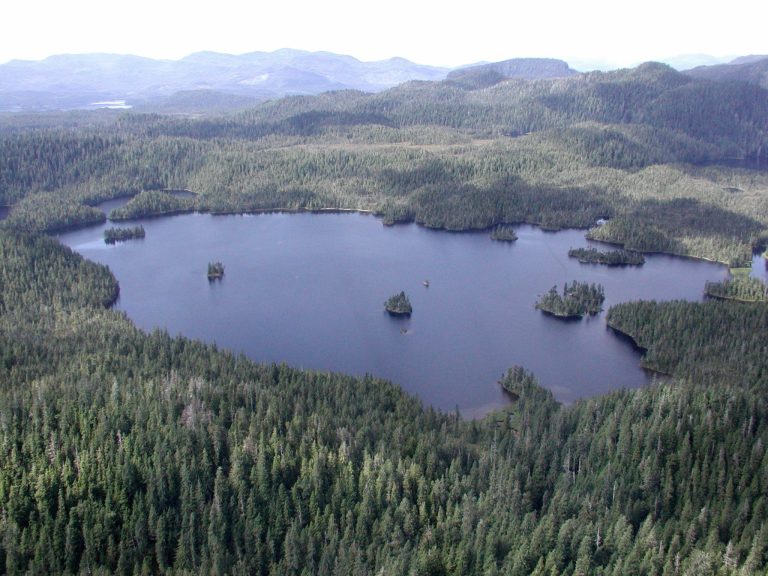
Photo: Invasive Green Crab. (Linda Shaw / NOAA Fisheries)
Invasive European green crabs have swelled in population across southern Southeast Alaska since they were first detected in the region four years ago.
In response, Ketchikan, Alaska’s local tribe recently petitioned the state to open a green crab sport fishery to help manage the invasive’s spread.
The request was denied, citing a lack of evidence that the invasive species has contributed to environmental changes.
KRBD’s Hunter Morrison reports.
The Ketchikan Indian Community submitted the emergency petition to the state’s Board of Fisheries in March, asking to reclassify European green crabs from a Class A to a Class B banned invasive species.
This change would allow anybody to transport dead European green crabs for harvest or consumption. Currently, the invasive can only be possessed or transported for scientific or educational purposes by those with a special Aquatic Resource Permit.
Emily Halsell is a fisheries and wildlife biologist with Ketchikan’s tribal government.
“This isn’t an issue that’s going anywhere, and it seems to be largely ignored throughout much of the state.”
The tribe has removed about 1,500 green crabs from Ketchikan beaches so far this year.
In its petition to the state, the tribe cites the species’ damaging impacts to the local ecosystem and economy.
The adaptive critter can burrow and destroy eelgrass beds, which are nurseries for native species like Dungeness crabs and juvenile salmon.
“So when these crabs come up and they tear up this critical marine habitat, there’s cascading population effects.”
The species was first detected in Alaska in 2022 on Annette Island, south of Ketchikan. They have since reached about 70 miles north. And the number of green crabs detected has increased.
Halsell says they can reproduce two or three times a year, and can lay up to 180,000 eggs each time.
Halsell believes a change in how the crab is classified in Alaska, and opening a sport fishery for them, could help better manage their spread.
Alaska Fish and Game Commissioner Doug Vincent-Lang, who denied the petition, says the state is determining how to best manage the invasive.
A letter from his office states a lack of evidence that the invasive has contributed to changes in eelgrass habitat or caused changes in fishery populations.
“I’m not opposed to the concept. I just think it needs to be fleshed out a little bit more, and I think it needs to be, you know, what does a fishery look like? What are the gear types that would be allowed, and what would happen with incidental harvests?”
Halsell believes green crab management efforts need to be addressed sooner than that.
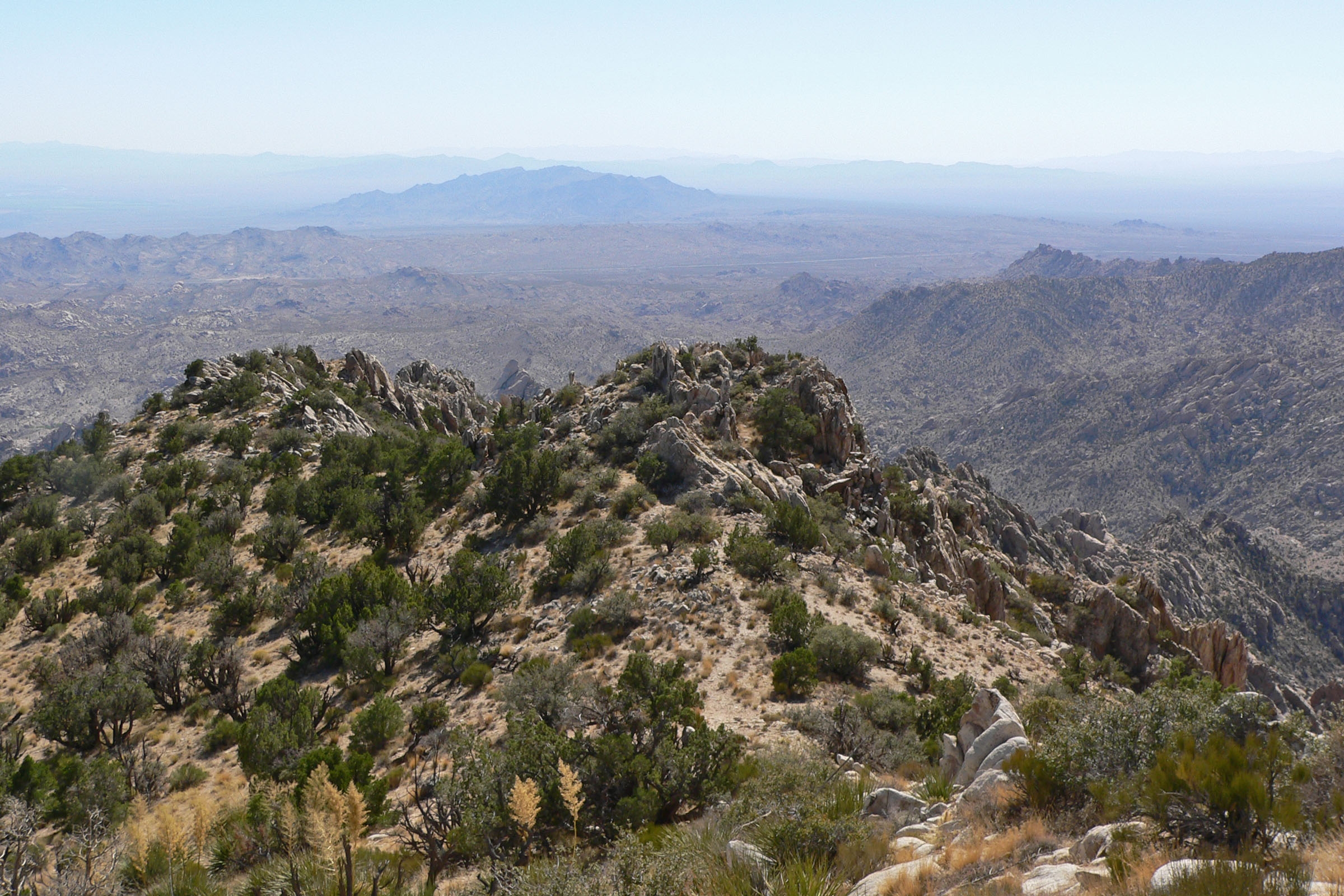
Summit area of Avi Kwa Ame in southern Nevada, which is adjacent to the proposed land sale. (Photo: Stan Shebs / Wikimedia)
Public lands are especially important to Tribal communities across Nevada, and a new report finds protecting those lands is also a top priority for a large majority of voters statewide.
Suzanne Potter has the story.
Protection of public lands is a top issue for a large majority of Nevada voters, according to a new report from the Center for Western Priorities.
Researchers aggregated multiple polls and found that most voters oppose the sale of public land and the rollback of environmental protections.
The center’s executive director, Aaron Weiss, points to the Colorado College Conservation in the West poll, which found that 82% of Nevada voters oppose the Trump administration’s funding cuts to agencies such as the U.S. Forest Service and the National Park Service.
“Western voters see public lands, waters, and wildlife as a motivating factor in how they vote and is worth everyone across the political spectrum keeping in mind as we head into this election season.”
Last year, proposals from U.S. Rep. Mark Amodei (R-NV) and U.S. Sen. Mike Lee (R-UT) to sell off public lands were abandoned after they drew a big backlash.
Environmental advocates say the Southern Nevada Public Lands Management Act of 1998 is a better model, because it established a process to identify land suitable for development while giving permanent protection to hundreds of thousands of acres of public land.
Weiss says the feds have now thrown their support behind the data center boom.
“We see them rushing to try to hand over public lands to build data centers over the objection of local and neighboring communities. The way that this process played out near Boulder City exemplifies that.”
Recently, Secretary of the Interior Doug Burgum slashed the boundaries of two national monuments in Utah.
Conservation groups are also concerned that the feds will target other national monuments next, including Gold Butte outside of Las Vegas.
Get National Native News delivered to your inbox daily. Sign up for our daily newsletter today.
Download our NV1 Android or iOs App for breaking news alerts.
Check out today’s Native America Calling episode
Monday, August 10, 2026 — August primary elections offer insights on Native candidates’ prospects