Podcast: Play in new window | Download | Embed
Across the United States, there are over 575 federally recognized American Indian tribes.
According to the U.S. Census, Native North American language use fell by 6% from 2013 to 2021, but among those who spoke a Native language, nearly half spoke Navajo.
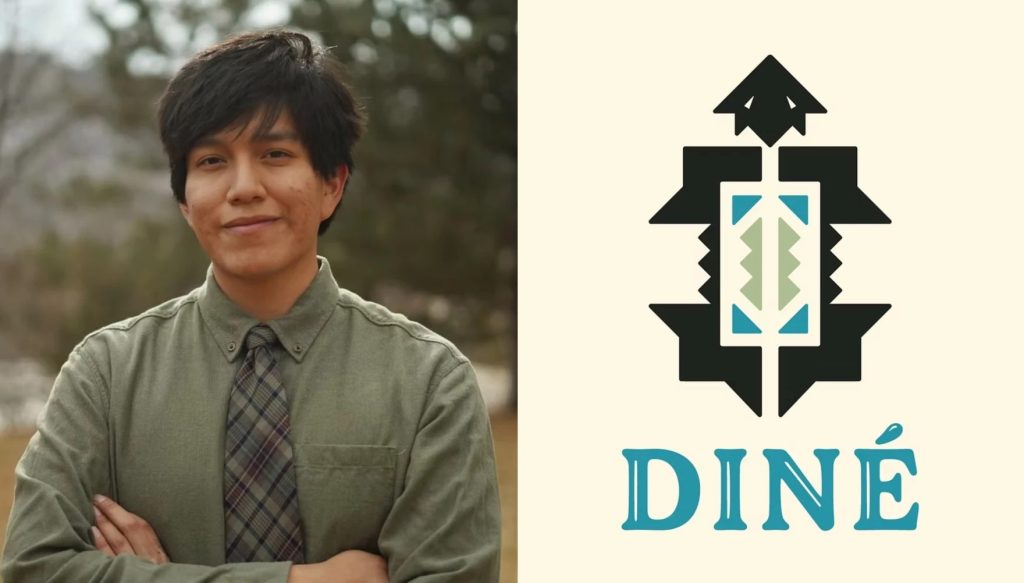
KUNM’s Jeanette DeDios (Jicarilla Apache and Diné) spoke to a Diné software developer who has created a mobile app to help preserve the Navajo language.
Albert Haskie (Diné) spent two years building the app Diné Bizaad with a group of Navajo employees.
“I’m making it for us, and that’s the primary goal.”
Haskie says he learned the Navajo language at a young age but in sixth grade he transferred to a non-Navajo language school and that it was a cultural shock for him.
“I kind of always missed it and always wanted to figure out how to reintroduce it into my life, but also try to reintroduce it to a lot of other people’s lives.”
Haskie says users can build their own curriculum and it includes fun tools like the word of the day. He says the app differs from other language apps because this one has richer content and a practicing Navajo speaker who consulted on every word and phrase.
Diné Bizaad was independently built without collaboration of the Navajo Nation.
“I’ve showed them multiple times, but they just couldn’t find anything to work with me. I was more than happy to try to figure out working with them. But the reality is, it would have probably not launched within the time I wanted it to be.”
A representative from the Department of Diné Education said Haskie talked with members within the department and that they are open to working with interested parties on preserving the Diné language.
Haskie says he is in talks with other tribes to create language apps for their members.
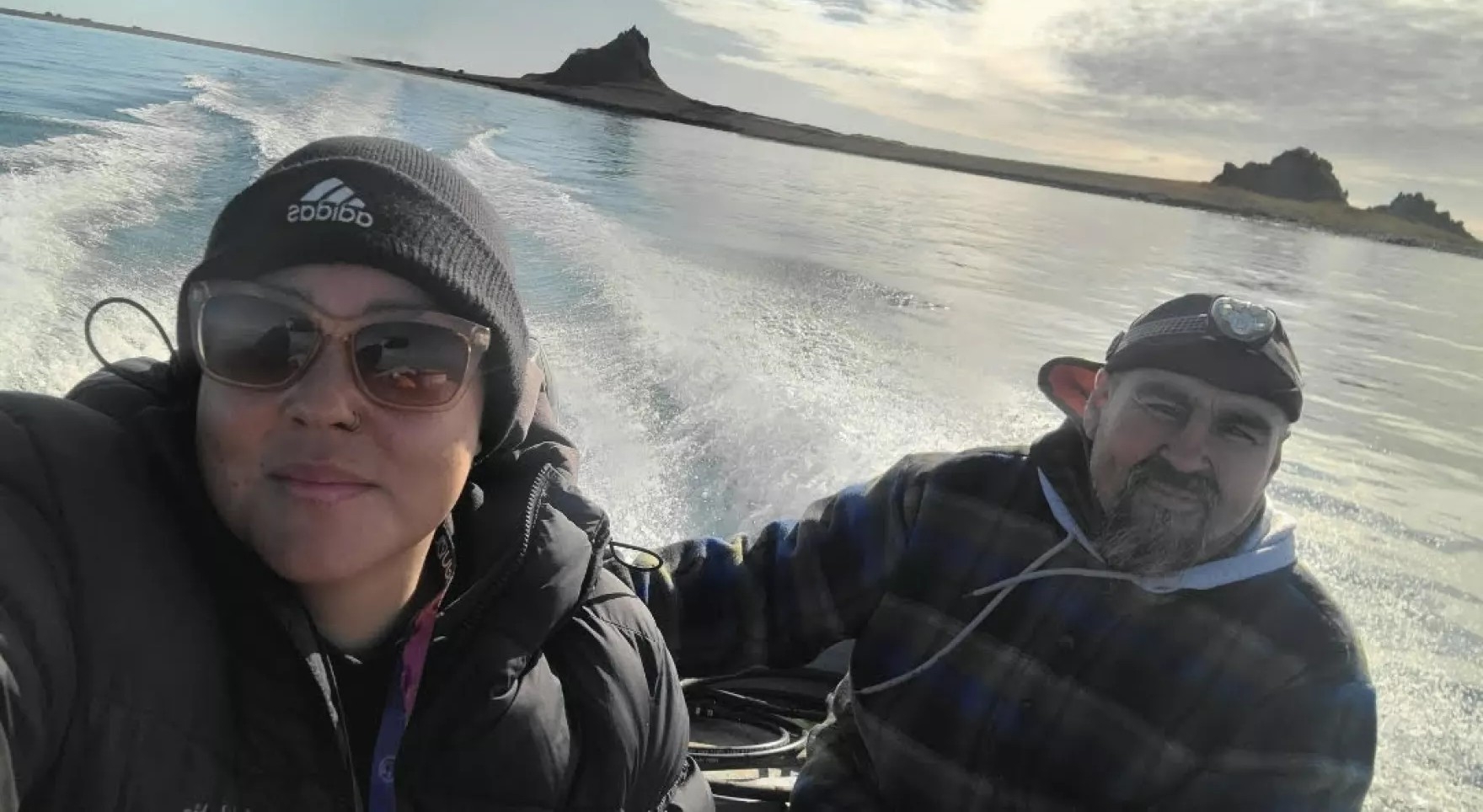
Whaling captain William ‘Wiyu’ Parks, right, and his wife Crystal on their way back from Punguk Island after a 3-month-long camping trip. (Courtesy Crystal Newhall)
Whaling is an essential part of subsistence hunting in Siberian Yupik culture.
High school student Tracy Tungiyan in the village of Gambell, Alaska on St. Lawrence Island wanted to understand more about it, so he interviewed a whaling captain from the community, William Parks, nicknamed Wiyu.
He spoke to Parks in the library of the Gambell school and asked him whether whaling is easy or difficult.
“There’s a degree of difficulty in it. You got to think of how enormous the whale is. You’re in basically a wash tub compared to the size of that whale. Depending on how the whale is moving, it could be pretty straightforward, catch up to it, strike. And there’s some days where the tails are really thrashing. You can’t get close to them.
“We use these harpoons that have a barrel on there. We call them Puskaan [Siberian Yupik word]. I don’t know what they’re called in English. I’ve always known them as Puskaan. It has a harpoon, buoy, line buoy, and it fires either a black powder bomb or a penthrite bomb into the whale.
Tungiyan asked Parks what hunting means to him and whether it was easier back then.
“That’s a good question. To me, hunting is mostly about survival, it’s about tradition, and it’s about feeding family, relatives as a community, which is the most important part of life, in my opinion. You need food to survive.
“I think mostly it’s like second nature to me. I don’t even think of how important this is to me anymore, more so that it’s the way I was brought up to live. It’s a part of me. It’s been a part of me since I was two, three years old.
“Back then it was- seasons were more predictable. Weather was more predictable. In a way, it was easier. Nowadays, with lack of ice, bigger storms, shorter opportunities to head out. Yeah, I think it’s more difficult now compared to back then. The windows of good weather are getting shorter.
“I know that everybody that goes hunting isn’t doing it for fun or sport. They’re doing it (as a) means of trying to harvest food. It’s a part of who we are as people, as the community. Hunting is part of our nature. It’s been for thousands of years.”
Tungiyan then asked him why catching a whale is so important for Gambell.
“I think it’s important mostly because of the size of the catch. There’s enough to feed everybody. Just the sheer size of the whale. It’s an opportunity to feed the community, to have a community gather. Whaling has been part of our culture since the first whale swam and man saw it. It was a means of survival.”
Tungiyan produced this story with former KNOM reporter Wali Rana and Alaska Public Media’s Rachel Cassandra.
Get National Native News delivered to your inbox daily. Sign up for our daily newsletter today.
Download our NV1 Android or iOs App for breaking news alerts.
Check out today’s Native America Calling episode
Monday, May 18, 2026 – Trump administration takes aim at American buffalo