Podcast: Play in new window | Download | Embed
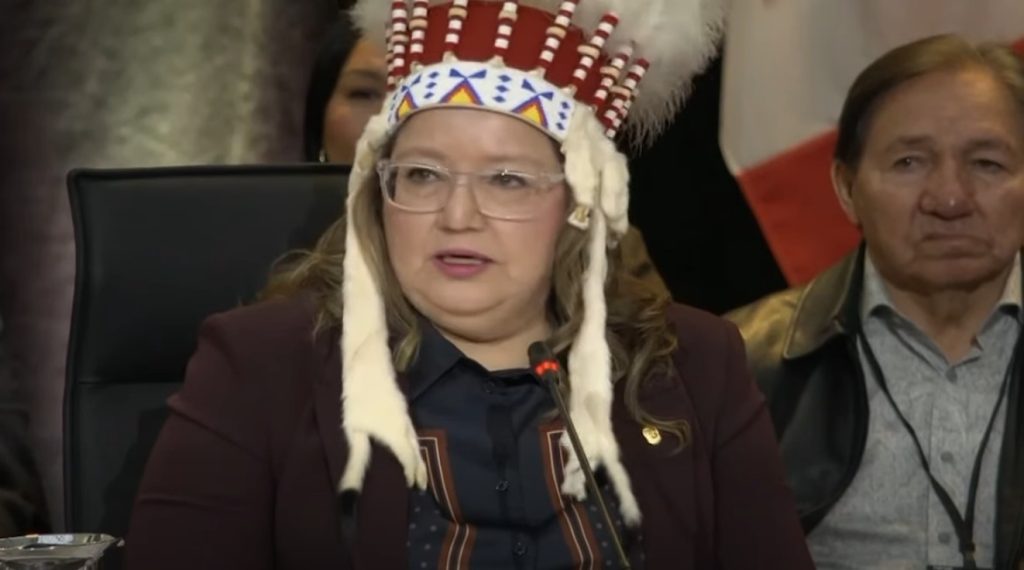
The national chief of Canada’s Assembly of First Nations is warning Prime Minister Mark Carney not to abuse his majority government to pass new legislation on major projects.
As Dan Karpenchuk reports, Cindy Woodhouse Nepinak says the proposed new law could affect the rights of the country’s First Nations.
Nepinak first issued the warning in September and again more recently as the issue is before the Canadian parliament.
The new law would speed up the construction of new so-called nation-building projects such as pipelines, energy projects, and critical mineral mines.
It is part of Carney’s plan to boost employment and find new markets for Canadian resources as he grapples with the frosty trade relationship with the United States.
After a handful of federal by-elections, Carney now has a majority government and Nepinak says do not forget about the Indigenous people.
“Well, the major projects office cannot be used as a side step for our rights. Every minister and prime minister in this country and the government itself cannot use the major projects as a crutch to try to get away from speaking and interacting with First Nations.”
Nepinak is also critical of the staff at the major projects office, adding that they do not know what they are doing when it comes to First Nations.
She says the prime minister must allow First Nations leaders to suggest amendments to the proposed legislation and his government should be open to them.
She says passing the so-called “Building Canada Strong Act” could affect First Nations rights.
Carney did meet with First Nations chiefs in October as well as with the country’s provincial premiers, but many first nations leaders are still wary of the legislation.
(Courtesy Bad Press)
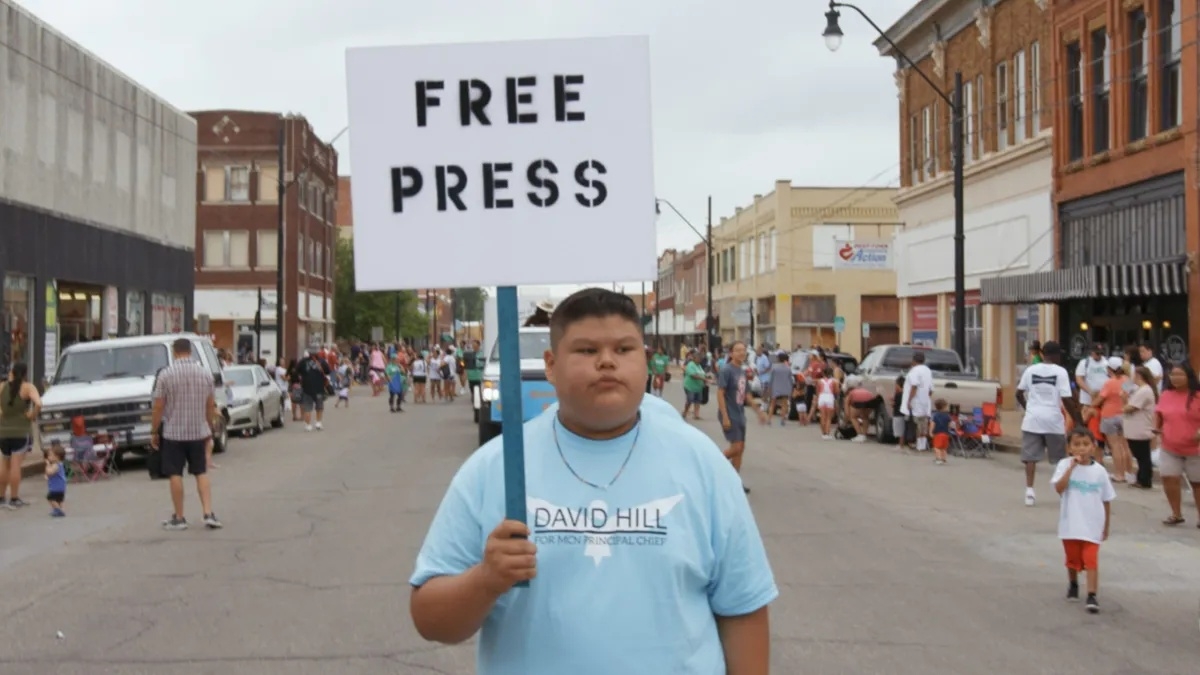
The acclaimed film, “Bad Press”, gets its public television debut this month, starting with Chicago’s PBS market.
The 2023 documentary looks at the recent battle over press freedom rights in Oklahoma’s Muscogee community.
Recently, “Bad Press” was taken on a statewide tour in Oregon, which included a stop in Madras, near the Warm Springs Reservation.
Angel Ellis, the film’s central character, was among the panelists. She is the director of Mvskoke Media and advocated for the return of press freedom rights after the tribal council voted to repeal them in 2019.
Ellis explained why they took their arguments to the tribal membership versus a Supreme Court challenge.
“This is self determination. We build it from the inside for ourselves, and it doesn’t always look like cookie cutter boilerplate policy that the federal government has tried over and over and over again to shove down our throats, and I feel like there was a lot more dignity in that. And there was a lot more opportunity to connect with people we hadn’t been connecting well before with, and so that gave us a lot momentum.”
Chris Mercier is a former vice-chairman of the Confederated Tribes of the Grand Ronde. He told the audience how he worked to get the tribal newspaper Smoke Signals financially independent, as well as securing allies on the council.
“Securing sustainable funding for the newspaper was the first step, and after that was done, that’s when I proposed the independent press ordinance, and it actually took turnover on a tribal council election, and Michael Langley one of the council members who was elected in 2017, and with him being on council, we had a majority council that supported creating the independent press ordinance, and so that’s more or less how that happened.”
Liz Smith, longtime broadcast journalist with Warm Springs’s radio station KWSO, talked about the importance of having an independent and supported tribal media on reservations, which cover essential events like tribal council meetings.
“If tribal media is not covering those things, nobody’s covering those things. And it matters because information is the foundation for how people live their lives and how they parent and how they make decisions every day. When we inform people, we’re essentially giving them tools and hopefully empowering them to advocate for themselves and to pass on that knowledge to future generations, and hopefully, go up against the apathy that people feel when they think they’re invisible.”
Rebecca Landsberry-Baker, executive director for the Indigenous Journalists Association and co-director of “Bad Press”, said she hopes this documentary continues to inspire tribes, Native organizations, and people to advocate for free press, much like the supporters of Mvskoke Media did in getting those rights restored a few years later.
“You never know what kind of challenges are coming, but I think you know for IJA some of the work that we have too, now that we have this roadmap for press freedom at the constitutional level, that is fantastic, and I hope that each tribe, you know, and their communities will develop whatever is right for them because there was really that citizen-led effort that led us to the constitutional amendment.”
Only six out of roughly 600 tribes, or 1%, have language in their constitutions that recognize press freedom.
PBS viewers can look up their local station to see when they may watch the special one-hour version of “Bad Press” or stream it at PBS.
Get National Native News delivered to your inbox daily. Sign up for our daily newsletter today.
Download our NV1 Android or iOs App for breaking news alerts.
Check out today’s Native America Calling episode

Leave a Reply