Podcast: Play in new window | Download | Embed
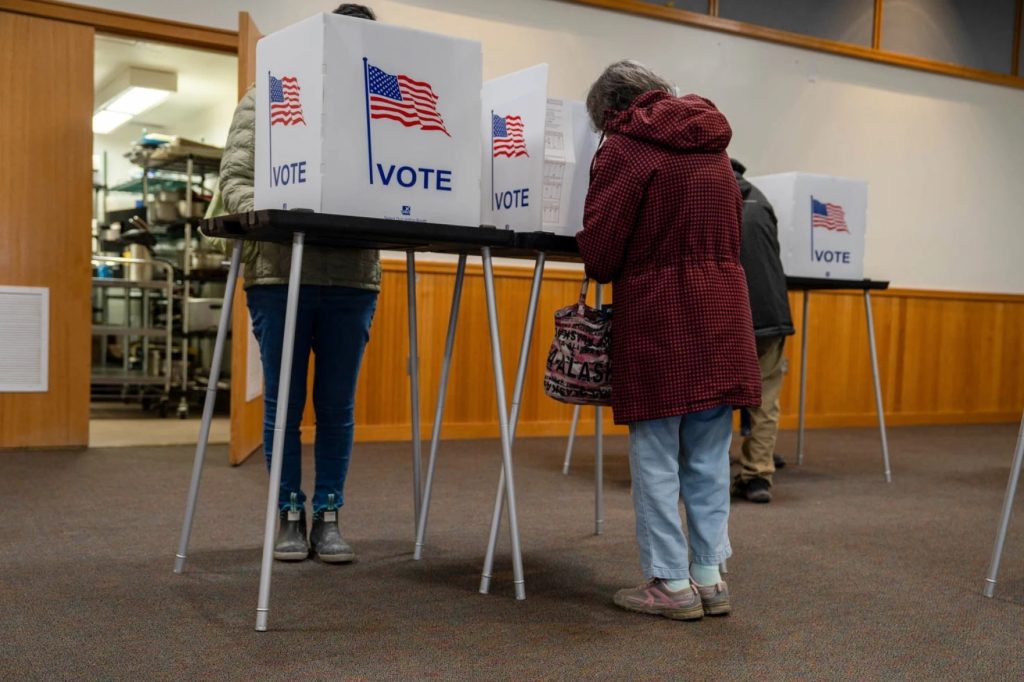
Voting rights advocates in Alaska are celebrating the number of Indigenous voters who went to the polls last Tuesday, as the state continues to count ballots.
The Alaska Desk’s Alena Naiden from our flagships station KNBA has more.
Michelle Sparck is the director of Get Out the Native Vote, a statewide voter education organization.
She says the organization partnered with tribes, Native corporations, local governments and community groups this year to inform voters, help them get to the polls, and provide language assistance in Iñupiaq, Tagalog, and several dialects of Yup’ik.
“We did an unprecedented push, and I think those numbers are going to make a difference.”
Ballots are still being counted and the state’s election results are unofficial, but Sparck says several tribal communities are already showing great turnouts in the midterm election. For example, South Naknek in the Bristol Bay region more than doubled its turnout compared to the general election, in 2024. Elim in the Bering Strait Region region had a turnout higher than 61%. And Klukwan in Southeast showed voter turnout higher than 71%.
“That’s something that warms my heart and also gives me so much hope that if one community can do it, so can so many others.”
Alaska Native voters make up around 20% of the state’s demographic, according to the Alaska Federation of Natives. But Sparck says turnout has been low for decades: Only about 30% Alaska Native voters showed up to the polls in 2024.
All Alaska polling sites opened on Election Day this week, according to the Alaska Division of Elections, but some rural absentee voting sites failed to open ahead of the midterms – an issue common in Alaska villages.
A big part of mobilizing voters this year happened during the annual Alaska Federation of Natives convention.
Sparck says more than 2,500 people cast their ballots early at Anchorage City Hall across the street from the convention.
AFN attendees also could file for a new passport or ID, necessary to vote.
“It kind of went viral. … I was like, these lines are bonkers, and everybody and their uncle are getting their passports, everybody is getting their children’s passports.”
Sparck says there is a lot left to do to address structural issues with voting in rural Alaska, where polling sites often open late or do not open at all, and ballots get rejected at a higher rate.
She says the organization has several ideas for improvements and continuing to engage residents to make access to voting more consistent is a major step.
This year’s election results will be certified later this month.
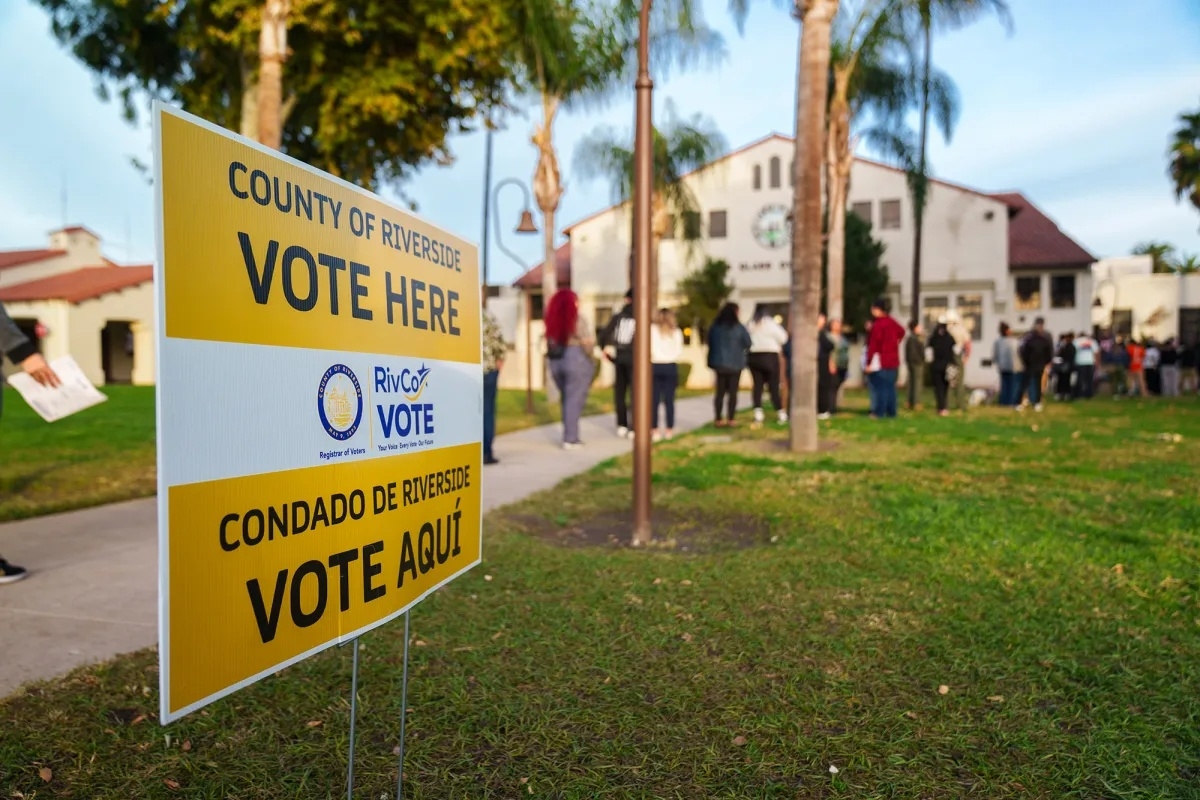
A voting sign in front of a line of voters outside the Bob Glass Gym in Perris on November 5, 2024. (Photo: Jules Hotz / courtesy CalMatters)
California has yet to establish a committee designed to improve voting access for Native Americans, six years after the measure became law, according to reporting by CalMatters and ICT.
The Native American Voting Accessibility Advisory Committee was approved in 2020 to address barriers including distant polling locations, unreliable mail service, and limited voter outreach.
The California Secretary of State’s office confirmed the committee has never been formed.
Calvin Hedrick, policy director for the California Native Vote Project, says the delay is frustrating, especially as Native voters continue facing obstacles.
The organization reported voting problems during Tuesday’s election, including a tribal citizen initially turned away from a polling location.
The Secretary of State’s office says it plans to begin recruiting committee members following the November election.
Advocates say the committee could help strengthen voting access and rebuild trust with tribal communities.
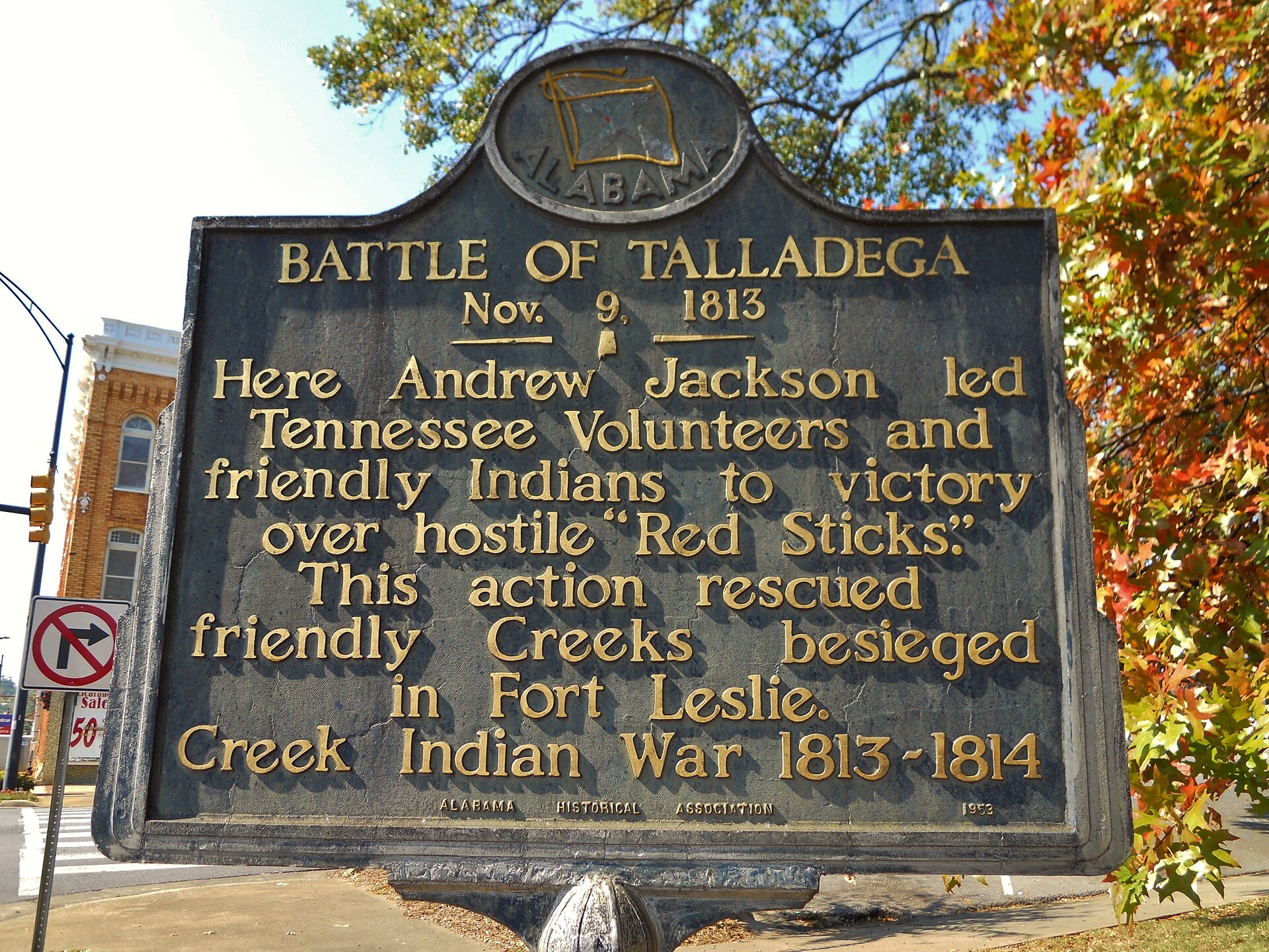
Alabama Historical Association historic marker commemorating the Battle of Talladega. (Photo: Rivers Langley / Wikimedia)
And on This Day, November 9, 1813, the Battle of Talladega took place in present-day Alabama during the Creek War.
American troops led by Andrew Jackson attacked Red Stick Creek warriors who had surrounded a settlement of Creek people allied with the United States.
The battle left approximately 300 Red Stick warriors dead and marked a major defeat for the Native resistance movement.
Get National Native News delivered to your inbox daily. Sign up for our daily newsletter today.
Download our NV1 Android or iOs App for breaking news alerts.
Check out today’s Native America Calling episode
Monday, November 9, 2026 — Tribes play lead role in fish recovery

Leave a Reply