
Podcast: Play in new window | Download | Embed
Photo: Bill Hill, an independent candidate for Alaska’s at-large U.S. House seat, stops to pose for a photo at a fundraiser on August 19, 2026. (Rhonda McBride / KNBA)
Two Alaska Natives are among the leading candidates for Congress.
Former U.S. Rep. Mary Peltola (Yup’ik) leads the U.S. Senate race, while Bill Hill (Athabascan) is emerging as a contender for the state’s at-least U.S. House seat, as Rhonda McBride from our flagship station KNBA reports.
Despite the commanding 12-point leader in the primary by U.S. Rep. Nick Begich, R-Alaska, Bill Hill, who ran as an independent, is looking to Democrats for support.
And many of them packed a fundraiser just after the primary to put on Bill Hill buttons.
He is also heartened by Peltola’s strong showing in the primary with almost 50% of the vote.
“We energize the same pool of voters.”
Hill, like Peltola, is from rural Alaska. He grew up in Bristol Bay, became a school superintendent, and, during the summer, worked as a commercial fisherman.
Hill says he and Mary Peltola share more than just their Native heritage.
“We both are heavily invested with fish as a core part of our identity. We’re heavily invested in family as a core part of our identity.”
Democratic political consultant Jim Lottsfeldt says Hill might have fared better running as a Democrat and there is no guarantee Peltola’s popularity will translate into votes for Hill.
“I don’t really put a lot into the coat tails argument, which is, ‘I know Mary, I like Mary, and now I’m going to vote for every Native.’ I don’t think we work that way.”
Lottsfeldt also says Alaska Native voters connect to the Begich name.
“I mean the Begiches are sort of the Kennedys of Alaska.”
Begich is named after his grandfather, who also served in the U.S. House. His uncle Mark Begich served one term in the Senate and another uncle, Tom Begich, ran for governor in the primary.
But Hill started out this race as a political unknown.
“We started this in January with no name recognition. The fact that we earned 40,000-plus votes from Alaskan voters, really shows that our message is carrying well and we feel very confident that we can carry this across the finish line.”
Hill has since picked up an endorsement from the Alaska Democratic Party, signs this race could be a lot closer than the primary results suggested.
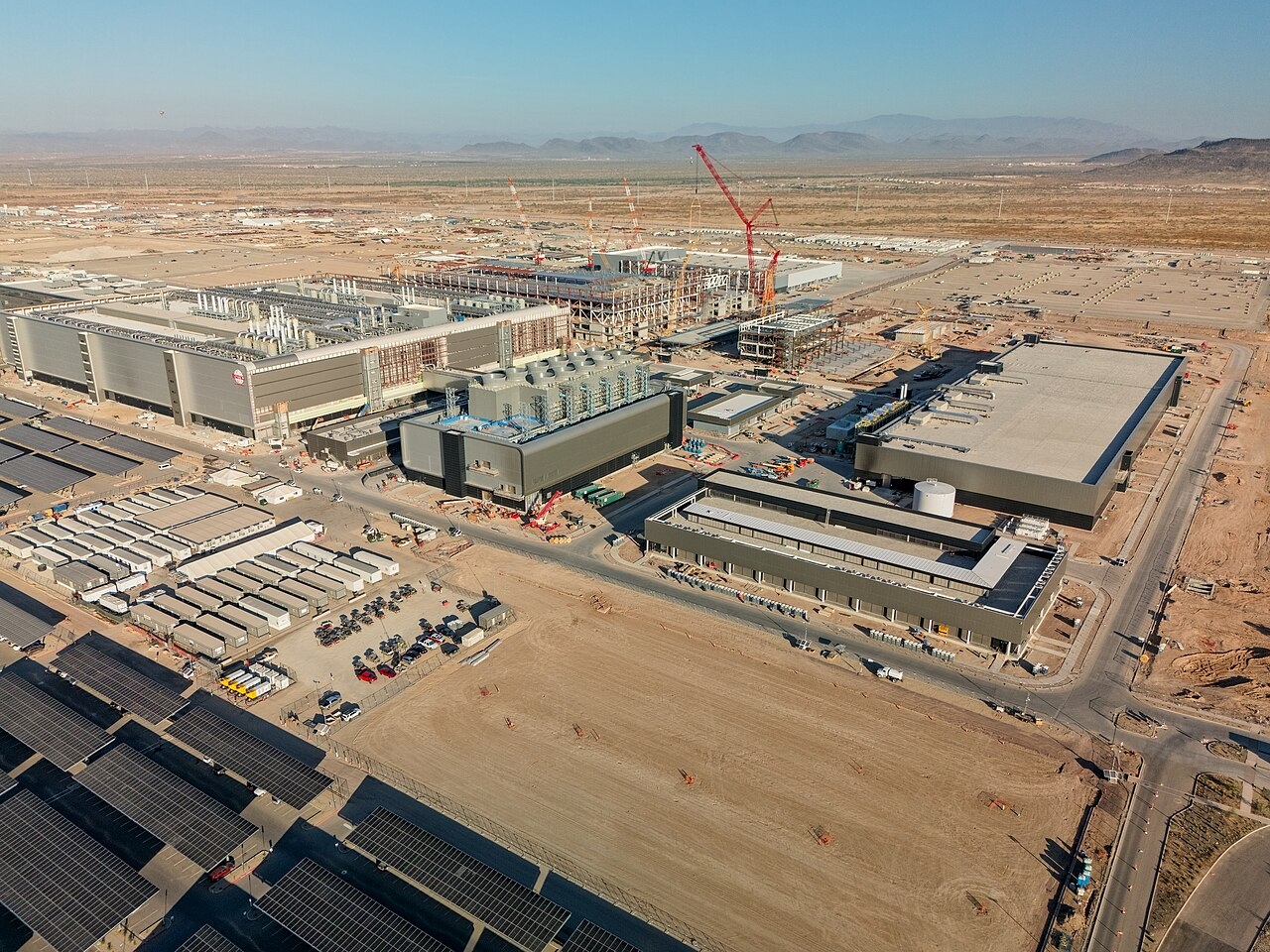
TSMC Fab 21 data center under construction in Phoenix, Ariz., November 2023. (Photo: Hunter Trick / Wikimedia)
Municipalities across Arizona are raising concern over the rapid rise of data centers, especially when it comes to water consumption in the drought-stricken Southwest.
As KJZZ’s Gabriel Pietrorazio reports, a tribe bordering the Colorado River has enacted a moratorium on its reservation.
The Hualapai Tribal Council in northern Arizona recently passed a resolution opposing “the irresponsible development of hyperscale data centers.”
Such facilities powering AI, they say, pose “a direct and severe threat to the tribe’s sacred water, lands, environment and way of life.”
“Moving forward, we will always protect our air, we will always protect our land, and we will always protect our water.”
That is Hualapai Chairman Duane Clarke.
“Hualapai Tribe will stand strong with any community, and we will oppose these data centers.”
Some neighbors in nearby Bullhead City, Ariz., which also sits along the Colorado River, are now concerned about rezoning proposals that could lead to data center development.
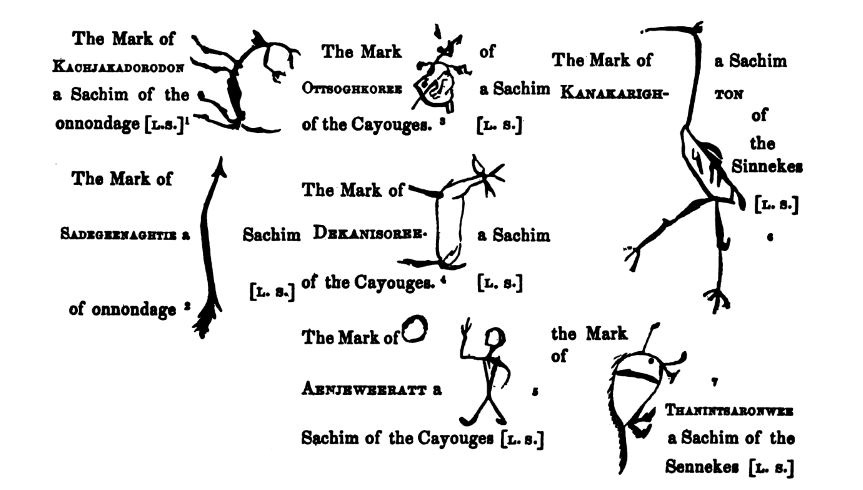
Deed in Trust from Three of the Five Nations of Indians to the King, 1726. (Courtesy Tribal Treaties Database / Oklahoma State University)
On this day in 1726, representatives of the Cayuga, Onondaga, and Seneca Nations entered into an agreement with British officials in Albany, N.Y.
The agreement amended an earlier 1701 treaty involving Native lands and became one of the earliest Native treaties preserved in the National Archives.
Get National Native News delivered to your inbox daily. Sign up for our daily newsletter today.
Download our NV1 Android or iOs App for breaking news alerts.
Check out today’s Native America Calling episode
Monday, September 14, 2026 — Shifting preservation policies pose risks to Native history




Leave a Reply