Podcast: Play in new window | Download | Embed
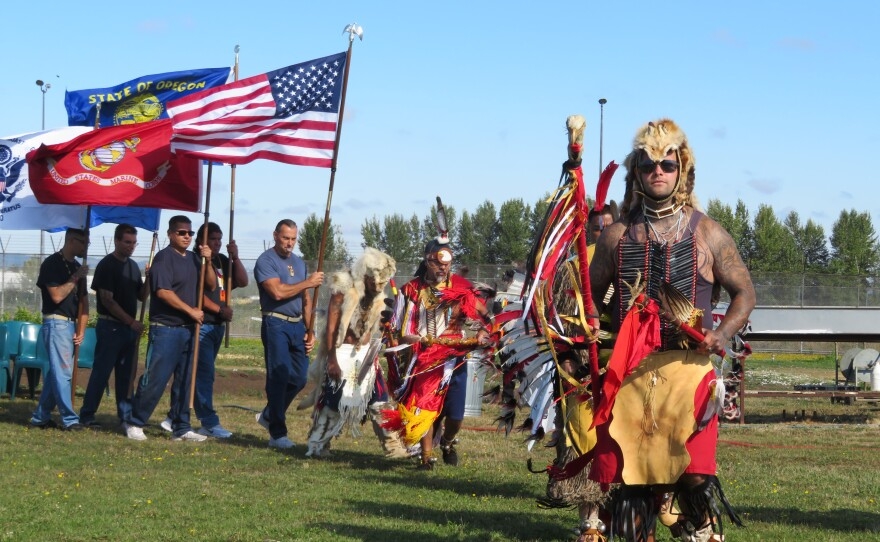
Photo: Lifer inmates at Salem’s Oregon State Correctional Institution connect with culture, family, and healing during the annual Many Nations Pow Wow. (Brian Bull)
The power of a Pow Wow has been described as a collective heartbeat that draws people together.
Celebrants often say they feel unity and freedom as they dance in a circle.
Those elements are especially vital for those serving time at the Oregon State Correctional Institution in Salem, Oreg., but as Brian Bull of Underscore Native News and KLCC reports, for one day each year, inmates get to move to the rhythm of a rawhide drum with friends and loved ones.
A soft breeze rustles the frills on Anthony Salazar (Apache)’s regalia. He describes its colors, as his wife, Stephanie, helps with final adjustments.
“Colors are white, black, red, and yellow, which is the colors of the four directions. The green represents Mother Earth. All the regalia is connected to nature somehow.”
Drummers gather in a circle, while other dancers fix their bangles and beadwork. A man with a microphone greets the crowd of visitors with a smile.
“We’re so glad you guys were able to make it. We are about to prepare to do our Grand Entry.”
At first, you’d think this was just any other Pow Wow getting underway. However …
“I’m in here for two counts of murder, and I got a life sentence. I’ve been in 24 years.”
Salazar, like everyone else preparing to dance or drum, is a “lifer” at this medium-security, all-men’s prison.
“This is actually the first “Pow Wow where I’ve actually dressed up in regalia, and I’m going to dance.”
He is thrilled to be part of the Pow Wow – and that his wife Stephanie is here.
“This is my first one that I’ve been able to come to, very fortunate to be here. Means a lot.”
As dancers gather for the grand entry, a red-tailed hawk soars above. It is a simple, but powerful symbol of freedom in a place where guard towers and checkpoints remind everyone this is a prison.
Emcee Shawn Jeffers-Monro says it is great having his wife and other loved ones here once a year.
“My mother was dying of cancer three years ago, and I was able to have this ceremony with her and these last rites, and be able to say goodbye to her. So this is that one time of year that we get to be together as a community, as a family, and kinda be free in a way.”
One of the guests for this Pow Wow is Aliza Kaplan, a professor at Lewis and Clark Law School in Portland.
She says she and some of her students have been invited to this event about five times.
“Because we aim to really get to know our clients and what matters to them, and see them as more than people who have committed crimes.”
No one here glosses over the fact that they are behind bars for serious crimes, and may not ever step foot beyond the prison gates, but many see the Pow Wow as a way to hold on to tradition and find worth, says inmate Nestor Diaz-Miller (Cow Creek Band of Umpqua).
“I’ve dealt with suicidal thoughts and actions in my past, and being able to focus on this inipi, this sweat lodge and that drum, literally saved my life. It’s given me something to believe in, something to hope in. It’s such a special feeling, I can’t describe it other than special.”
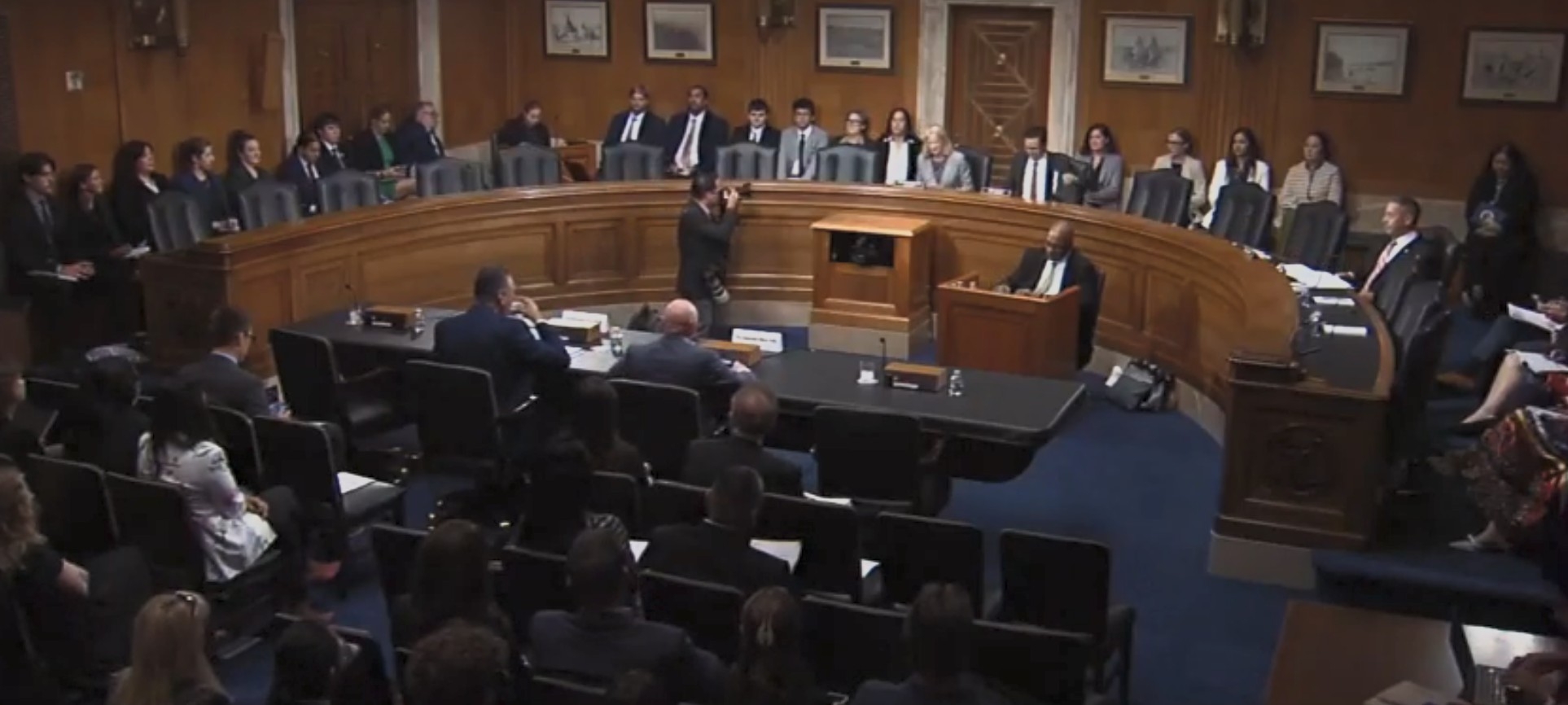 The Senate Committee on Indian Affairs is advancing several bills aimed at settling tribal water rights and funding water infrastructure across the West.
During a legislative hearing last week, senators considered measures affecting the Yavapai-Apache Nation in Arizona and the Agua Caliente Band of Cahuilla Indians and the Pechanga Band of Luiseño Indians in California, along with legislation to strengthen the federal Indian Water Rights Settlement Completion Fund.
Supporters say the bills would help fulfill the federal government’s trust responsibilities while providing greater certainty for Tribal Nations and neighboring communities.
The measures now await further action by the committee and Congress.
Get National Native News delivered to your inbox daily. Sign up for our daily newsletter today.
Download our NV1 Android or iOs App for breaking news alerts.
Check out today’s Native America Calling episode
Thursday, August 6, 2026 — Testing the limits of religious freedom