Podcast: Play in new window | Download | Embed
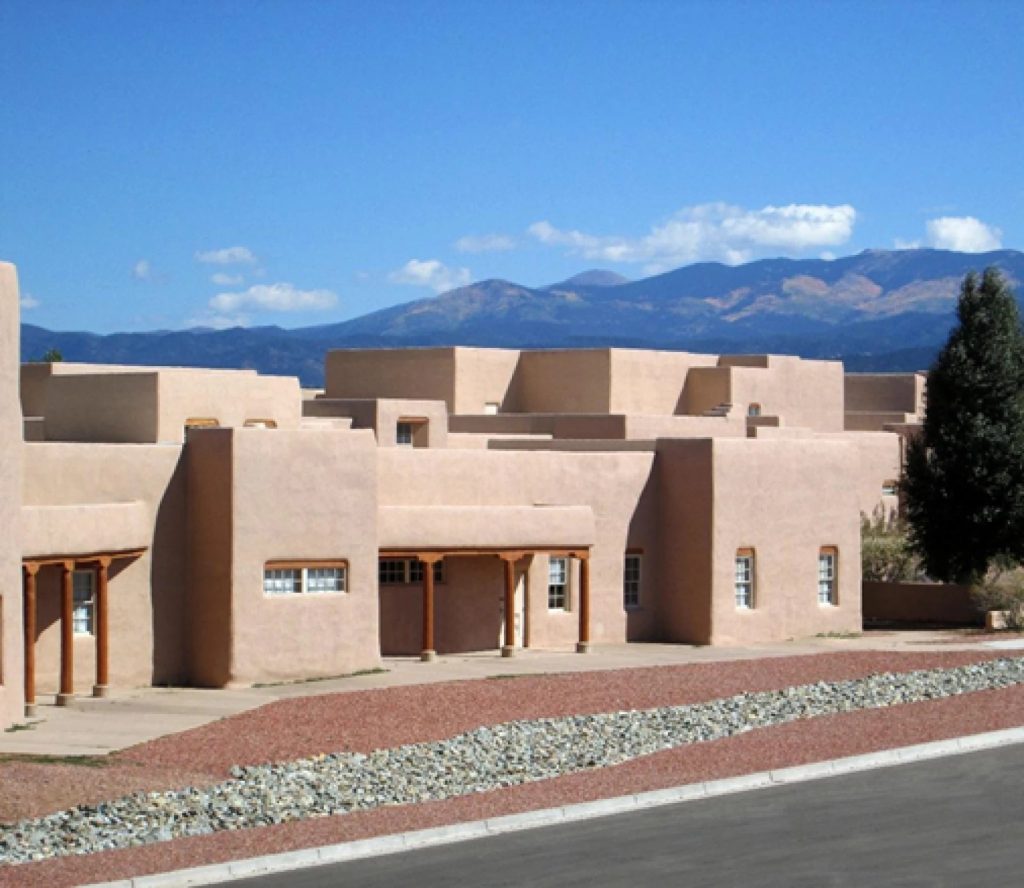
Photo: Santa Fe Indian School campus. (Courtesy Administration for Native Americans for Children & Families)
U.S. Rep Melanie Stansbury (D-NM) introduced two bills this week to modernize the Bureau of Indian Education (BIE) and potentially bring higher teacher salaries and more federal funding for tribal schools.
KUNM’s Jeanette DeDios (Jicarilla Apache and Diné) has more.
The Indigenous Students Excel through Parity Act and its supporting Act II bill would create a study under the Department of Interior (DOI) to recommend reforms in order to provide funds that could increase teacher pay, and provide more educational opportunities.
An identical bill is sponsored in the Senate by U.S. Sens. Martin Heinrich (D-NM) and Cynthia Lummis (R-WY).
DOI administers BIE, which funds 183 schools across the country.
New Mexico has one of the highest concentrations of BIE-funded schools with 44.
Despite this, Rep. Stansbury says BIE schools have traditionally been underfunded, but they are competing with state-funded schools to recruit teachers.
“So what this bill would do is study the current formula funds that are allocated per student to these tribally controlled schools to evaluate one how to increase funding per student, how to address increasing teacher and staff pay, and how to make sure that those schools who have extra costs and needs can have their needs met.”
Stansbury says the goal of the bills is to bring teacher salaries in tribal schools up to the same level as those in state-funded schools.
“If you’re a teacher, I mean, think about it, and you really want to work in a tribal community, whether you are a Native person yourself or not. And you’re looking at the difference of getting paid, let’s say, $50,000 by the federal government versus going and teaching in APS (Albuquerque Public Schools) making $60,000, you know, you’re going to have to make that economic decision for yourself and your family, and so we don’t want teachers to have to make that decision. We want teachers to be teaching in the schools they want to.”
The proposed bill does not have a cost included with it, but if the study recommendations are enacted, BIE would have to boost funding for tribal schools.
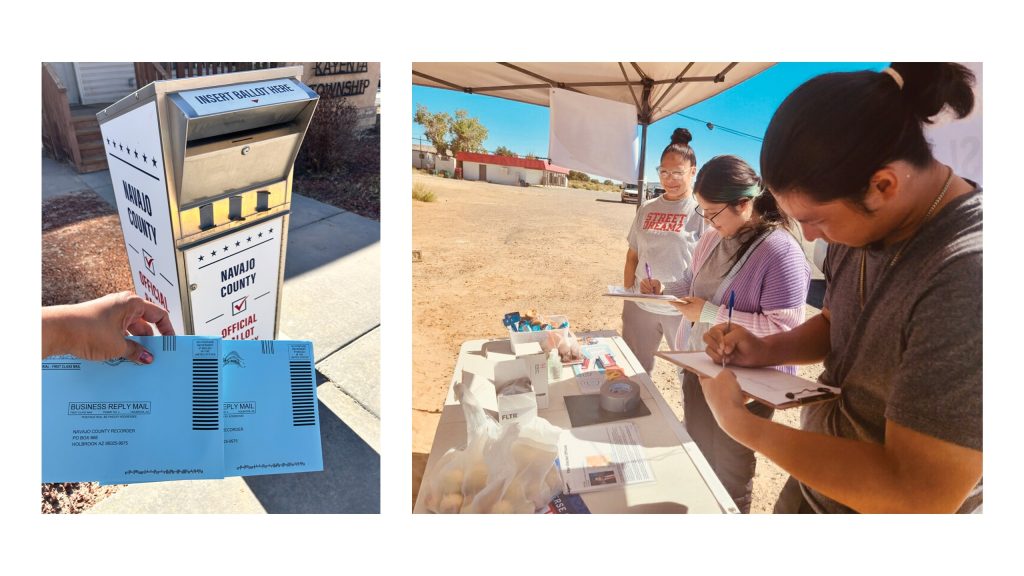
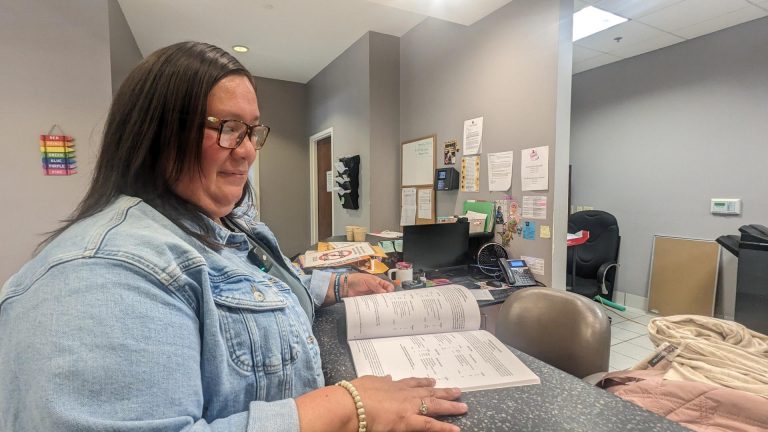
Jaynie Parrish and her father drop off ballots at the one county ballot box in their town of Kayenta, Ariz., left, and members of Arizona Native Vote’s Hopi team, the Firekeepers, register younger community members in Bacavi, Ariz. (Photos: Jason Biggs / courtesy Jaynie Parrish)
The U.S. Supreme Court recently ruled that mail-in ballots that arrive after Election Day can still be counted.
While the move is a win for Arizona’s Indigenous voters, it highlights the challenges Native people still face in rural parts of the state, as Mark Moran reports.
Voting rights advocates say the debate highlights the challenges Native people face in trying to submit a ballot in person.
The sheer geography, vast distances between physical polling places, and lack of transportation all present obstacles for Indigenous voters.
In many places, the nearest polling place may be miles away, but Arizona Native Vote’s Jaynie Parrish says many people on reservations also lack physical addresses, which creates its own set of problems.
“Even in some rural towns, they have physical addressing, but not on a lot of Tribal lands. We still predominantly use PO boxes. That means we have to go to a U.S. Post Office or another location to pick up mail, but our folks still vote by mail.”
The Trump administration has pushed back on the high court’s ruling, asking justices to allow the president’s executive order to be implemented.
The attempt to reject mail-in ballots received after Election Day is among a host of bold policy choices under the Trump administration.
Parrish also points to efforts to challenge voter citizenship, which she says hit especially hard on Native reservations.
“It’s just absurd. You get a look on people’s face when we have to explain this or when they hear about the news or what this means, and it’s another barrier. And it’s ridiculous to ask First Peoples, Indigenous Peoples of their citizenship.”
According to research from the Brennan Center, Indigenous voters were about 7% less likely to cast their ballot by mail in the last General Election, reflecting a wider lack of participation among Natives.
Get National Native News delivered to your inbox daily. Sign up for our daily newsletter today.
Download our NV1 Android or iOs App for breaking news alerts.
Check out today’s Native America Calling episode