Podcast: Play in new window | Download | Embed
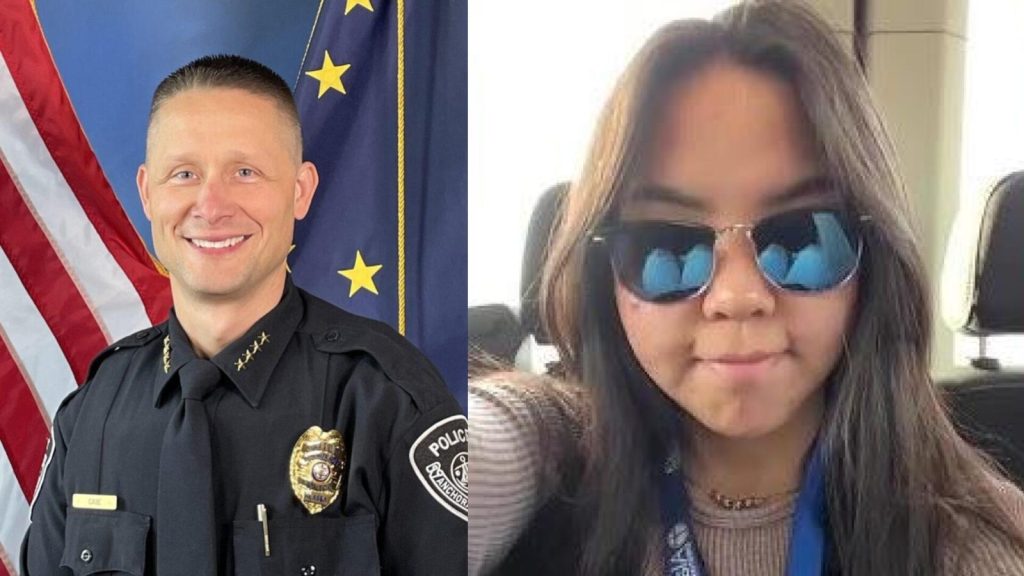
Questions are being raised about how the Anchorage Police Department responded to a missing Alaska Native college student from the Bering Sea community of Shaktoolik.
After almost four months, the remains of Kelly Hunt were found in a wooded area in the city, as KNBA’s Rhonda McBride reports.
Although the search for Kelly Hunt ended in a ravine where she was found last week, the quest for answers goes on.
The 19 year old’s remains were discovered not far from the home she had been staying in, where she stopped to visit on her way to attend college in Soldotna.
She was last seen on the morning of January 7. Her family reported her missing four days later.
Advocates for Missing and Murdered Indigenous People (MMIP) have questioned the police’s response.
“When a young Alaska Native woman is reporting missing, it is too late, and now we are looking at human remains.”
Michael Livingston (Unangax̂), a retired Anchorage police officer and MMIP advocate, says Hunt’s case reflects a pattern he has seen too often.
He says several red flags in Hunt’s disappearance should have prompted a more aggressive investigation. He says she had left her purse behind, with money inside, as well as clothing, signs she did not plan to be gone for very long.
“Was there anymore, that anybody could have done, to try to have located her, early on in the game, to see whether or not any video surveillance cameras or people in the neighborhood might have seen anything suspicious?”
Livingston says he would like to see an investigation into the police’s response.
Anchorage Police Chief Sean Case says he would be happy to discuss the department’s handling of the case with advocates, but for now, the ability of police to talk about the investigation is very limited.
“The problem is that can really cause challenges if it does become a criminal investigation later on.”
Case says one of difficulties police faced was the four-day gap between the time that Hunt went missing and when her disappearance was reported.
Case says he doesn’t blame anyone for the delay. The difficulties were understandable under the circumstances.
“But as soon as we found out that she was missing, we took the report, and detectives took over that case and treated that case as a critical or a high-risk case, that there was definitely concern over.”
Case says investigators continue to process evidence in the case as they wait for the Chief Medical Examiner to determine the exact cause of Kelly Hunt’s death. So far, no arrests have been made.
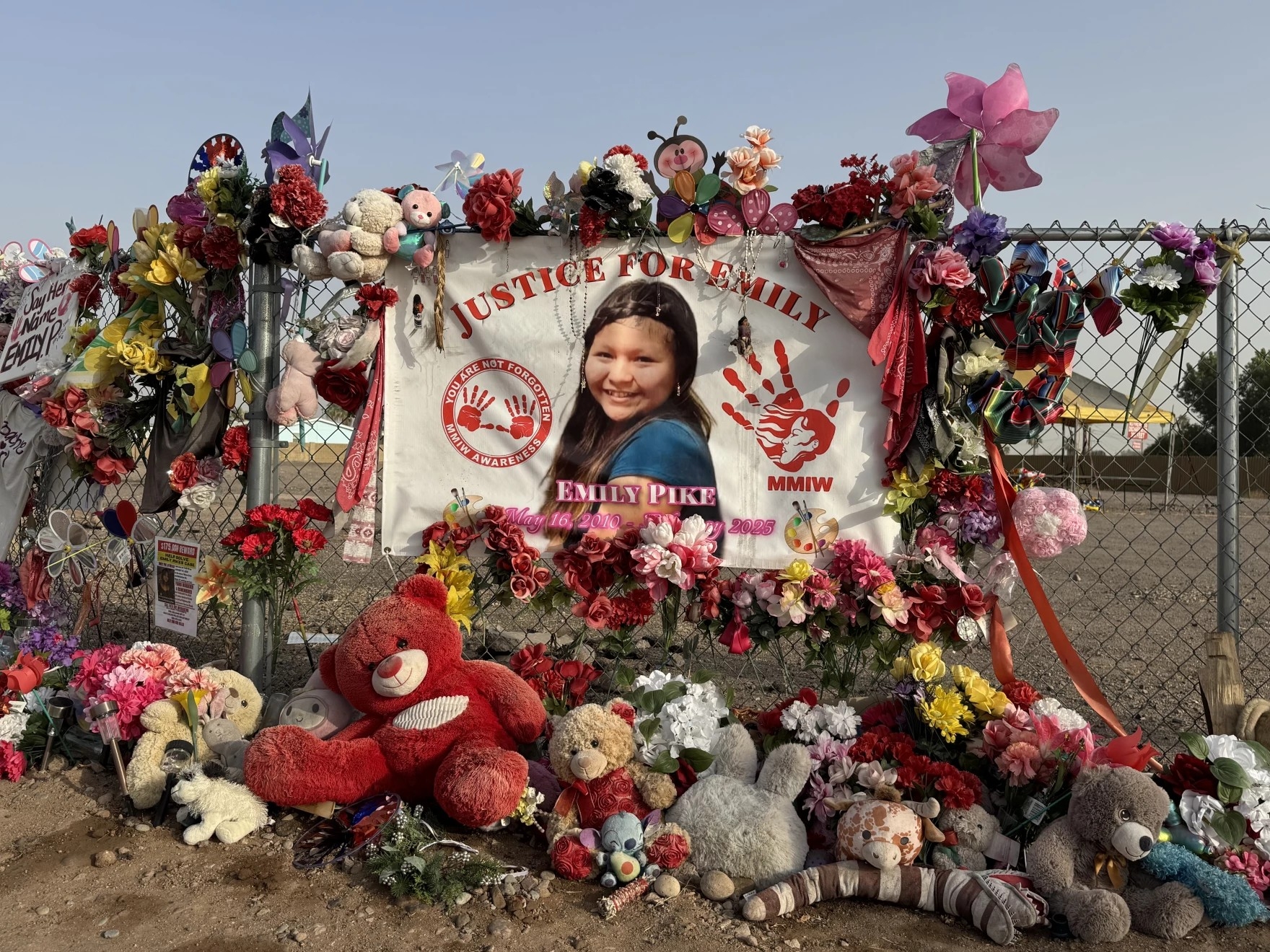
A tribute to slain teen Emily Pike adorns a fence in Mesa, Ariz. (Photo: Gabriel Pietrorazio / KJZZ)
Gov. Katie Hobbs (D-AZ) signed a bipartisan bill into law this month, mandating that the Arizona Department of Child Safety (DCS) make attempts to enter cooperative agreements with each of the state’s 22 federally recognized tribes.
KJZZ’s Gabriel Pietrorazio has more on the measure meant to improve child welfare.
The statute requires DCS to identify a liaison for each tribe, who is then responsible for providing technical assistance and coordinating communication.
The agency will also share best practices, policies, training materials, and operational standards.
Murdered San Carlos Apache teen Emily Pike was in the care of DCS when she went missing from a Mesa group home for the last time in early 2025. Her tribe has yet to enter an agreement with DCS, but is in talks.
To date, only four tribes have established such Memoranda of Understanding.
Get National Native News delivered to your inbox daily. Sign up for our daily newsletter today.
Download our NV1 Android or iOs App for breaking news alerts.
Check out today’s Native America Calling episode
Tuesday, April 28, 2026 – Oklahoma tribes work to keep Medicaid access intact as federal cuts loom