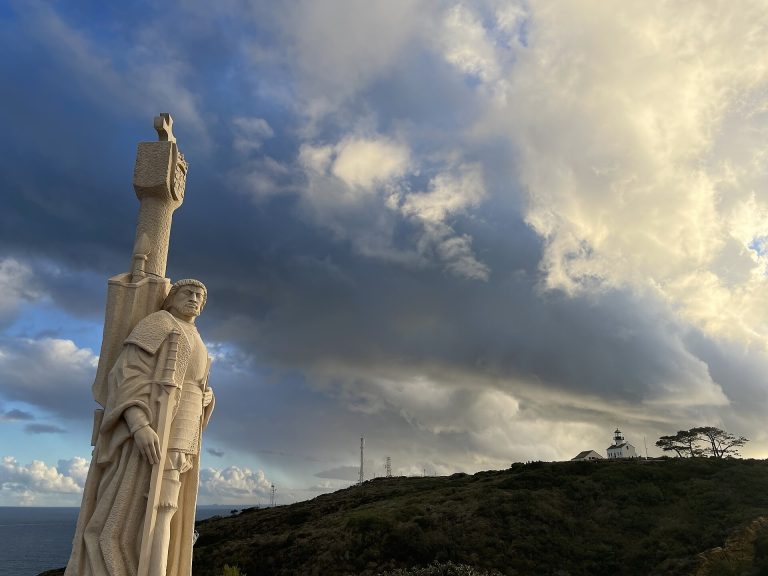
Podcast: Play in new window | Download | Embed
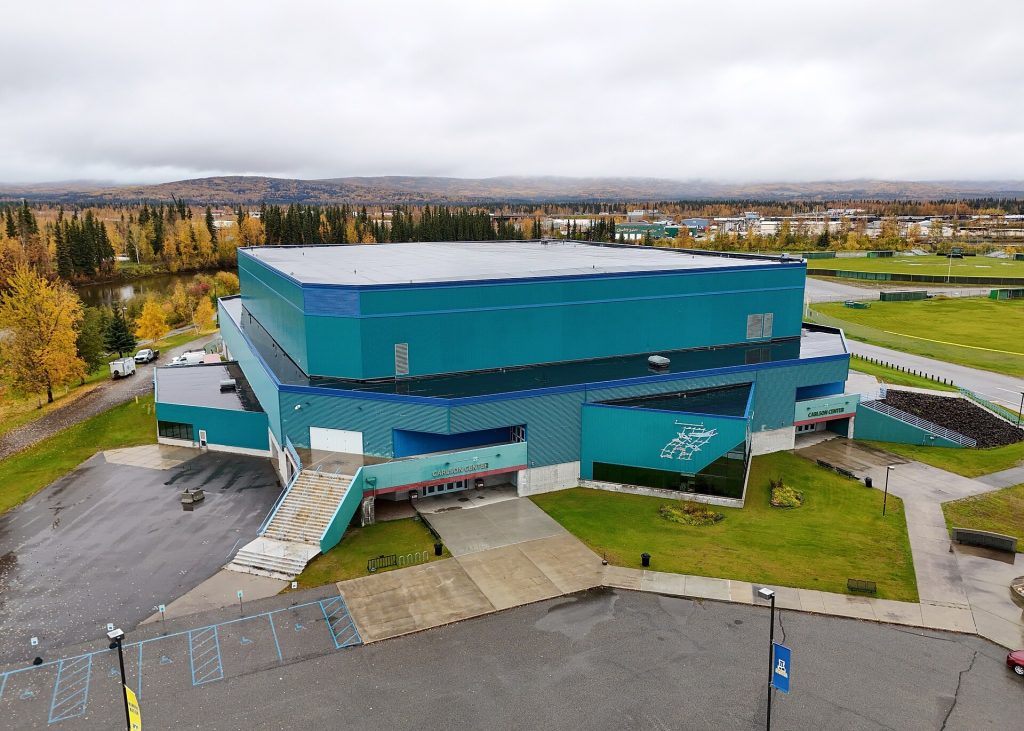
Photo: Carlson Center in Fairbanks, Alaska will host the 2028 Arctic Winter Games. (Quintin Soloviev / Wikimedia)
The Arctic Winter Games International Committee has chosen Fairbanks, Alaska to host the games in 2028.
Organizers chose to buck an April decision that would have moved to a three-year cycle temporarily.
The announcement means the next Arctic Winter Games, which had been set for 2029, will happen a year earlier than was planned.
A statement from the committee’s president says an “extraordinary” proposal from Fairbanks this spring made it possible to return to the traditional two-year cycle.
“Working with the Fairbanks North Star Borough, the Fairbanks North Star Borough School District, the State of Alaska, and numerous community partners, the Host Society demonstrated the community’s readiness to host the Games.”
The international competition brings together about 2,000 youth participants from across the Circumpolar North, including Alaska, Canada, and Nordic countries.
The multi-sport event and Indigenous cultural celebration started in 1970 and features sports like hockey, skiing, and curling as well as Dene games, such as the finger pull and snow snake.
The competition took place in Whitehorse, Canada last winter.
It was last hosted in Alaska in the Matanuska-Susitna Borough in 2024.
The games have come to Fairbanks three times – twice in the 1980s and again in 2014.
The Northwest Territories had been slated to host the 2028 iteration of the event, but withdrew its bid in 2024.
Its Municipal and Community Affairs Minister cited reasons like insufficient capacity and facilities, the Canadian Broadcasting Corporation reported at the time.
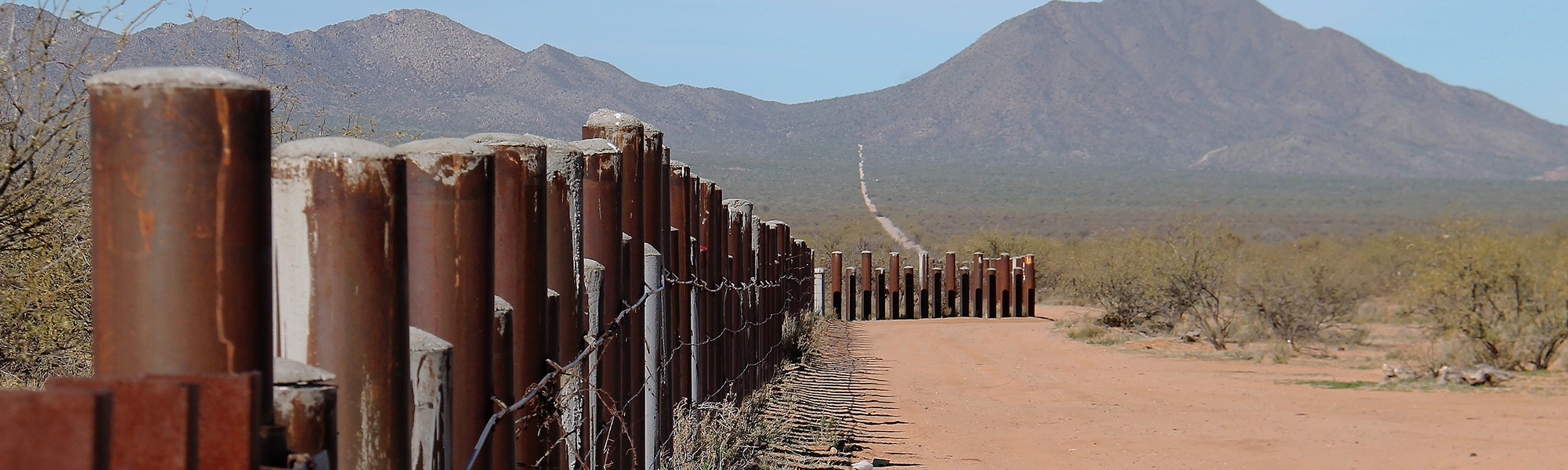
(Courtesy Tohono O’odham Nation)
Over the weekend, a tribe in southern Arizona warned that border wall contractors may soon encroach upon their lands.
As KJZZ’s Gabriel Pietrorazio reports, the tribe says it is ready to deal with trespassers.
According to the Tohono O’odham Code, the tribe may impose up to a $5,000 fine for civil trespassing.
Tribal police would escort any offender off the reservation sharing a 62-mile boundary with Mexico.
The U.S. Department of Homeland Security, led by Secretary Markwayne Mullin (Cherokee) is looking to erect a border wall there.
The Tohono O’odham Nation has sued, claiming its sovereignty would be violated should the Trump administration be allowed to proceed.
While Customs and Border Protection is aware of the tribe’s warning, the federal agency declined to comment due to ongoing litigation.
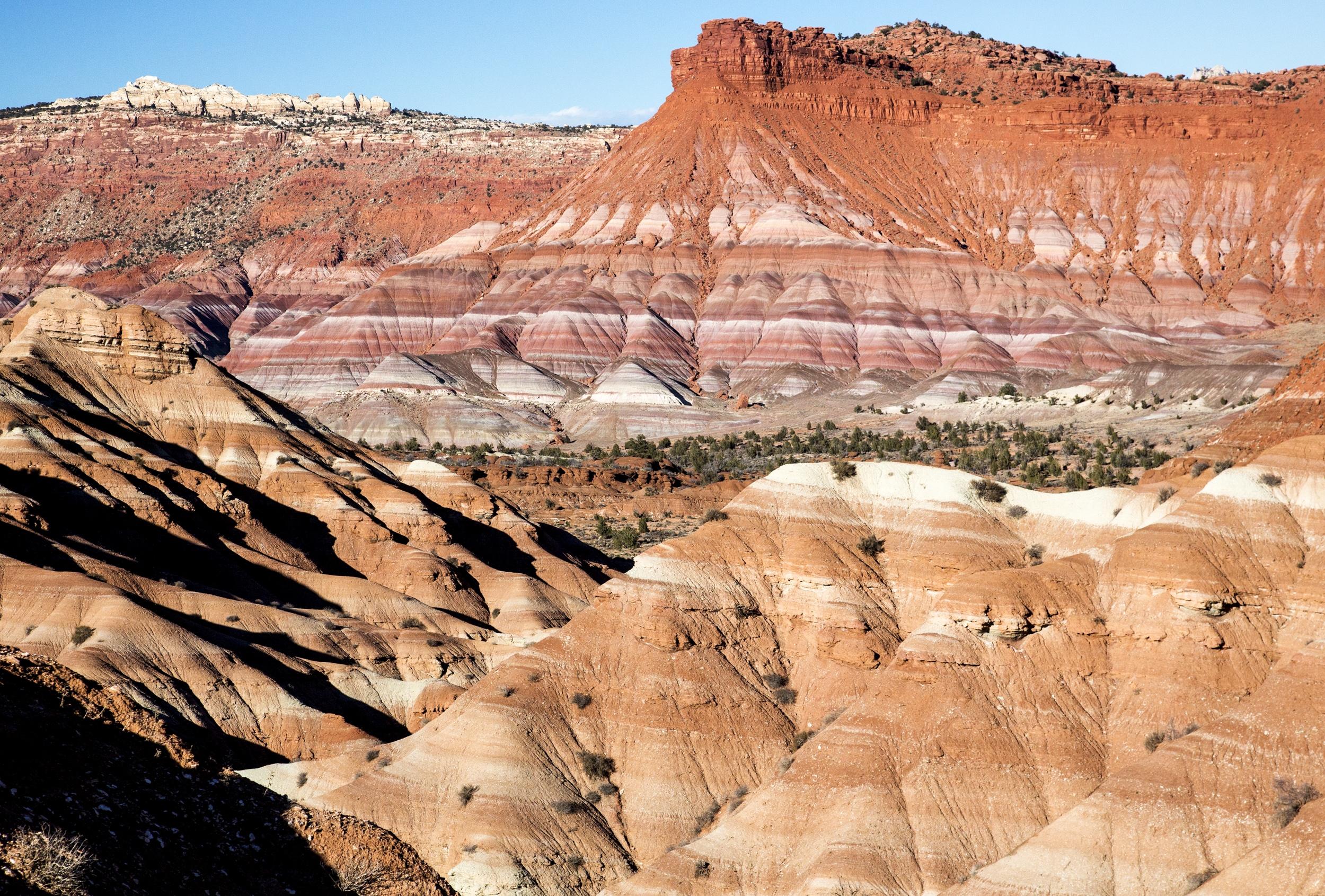
Grand Staircase Escalante National Monument in Utah. (Courtesy U.S. Bureau of Land Management)
Native Tribes and conservation groups are preparing to sue the Trump administration after the president signed orders to sharply reduce the size of two national monuments in Utah.
Mark Richardson has details.
Republicans are celebrating the move, while Tribes and environmentalists say it strips protections from culturally significant public lands.
Gov. Spencer Cox (R-UT) and Utah’s congressional delegation joined the president to celebrate the signing of the orders.
Steve Bloch, legal director for the Southern Utah Wilderness Alliance, calls conservatives’ vision for the state’s wildlands “wrong-headed”.
“(U.S. Sen.) Mike Lee (R-UT)’s vision of the American West is not one with sweeping federal public lands. His view of the American West is Utah and other western states should be the South Carolina of the West, with almost no public land.”
President Trump reduced the area of the Bears Ears and Grand Staircase-Escalante National Monuments by about three million acres from their current boundaries – roughly 90% of the original protected area.
Polling shows that 65% of Utah voters support keeping Bears Ears and Grand Staircase-Escalante protected as national monuments.
Utah Republicans have long pushed to reduce or eliminate the two national monuments to allow mining and other economic development on the land.
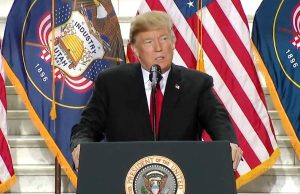
President Donald Trump speaks at the Utah State Capitol in 2017 before issuing a proclamation reducing boundaries for the Bears Ears and Grand Staircase-Escalante national monuments.
Trump first reduced the monuments in 2017 during his first term, but President Joe Biden restored the areas.
Bloch says he believes Trump is misinformed about the value of the monuments.
“I think he really didn’t know what he was talking about. The line that everybody is hooked into that, as he understood it, you couldn’t hunt, fish, or walk in the monuments, and that is so demonstrably false.”
The Bears Ears Inter-Tribal Coalition, formed by the Hopi, Zuni, Ute Mountain Ute, Navajo Nation and Ute Tribes, called it a major setback to an extraordinary collaboration on public lands between Tribal Nations and federal agencies.
Bloch says it was a bitter pill for the tribes to swallow.
“The tribes are angry. They are really disappointed. It’s just a lot of pain from yet another attempt by the nation to try and undo their footprint.”
Get National Native News delivered to your inbox daily. Sign up for our daily newsletter today.
Download our NV1 Android or iOs App for breaking news alerts.
Check out today’s Native America Calling episode
Tuesday, August 11, 2026 — Tribes face record-setting wildfire destruction