Podcast: Play in new window | Download | Embed
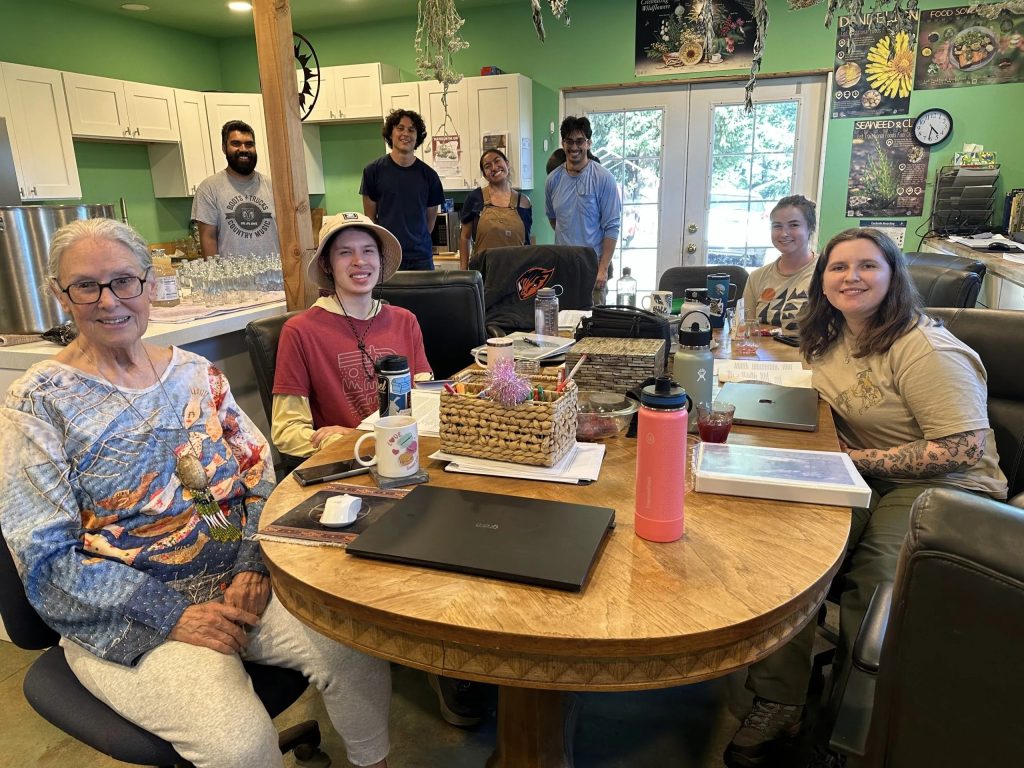
Photo: Rose High Bear, left, David Mora-Flores, Roman Wood, Joaquin Ocana, Claudia Vega, Damian Salazar, Paige Wentzel, amd Jaimie Myrick Duckett in Salem, Oreg., July 9, 2026. (Brian Bull)
A small, two-acre farm near Salem, Oreg. aims to save the planet.
Elderberry Wisdom Farms launched in 2018 and is the creation of Rose High Bear.
The 81-year-old Alaskan Native trains interns on urban forestry and Traditional Ecological Knowledge, but as Brian Bull of Underscore Native News and KLCC reports, funding challenges make its future uncertain.
Inside the Elderberry Wisdom Farm classroom, several people monitor a kettle of pressed elderberries.
Urban forestry coordinator David Mora-Flores reads a thermometer …
“It’s at 133 (degrees) right now. We’re trying to get it to about 90 degrees. At 90 degrees, we can add our flavoring and pH stabilizing agents, which are honey, lemon, and cinnamon juice.”
… as Rose High Bear observes.
“We’re using raw organic honey from the Willamette Valley, and we don’t want to put it in something more than like 90 degrees, so we can keep all the health properties of the honey.”
It is a lesson in product creation and marketing.
This syrup will be used in spritzer and other items, and sold at markets.
30 years ago, High Bear helmed an award-winning audio series called “Wisdom of the Elders”, which profiled venerable people from Indian Country. But then Martin High Bear, her husband and Lakota medicine man, died.
“And when he died in 1995, I seemed to continue to get messages through interpreters. So he told me that I would be leaving Portland.”
High Bear settled in Salem and launched her farm.
Her focus has since been getting her hands dirty, with help.
Intern Claudia Vega shows some potted yew trees that a resident donated to the farm.
“They’re so small, but they’re so-they’re so resilient. I mean, even just interacting with the trees is medicine itself.”
Eight years in, the environmental and political climates have heated up for the farm.
Last year, the Trump administration slashed budgets for DEI and environmental programs.
High Bear recalls what she was about to do with a $750,000 U.S. Department of Agriculture (USDA) grant when the axe fell.
“Planting trees in the city of Salem in the, you could call it, Title I school neighborhoods, low-income neighborhoods, where there is low tree canopies. Then on February 28, 2025, I lost four staff all in the same day after we got notified of the freeze.”
U.S. Rep. Andrea Salinas (D-OR) was able to unfreeze the funds, which run out in 2028.
High Bear says there is a need for her farm.
“The prophecy says the day will come when the people of the earth will turn to Native people to learn how to care for the earth, and to care for one another. And so you know we’re just trying to help fulfill that. This work is really spiritual work.”
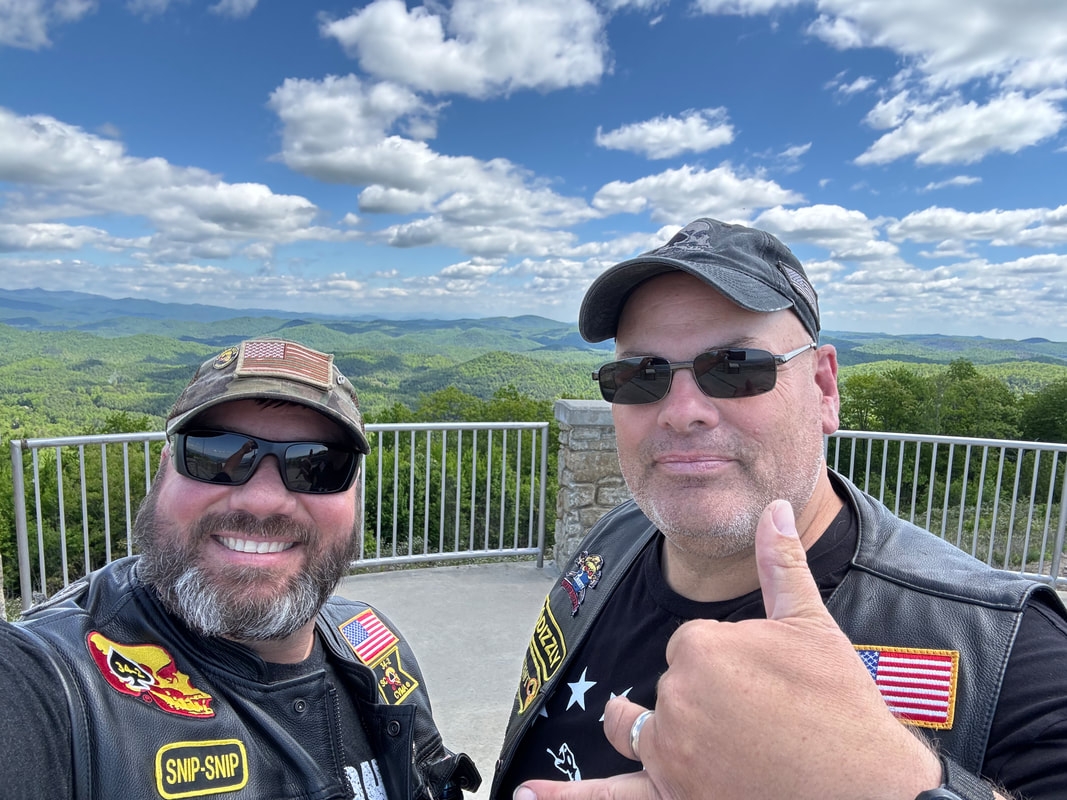
Randy Merrill, left, and Brian Cassidy. (Courtesy AAIA)
Two Army veterans are riding nearly 10,000 miles across Turtle Island to raise money and awareness for Native Nations.
Randy Merrill and Brian Cassidy began the 2026 Hoka Hey Motorcycle Challenge on August 2 with a goal of raising $10,000 for the Association on American Indian Affairs (AAIA).
The nonprofit says the money will strengthen Native Nations, support Native youth and family programs, protect tribal sovereignty, preserve Indigenous cultures, and educate the public about Native Peoples.
The veterans say the journey is also part of their own healing after military service and a way to stand in solidarity with Native communities.
AAIA CEO Shannon O’Loughlin (Choctaw Nation of Oklahoma) says the challenge represents healing through service and helps raise awareness that Native Peoples and their diverse cultures deserve equal protection.
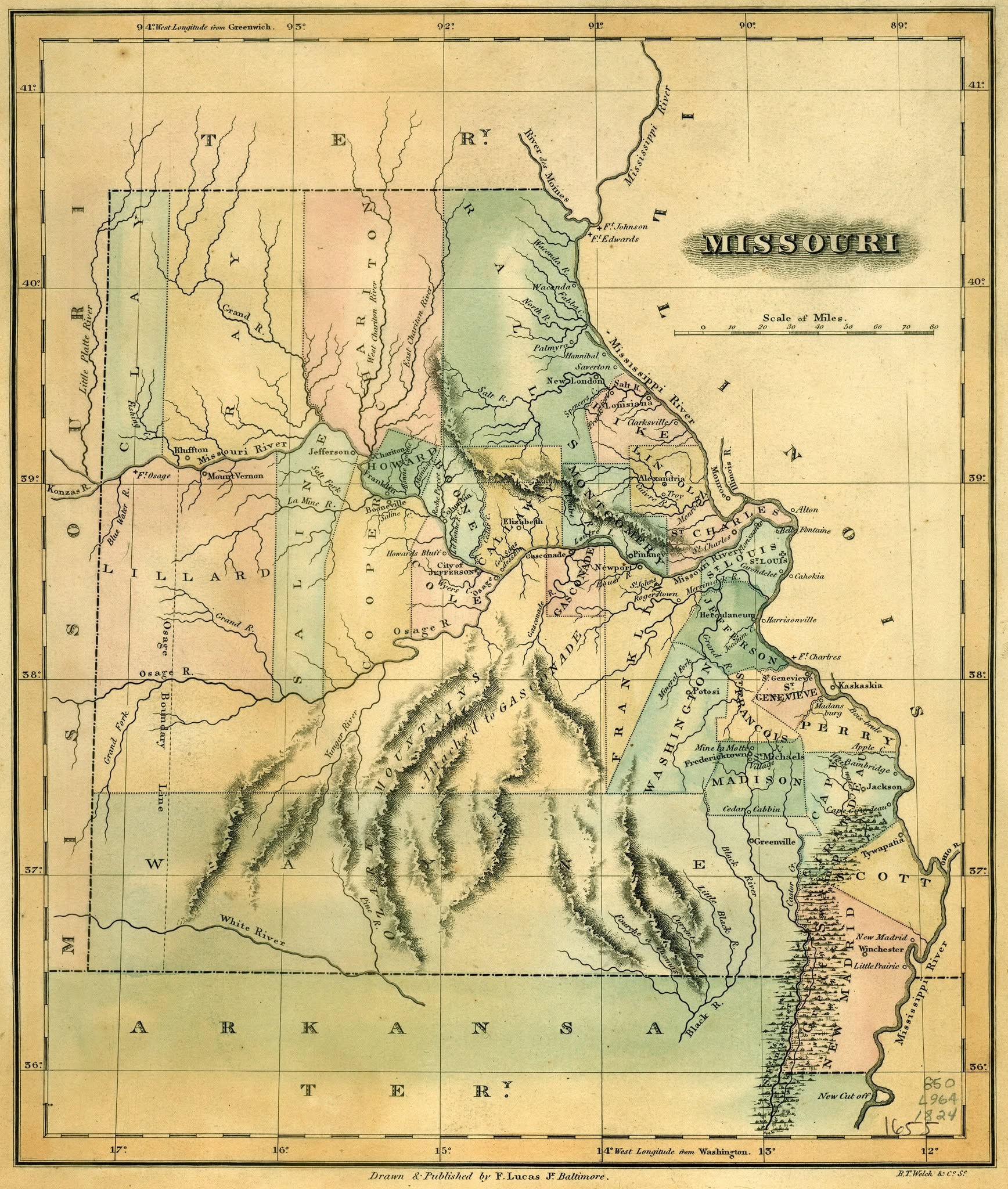
Missouri in 1824 when the Treaty of Washingon was signed. (Photo: Lucas Fielding, Jr. / courtesy State Historical Society of Missouri)
On this day in 1824, the U.S. and leaders of the Ioway (Baxoje) Nation signed the Treaty of Washington.
Under the agreement, the Ioway ceded their remaining lands in present day Missouri to the U.S., marking another chapter in the federal government’s expansion through treaty-making with Tribal Nations.
Get National Native News delivered to your inbox daily. Sign up for our daily newsletter today.
Download our NV1 Android or iOs App for breaking news alerts.
Check out today’s Native America Calling episode
Tuesday, August 4, 2026 — When is it OK to let a Native language die?