Podcast: Play in new window | Download | Embed
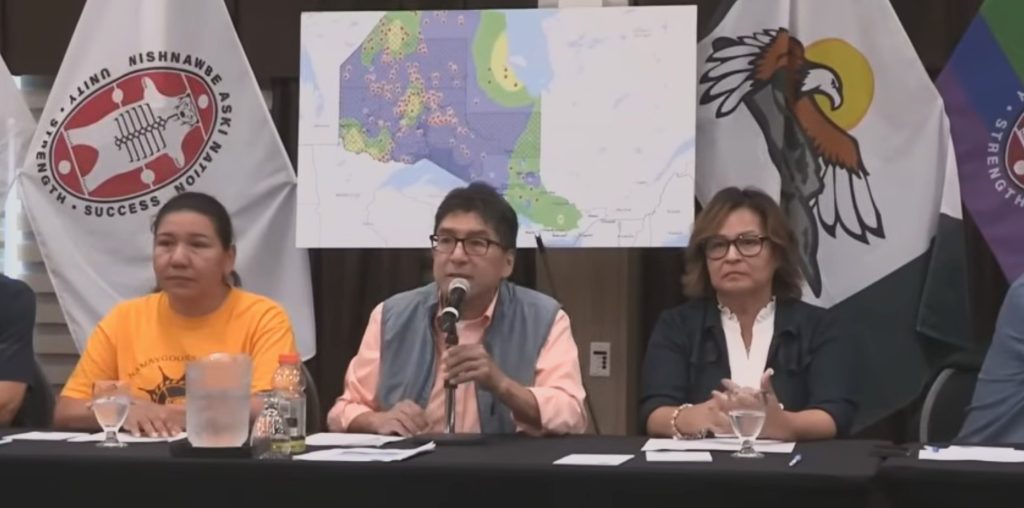
Photo: First Nation leaders held a press conference on July 21, 2026 to address claims by the Ontario government. (Courtesy Nishnawbe Aski Nation / YouTube)
Indigenous leaders in Ontario are calling for a public inquiry into how the provincial government responded to the wildfires that ripped through parts of Northern Ontario.
As Dan Karpenchuk reports, at least two First Nations communities burned to the ground.
Several First Nations leaders held a news conference in Thunder Bay recently to counter claims by the Ontario government that it did communicate and respond with Native communities about the fire dangers.
Helen Paavola is the chief of the Collins First Nation.
“There’s nothing left but just ashes. My members barely escaped with the clothes on their back.”
Paavola says her community was left to evacuate without notice or support from the government, but Ontario Minister of Emergency Preparedness and Response Jill Dunlop insists there was communication.
“There has been a lot of communication back and forth between First Nations communities with myself and with my colleagues and our ministry officials as well.”
But Alvin Fiddler, grand chief of the Nishnabe Aski Nation, disagrees.
“They were here on Saturday. Premier Doug Ford some ministers were here as well and they didn’t even bother to reach out to First Nations leaders.”
The chiefs are calling for changes, including officials at the top of the forest fire and emergency services for the ministry of natural resources, pending an independent investigation. And they want a public inquiry into decision making, emergency coordination, and communications with First Nations as well as over provincial preparedness.
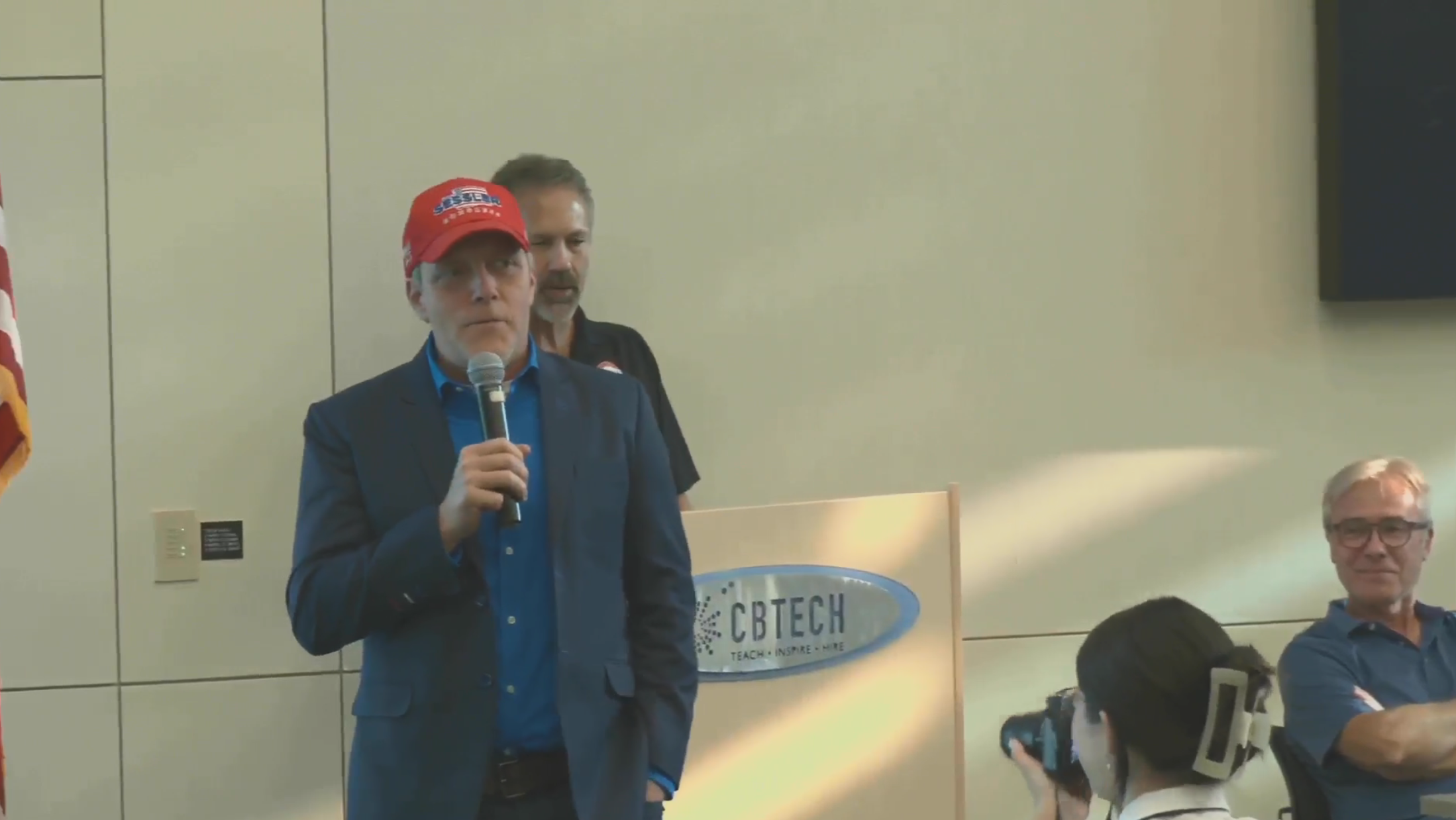
Jerrod Sessler addresses the Moses Lake Chamber of Commerce candidate forum, July 21, 2026. (Courtesy Columbia Basin Herald / Facebook)
A congressional candidate in Washington state has apologized for recent remarks that falsely claimed the Colville Tribe has an “incentive” for more fires, because they get “free money” from the Federal Emergency Management Agency (FEMA).
KREM 2 TV reports that Republican Jerrod Sessler hopes to replace retiring U.S. Rep. Dan Newhouse (R-WA) in an upcoming primary.
The district includes parts of the Colville Indian reservation and the entire Yakama Reservation, which are both experiencing wildfires.
At a candidate forum on July 21, Sessler made the following comments about the Colville Tribe.
“They don’t pay taxes for anything, but yet we fight those fires to the tune of millions of dollars, and they got a check from FEMA for $30 million for the fire. So what’s the incentive for them? The incentive is more fires, ‘Because we get free money.'”
Tribal officials condemned Sessler’s remarks, reminding people that Native citizens pay federal income “and other applicable federal taxes” while outlining how FEMA funds disaster responses.
In a statement sent to tribal leaders Monday, Sessler said his remarks were “ill-informed and incorrect” and there is “no excuse for making these sorts of public comments without verifying the information.”
Sessler is one of 11 candidates vying for the 4th Congressional District in the August 4 primary.
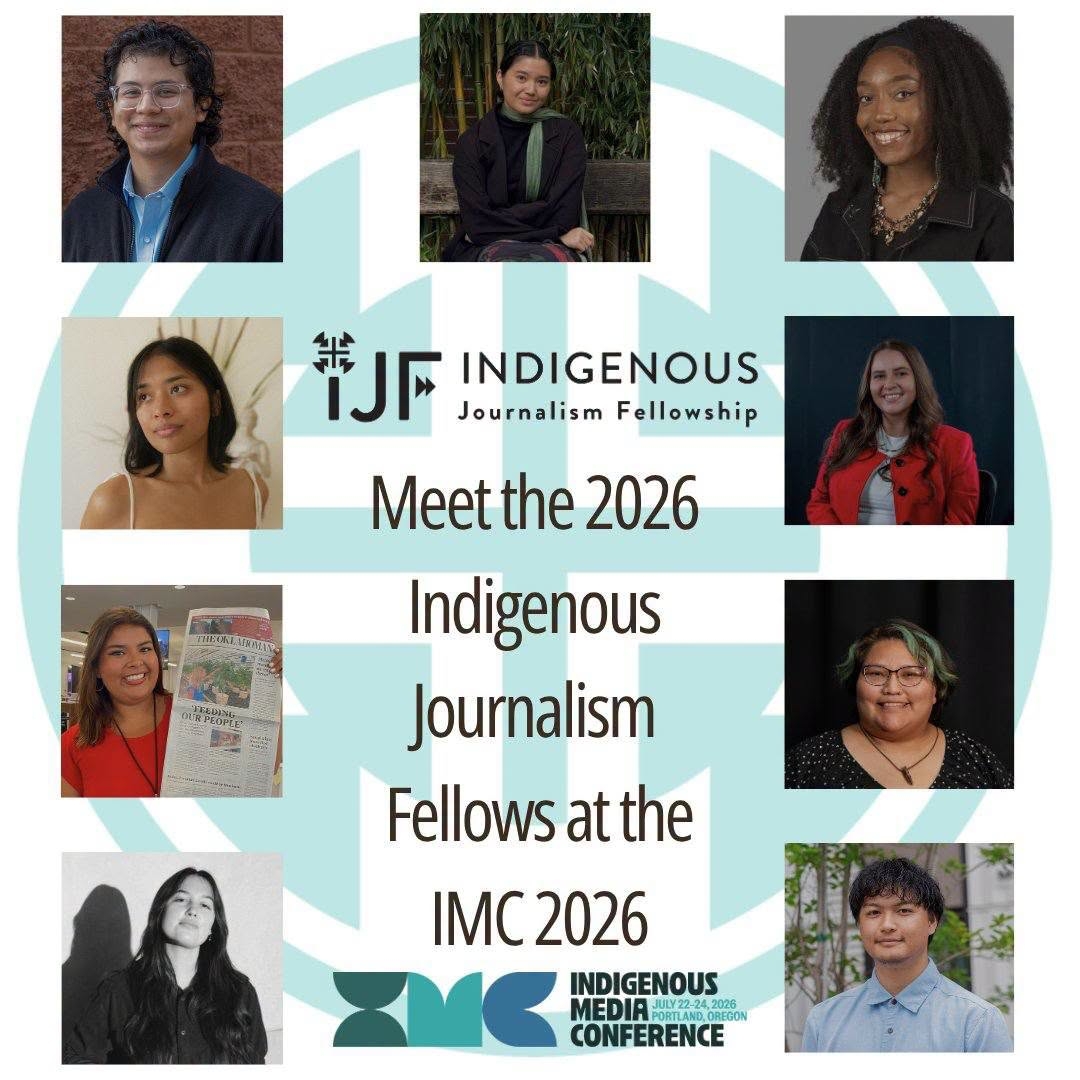 And the 2026 Indigenous Media Conference just wrapped up in Portland, Oreg.
The Indigenous Journalists Association (IJA) organized the three-day event, which held panels ranging from how to best cover the MMIP crisis to doing social videos.
Melissa Greene-Blye (Miami Tribe of Oklahoma) of the IJA education committee says final registration totals came to roughly 490 attendees, one of the best turnouts yet.
“That’s really exciting, um, to maybe find out that word of what’s happening is spreading and people are saying, ‘I want to be a part of this’, and they’re showing up.”
Chuck Sams (Cayuse/Walla Walla, Confederated Tribes of the Umatilla Indian Reservation), the first Native director of the National Park Service, gave the keynote address.
Greene-Blye says new developments also sparked interest.
“The launch of the Pacific Islander Journalism Network at conference, there was a lot of excitement with that. The new bylaws were an important point of discussion, because it had been decades since they had been updated. Now, the Indigenous Journalist Association renaming is official, official, official on paper, in law.”
The event wrapped up with the IJA awards and banquet, which honored Osage News editor Shannon Shaw Duty with two IJA distinguished awards.
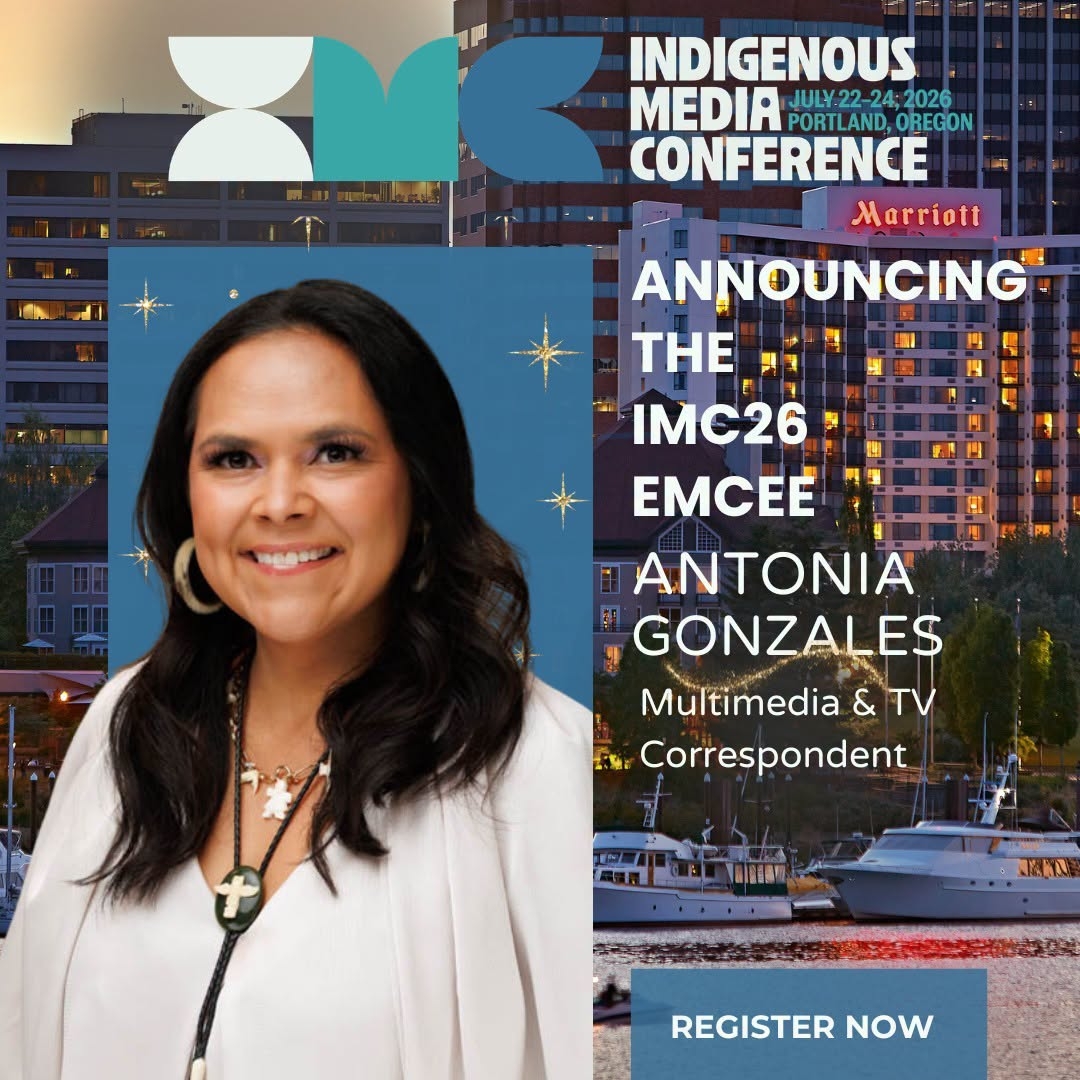
Former National Native News host Antonia Gonzales (Navajo) was also recognized for her 22 years of hosting this program.
Next year’s conference will be held in Minneapolis, Minn.
Get National Native News delivered to your inbox daily. Sign up for our daily newsletter today.
Download our NV1 Android or iOs App for breaking news alerts.
Check out today’s Native America Calling episode
Tuesday, July 28, 2026 — Addressing public health with veterinary care in rural areas