Podcast: Play in new window | Download | Embed
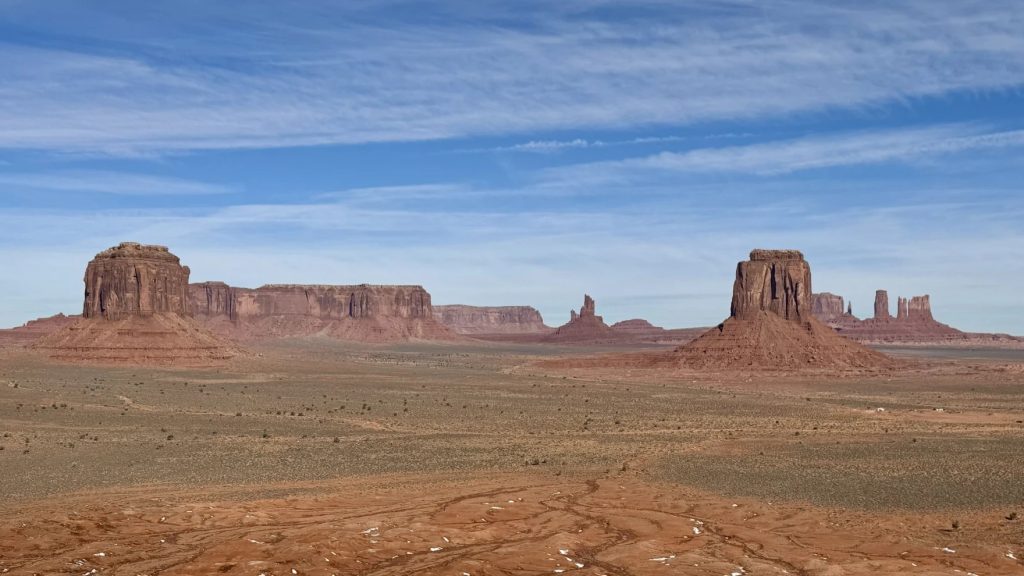
Photo: A panoramic view of Monument Valley. (Gabriel Pietrorazio)
The nation’s 575 federally recognized tribes are now eligible for conservation grants from the National Park Service. And as KJZZ’s Gabriel Pietrorazio reports, a new digital tool is designed to help them navigate the bureaucracy.
The Land and Water Conservation Fund has been around since 1964.
“It receives about $900 million each year from offshore oil and gas royalties – not taxpayer dollars – to support conservation and outdoor recreation nationwide. And yet, I had never heard of the program.”
Starlyn Rose Miller is from the Little Shell Chippewa Tribe of Montana. She is with the nonprofit Wilderness Society, which launched the new online hub.
“Tribal governments are so busy. We thought if we could put a hub up designed in partnership with Indigenous-led orgs, agencies, nonprofits, that it could be helpful.”
The fund has aided more than 47,000 projects in nearly every county nationwide.
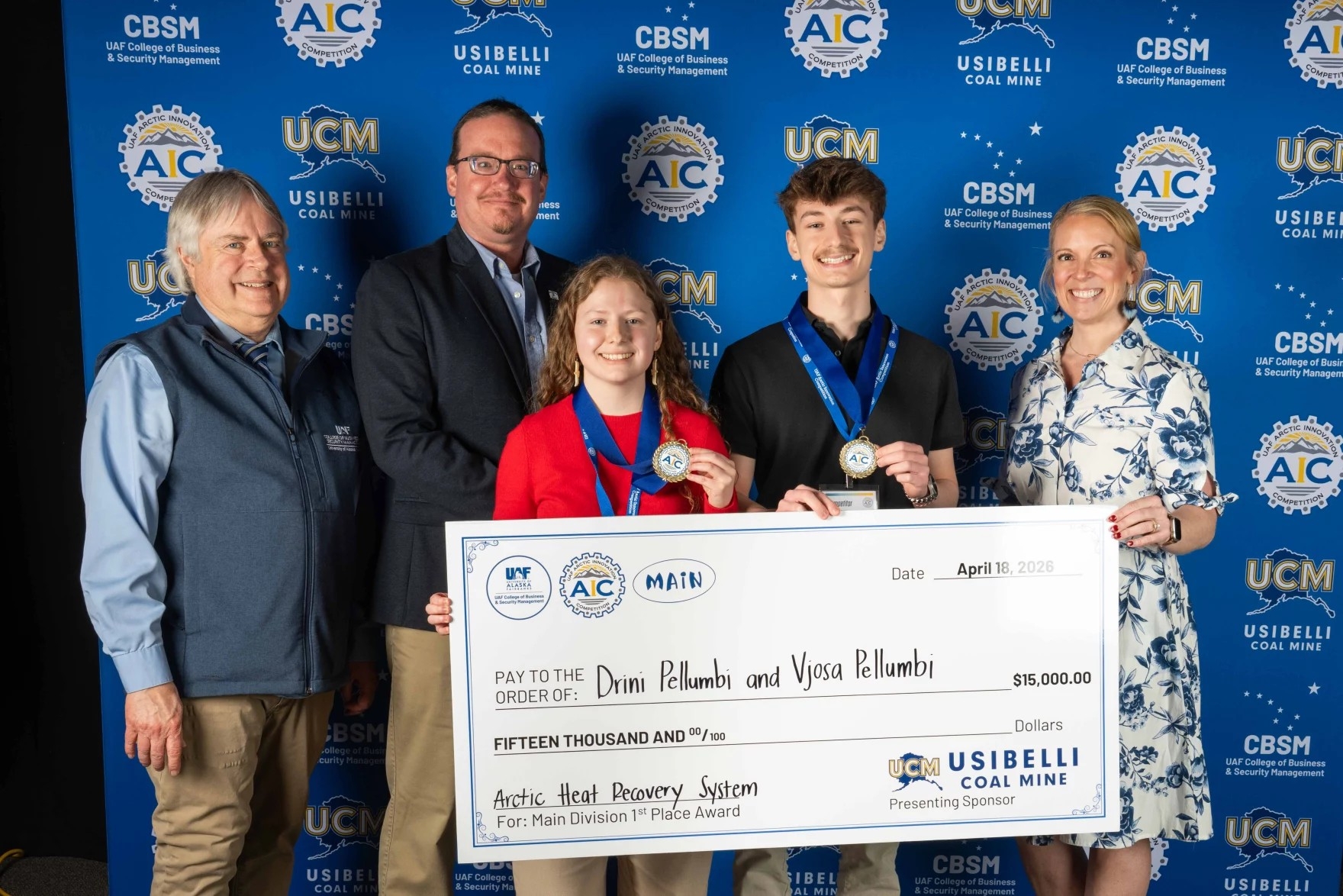
Bethel siblings Vjosa Pellumbi, left, and Drini Pellumbi pose after winning the top prize at the UAF College of Business and Security Management’s Arctic Innovation Competition held at the 8 Star Events Center in Fairbanks on April 18, 2026. (Photo: Sarah Lewis / UAF)
High energy costs are a fact of life in remote, rural Alaska with few easy answers.
A brother and sister team from Bethel, Alaska recently won top honors at an innovation competition hosted from the University of Alaska Fairbanks.
As KYUK’s Evan Erickson reports, they are committed to being part of the solution.
Fraternal twins Drini and Vjosa Pellumbi have more in common than the same birthday. So far, their education and career paths have followed side by side.
The brother and sister graduated from high school with college credit gained through the Alaska Native Science and Engineering Program (ANSEP) and are currently studying mechanical engineering at the University of Alaska Anchorage.
The Pellumbi twins are busy advancing a prototype of a device that attaches to home boilers and aims to reduce heating costs in cold-weather climates.
Drini Pellumbi says their device essentially takes heat that would have been wasted by the boiler and just repurposes it to heat incoming water.
Their Arctic Heat Recovery System design earned the top prize and $21,000 at the Alaska Innovation Competition hosted by the University of Alaska Fairbanks. The same day, Vjosa Pellumbi said the pair celebrated their 20th birthday.
“It was such a whirlwind of emotions, because during the finals of that competition, we still had finals for our semester course, and you know we’re taking rigorous engineering courses, so stresses were high. It was just, it was a lot of good news that day.”
This summer, the Pellumbis are both in Washington, D.C., interning with a wildlife conservation nonprofit. In their off-hours, they are plugging away at their prototype.
Drini says the heat recovery concept is nothing new, but that it’s so far been focused on large-scale commercial applications.
“On my table right in front of me we have a couple thermocouples and sensors. We’re in two separate apartments, but we take turns, whose room carries all the junk. I guess a lot of people just don’t see a profit margin in developing it for Alaskan citizens, like residents, to use. We’re not really in it for the profit, we’re in it because it’s clean, it saves oil, it saves money, it saves pollutants from entering the atmosphere. Hopefully it’ll be good all around.”
Friends and family in Bethel – where fuel prices have recently spiked due to the war in Iran – are eager to be the first to test the device.
The Pellumbis say it has the potential to save homeowners thousands of dollars per year.
They say the money they earned at this year’s Arctic Innovation Competition is going directly into making the heat recovery system a reality.
The second-generation Albanian-Americans credit their mother for pushing them to apply together for the competition.
Vjosa says the parallel paths her and her brother have taken come down to family ties.
“Within Albanian culture, one of the core values is being very family-oriented. So I guess that’s always been why we’ve gravitated towards doing the same things, because we’ve always been close.”
Both say they could end up specializing in different engineering fields down the road. But for now, they say they’re enjoying being a team as long as they can.
Get National Native News delivered to your inbox daily. Sign up for our daily newsletter today.
Download our NV1 Android or iOs App for breaking news alerts.
Check out today’s Native America Calling episode
Tuesday, June 23, 2026 — Descendants reflect on Greasy Grass anniversary