Podcast: Play in new window | Download | Embed
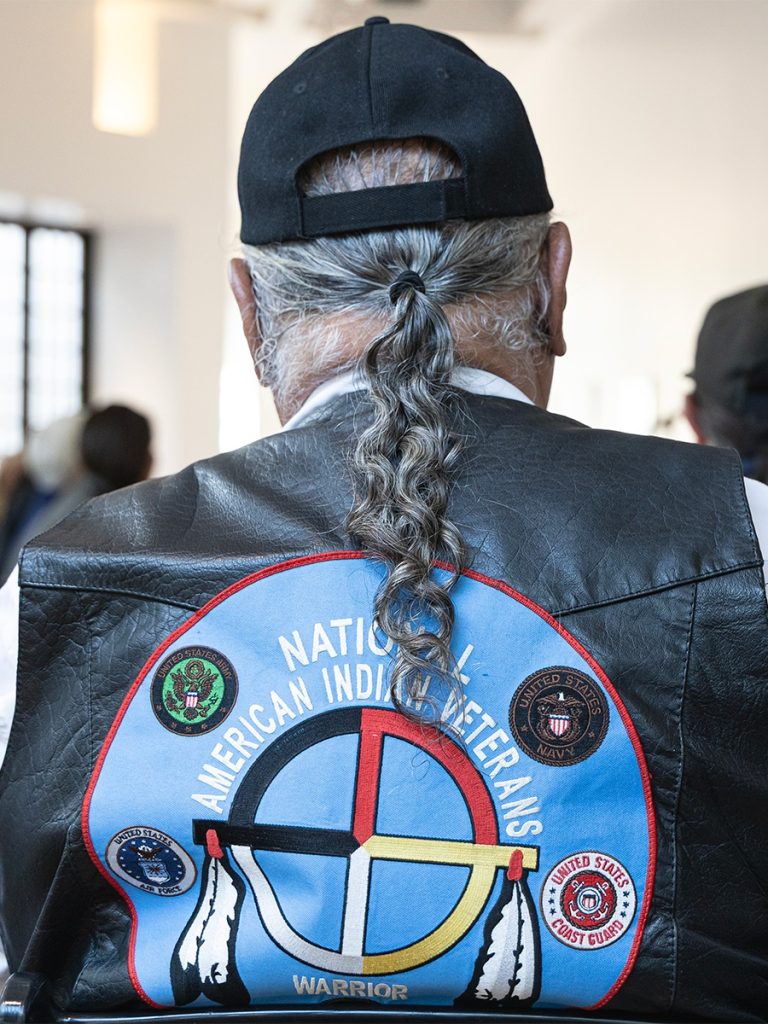
The Heard Museum in Phoenix, Ariz. remembered Indigenous servicemembers, who made the ultimate sacrifice, during a Memorial Day observance.
KJZZ’s Gabriel Pietrorazio has more.
On this hot Monday morning, Kiowa-Comanche singer Kenneth Cozad Sr. chants a series of honor songs. Each melody is meant to pay tribute to the fallen as the Oklahoma native beats upon a drum made from rawhide.
One of his patriotic tunes is called “Star and Stripes”. It is inspired by World War II Kiowa Code Talker Leonard “Red Wolf” Cozad Sr.
“My grandpa, he had a thought came to him about this flag here that our folks fought for this red, white, and blue, he said.”
For Cozad, he’s thankful to share his music.
“Because we don’t just be singing songs, just to be singing them, there’s always has to be a purpose.”
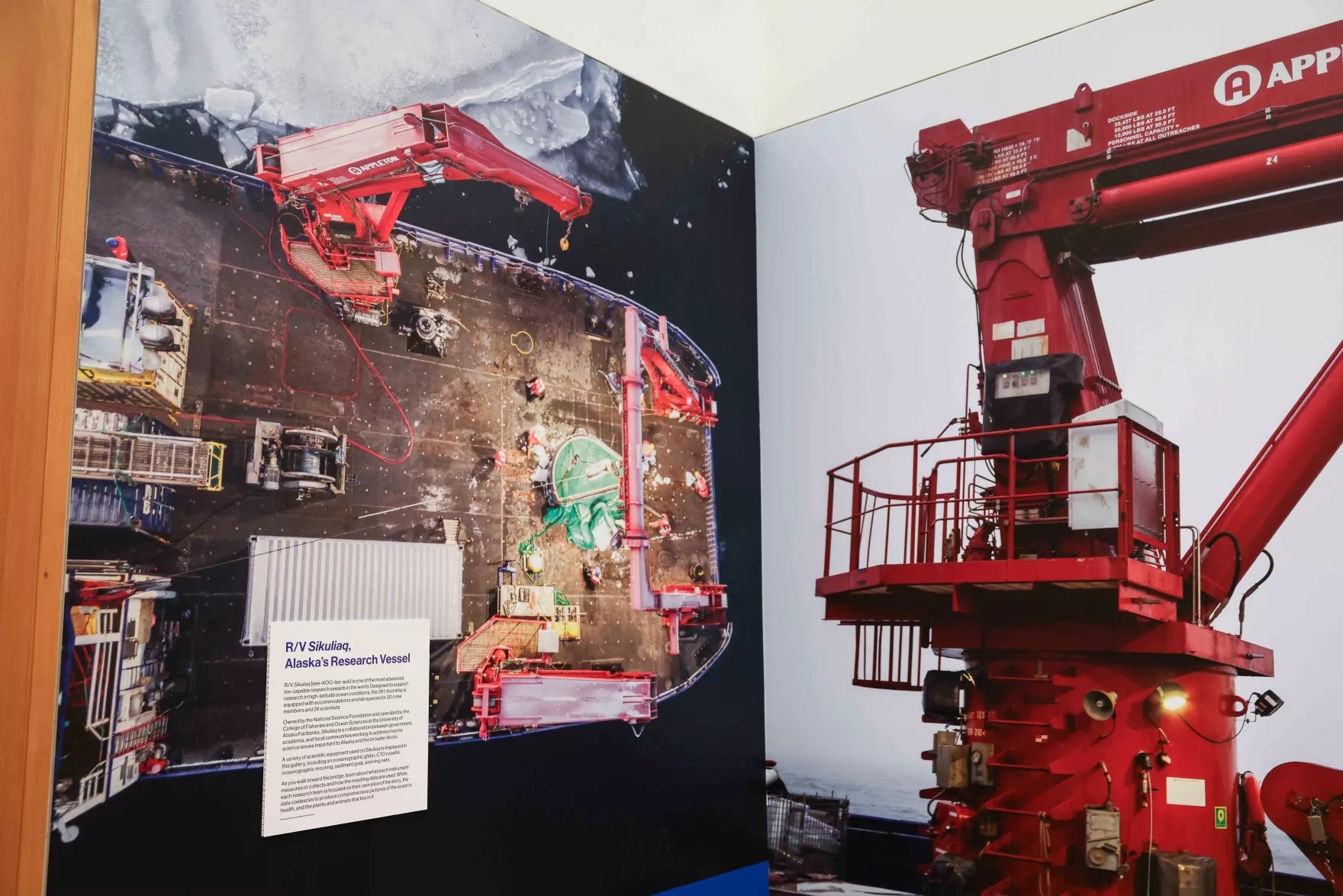
Visitors of the exhibition, “Arctic Marine Science: Sikuliaq to Shore”, can learn about various science instruments used by Sikuliaq research crews to study the environment. (Photo: James Daggett / Alaska Public Media)
A new exhibit at an Alaska museum takes visitors inside an Arctic research vessel.
Since opening last week, it has given guests a chance to glimpse at what it is like to study the Arctic marine ecosystem – and how Indigenous communities shape that research.
The Alaska Desk’s Alena Naiden from our flagship station KNBA has more.
Rachel Boesenberg is associate curator at the Anchorage Museum. She is walking under a tall crane, with deep blue all around her.
“So you enter here through the stern of the vessel.”
Boesenberg is giving a tour of the new exhibition called Arctic Marine Science: Sikuliaq to Shore, which brings the audience aboard a replica of the research vessel Sikuliaq.
Visitors make their way onto the bridge. Here, the captain’s chair faces a ceiling-high projector screen with a vast ocean that changes from stormy swells to chunks of pancake ice.
“We’re looking off the bow of Sikuliaq, which visitors at this point have walked through.”
Sikuliaq is operated by the University of Alaska Fairbanks and owned by the National Science Foundation.
Each year, dozens of scientists board the vessel to study the Arctic.
Brendan Smith is the communications director at the North Pacific Research Board. He dreamed up the idea for the exhibition.
“I said to myself, what if we bring the Sikuliaq … into the museum? How do we give people an experience that makes them feel like they’re out at sea?”
The result is an immersive experience, focused on how the ship is used to study the environment, and the people who bring that knowledge to life.
And there is a station with Arctic soundscapes.
“That’s a bowhead whale.”
Boesenberg says these are the sounds that scientists gather using hydrophones they deploy from the real vessel.
Harmony Jade Sugaq Wayner is an Indigenous scholar from Naknek in Southwest Alaska. She consulted on the exhibition and suggested curators include what Arctic research means for Alaska Native people.
“We see a lot of big graphs about climate change and the extent of sea ice and those big global processes, but we don’t see the joy of living our culture in coastal Alaska and river Alaska.”
The exhibition runs through April 2027.
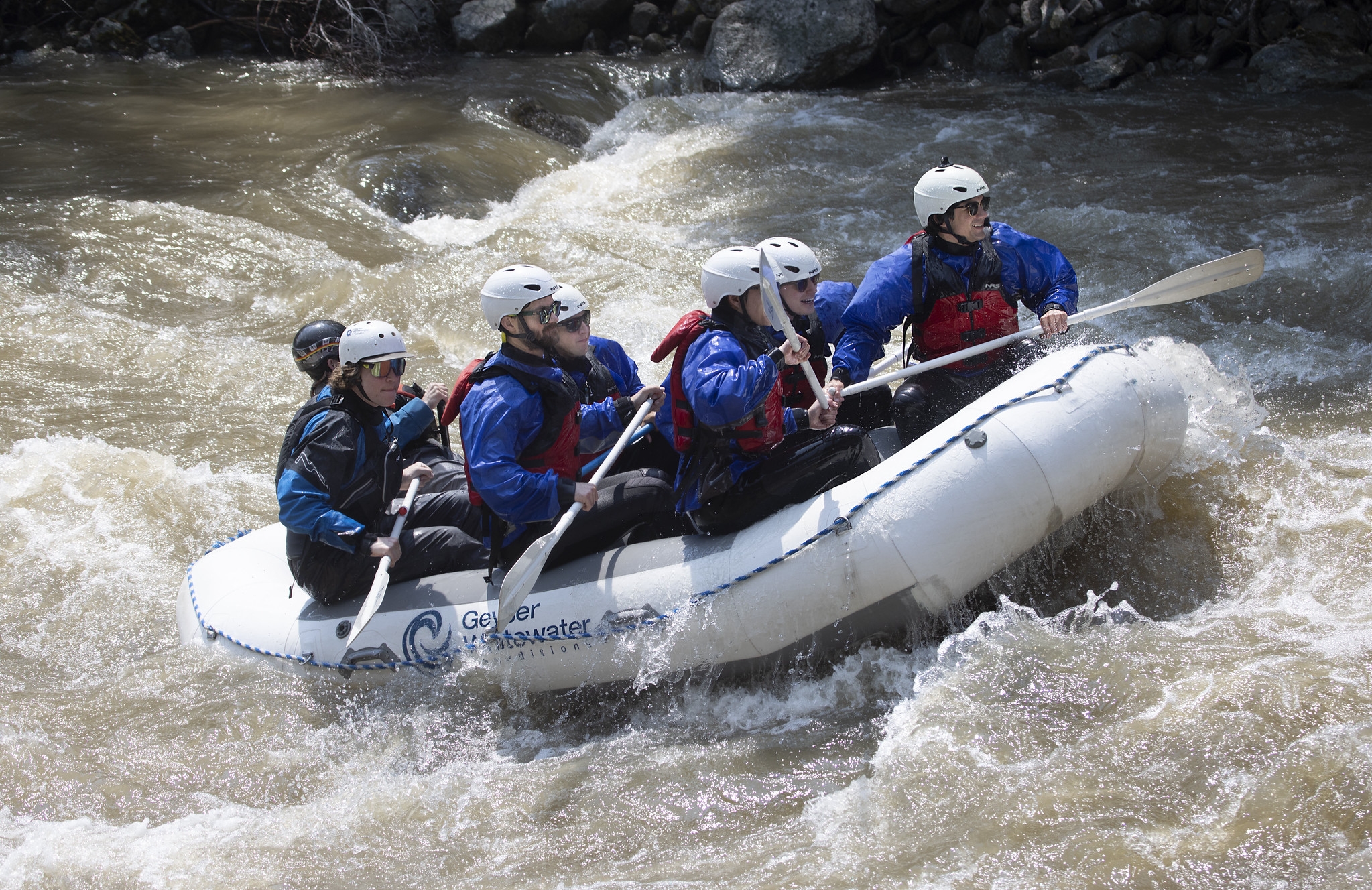
Whitewater rafting on the Gallatin River in Montana in 2023. (Photo: Watts / Flickr)
People working in Montana’s outdoor industry are reporting emotional impacts tied to climate change.
According to reporting from Glacier Raft Company and environmental advocates, river guides are increasingly experiencing ecological grief as changing waterways affect their work and livelihoods.
Get National Native News delivered to your inbox daily. Sign up for our daily newsletter today.
Download our NV1 Android or iOs App for breaking news alerts.
Check out today’s Native America Calling episode
Tuesday, May 26, 2026 – Border wall construction damaging sacred sites