Podcast: Play in new window | Download | Embed
Today is Election Day, with many voters across Indian Country turning out at the ballot box in many states.
Brian Bull recently talked to Underscore Native News colleague Nika Bartoo-Smith (Osage & Oneida Nation), who is a joint reporter with Underscore and ICT, and asked her what the nationwide midterm ballot looks like in terms of Indigenous candidates.
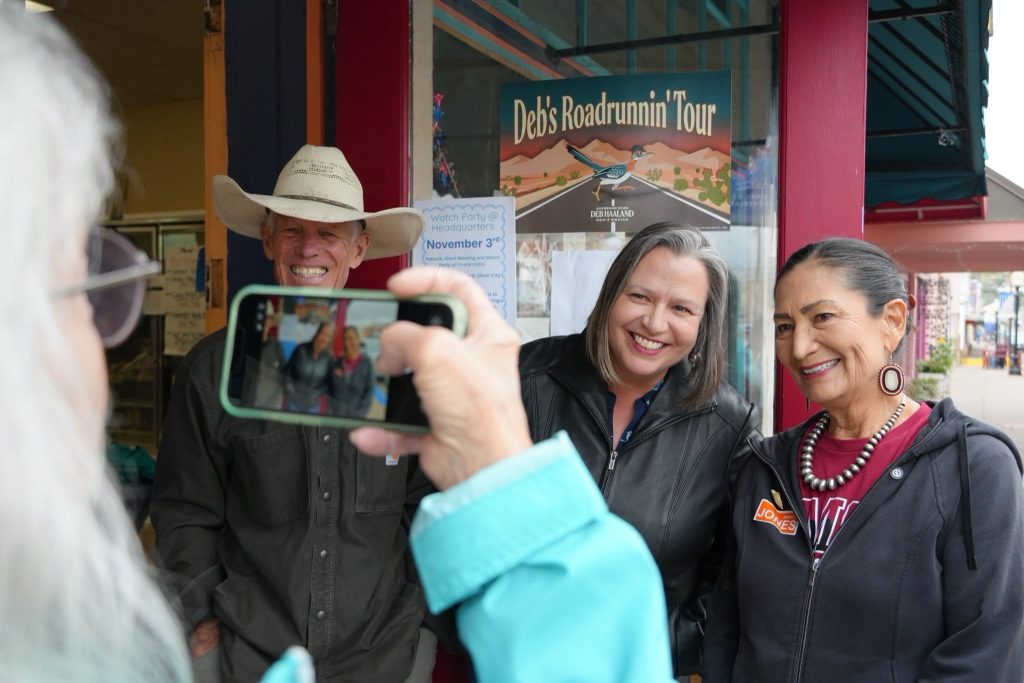
“County seats, city council seats, school boards, um, auditor, city auditor, those kinds of things. And what we’ve seen is across 17 states, there’s over 117 Indigenous candidates that are running, and that doesn’t include some of the higher profile races like Senate positions, like I think about Deb Haaland (Laguna Pueblo) in New Mexico, who’s running for governor. So there’s well over 100 candidates all across the country.”
Bartoo-Smith also talked to an Oglala Lakota official about the diversity of candidates who are running for office during these midterm elections.
“Yeah, yeah, I talked to Kevin Killer, who is former president of the Oglala Sioux tribe. He also served as a state senator and state representative in South Dakota, and he talked about just how in the last decade or so, he’s really seen an uptick in native candidates across political parties. So, you know, beyond Democrat and Republican and independent, and he really talked about how that’s actually such a good thing because it, it’s important to see this like range of diversity of opinions in people. And as we know, Native people are not a monolith. And so it makes sense that their canon should be native folks running across all different party affiliations.”
Bartoo-Smith reported on ballot measures that will be put before voters this midterm election and will have a significant impact on Native communities.
“There’s over 140 different statewide ballot measures across the country. There are 31 ballot measures across 15 states that really have the potential to impact Native folks and communities. And those span a whole number of issues that range from voting rights to abortion access to environment to 2SLGBTQ+ rights to cannabis regulation and well beyond that. And folks I talked to really just talked about the importance of these ballot measures actually have, have such a, have such a possibility of impacting our day-to-day lives. And how it is really important to not forget about those in the conversation of voting and beyond just the candidates that are going to serve an office, but thinking about the policies that can be put in place in our states that really have the ability to impact Native folks across the spectrum. So urban Native folks and tribal communities, and beyond.”
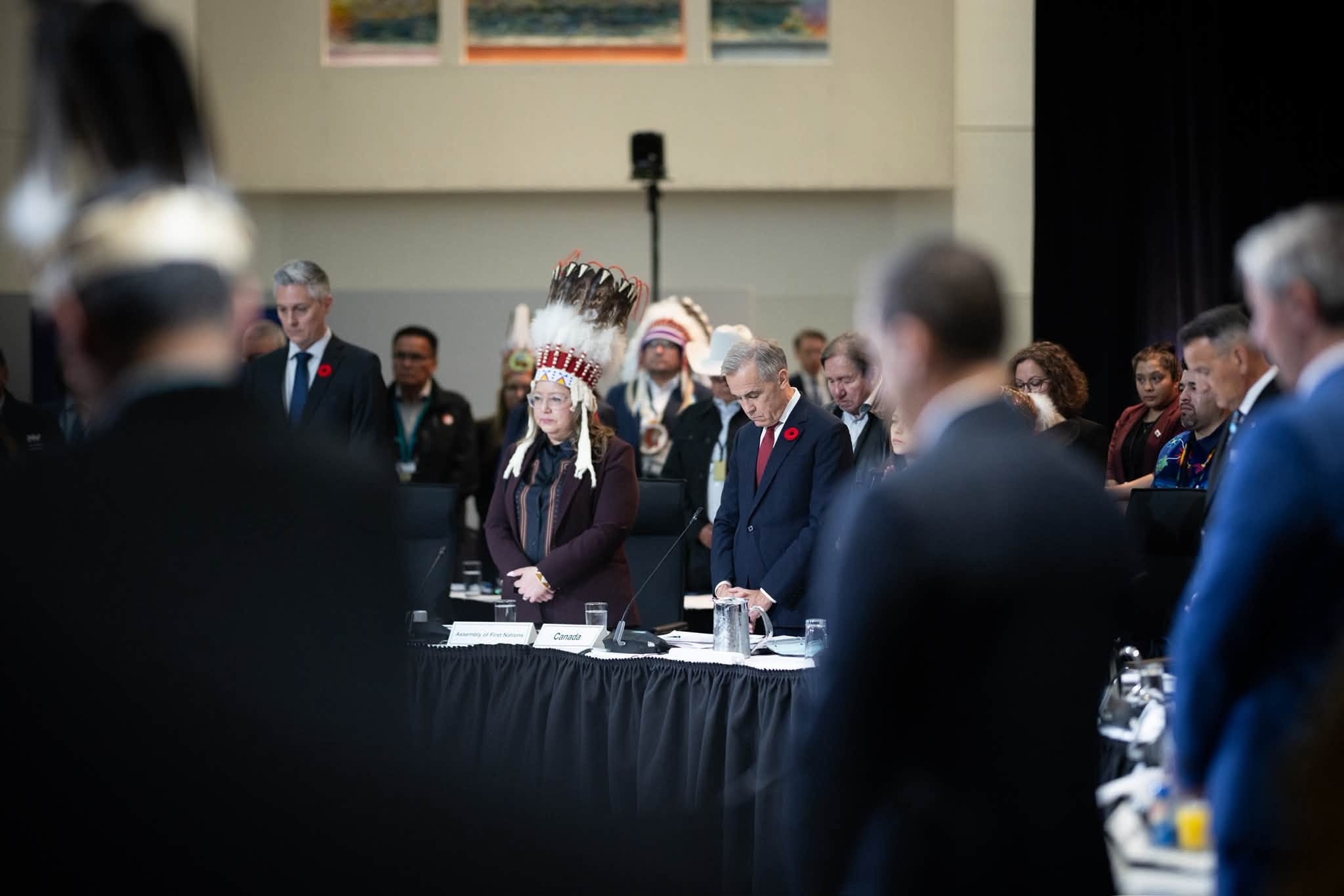
Prime Minister Mark Carney holds a combined First Ministers’ Meeting and Assembly of First Nations meeting in Ottawa, 26 October 2026. (Photo: Daniel Pereira / Office of the Prime Minister of Canada)
Canadian Prime Minister Mark Carney says he is ready to reform or abolish the Indian Act, controversial and divisive legislation that has been around for more than 150 years.
As Dan Karpenchuk reports, Carney’s comments came after he met with First Nations chiefs and provincial premiers.
The Indian Act dictates nearly all aspects of First Nations governance and many individual rights of people considered “status Indians”.
Over its lifetime, it has undergone several amendments but still gives the Canadian government exclusive authority over first nations people and their lands.
Today many see it as a sad relic of the oppression Indigenous people suffered under British colonial rule. Some wanted it dismantled or replace, while others say doing that would erode legally recongized treaty rights, health benefits and tax exemptions.
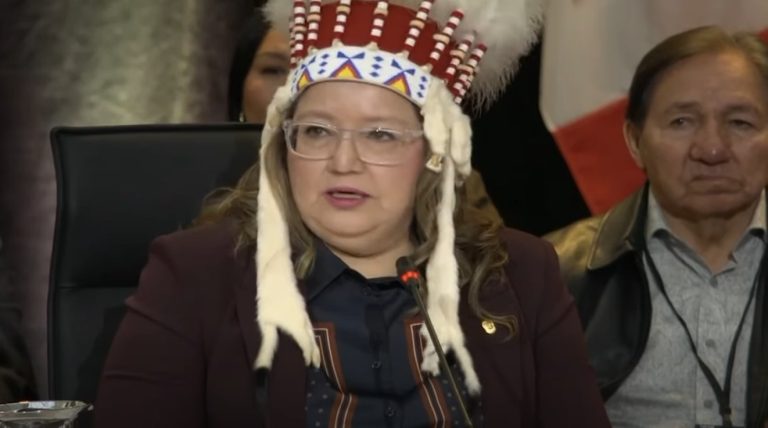
Wab Kinew (Onigaming First Nation) is the premier of Manitoba.
“I don’t know how many people in Canada have seen one of these before, but this is a status card and it says your friend Wab Kinew is an Indian within the meaning of the Indian Act. And I’m not sure if that lines up with your vision of Canada that we still have a race-based form of identification in this country. But this is the reality.”
Carney says reforming or abolishing the action is a process he remains very open to. His meeting with provincial premiers and Indigenous leaders comes as Ottawa aims to speed up what it says are nation building project approvals.
While some Native leaders are in favor of the economic benefits those projects will bring to their territories, other says speeding approvals for mines, pipelines, and energy projects would diminish their rights and lead to court challenges.
Get National Native News delivered to your inbox daily. Sign up for our daily newsletter today.
Download our NV1 Android or iOs App for breaking news alerts.
Check out today’s Native America Calling episode

Leave a Reply