Podcast: Play in new window | Download | Embed
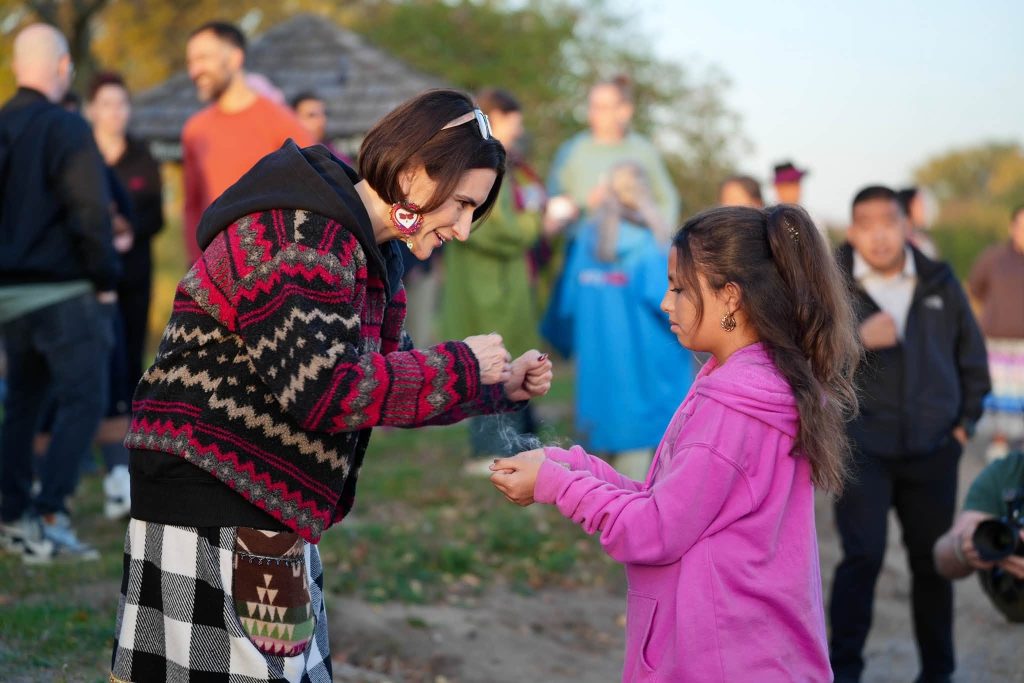
Photo: Lt. Gov. Peggy Flanagan, D-Minnesota, connects with a student during an Indigenous Peoples Day event on Monday, October 12, 2026. (Courtesy Lt. Gov. Peggy Flanagan / Facebook)
Indigenous Peoples Day celebrations in Minnesota gave educators a chance to spark curiosity for Native history.
As Mike Moen reports, Minnesota is rolling out enhanced learning opportunities in K-12 schools and state law now requires teachers to complete training on Native history when renewing their licenses.
Sung Ja Shin, director of K-12 education programs at the Minnesota Humanities Center. says this knowledge boost can be powerful.
“There’s a lot of background knowledge, context, and history that is less known, and understanding treaties and sovereignty is critical for understanding how our government relationships have worked, how they failed.”
She says learning more about that history also helps Minnesotans recognize how tribal sovereignty continues to shape present-day issues, including land use.
MHC helps distribute books under the Native Lives series and is collaborating with the Shakopee Mdewakanton Sioux Community on a new interactive map of Dakota history.
Away from the classroom, it is the 15th anniversary of the “Why Treaties Matter” exhibit, on display at the Minnesota State Capitol.
For a more immersive, real-life setting tied to Native history, learners can schedule Dakota-led tours along the Bdote, where the Mississippi and Minnesota Rivers meet.
Shin says these experiences weave together stories and past events in a beautiful way.
“It’s a way for adults to step outside of their traditional learning environments and to really let those places speak to you.”
She says enhancing Indigenous learning in a more engaging way is an antidote to the negative effects of digital devices.
“When things are whittled down to sound bites, digital content only, it’s easy to make assumptions. It’s harder to challenge ourselves to reach beyond, and it’s, it’s frankly harder to remember the storytelling.”
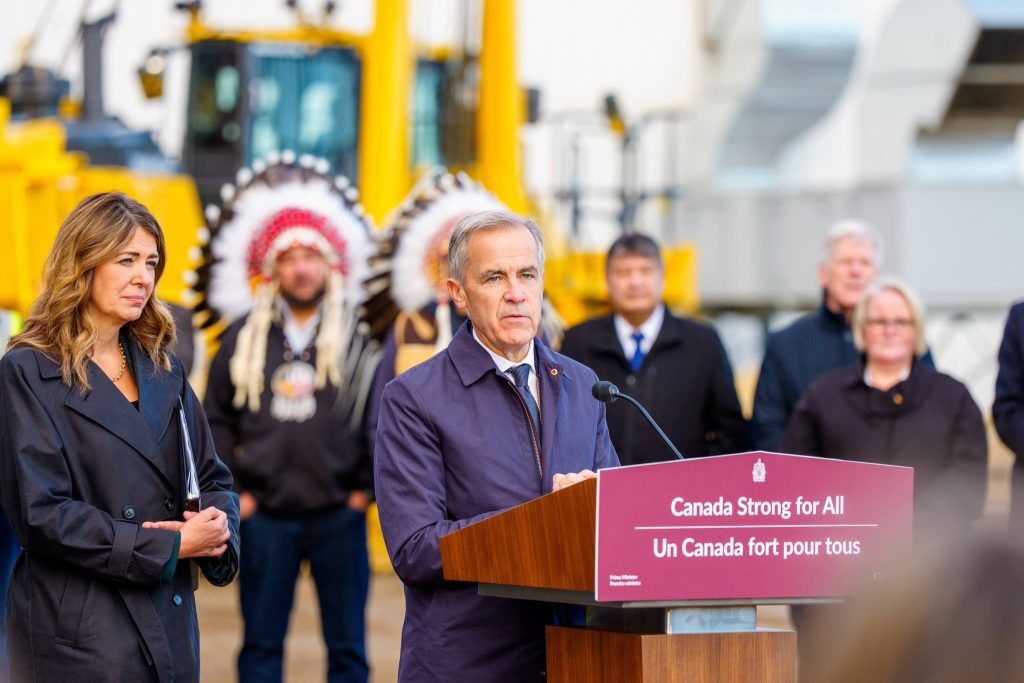
Prime Minister Mark Carney announced this month that the new West Coast Oil Pipeline, now known as Pacific Link, has been officially listed as a project of national interest. (Courtesy Prime Minister Mark Carney / Facebook)
An Alberta First Nation is taking the Canadian government to court over a proposed oil pipeline.
Cold Lake First Nations has filed for judicial review of Ottawa’s decision to designate the Pacific Link pipeline as a project of national interest.
The designation would accelerate reviews of the pipeline connecting Alberta to British Columbia.
Chief Kelsey Jacko told the Canadian Press that his community was excluded from consultations, despite being located in Alberta’s oil sands region.
“I’m here to protect the best interests of my people and for the ones yet to come.”
The First Nation argues the designation threatens treaty rights and could worsen the environmental impacts of oil sands development.
It is asking the Federal Court to overturn the designation and recognize the government’s duty to consult.
Canadian officials say consultations and environmental reviews are still required, with construction targeted for September of next year.
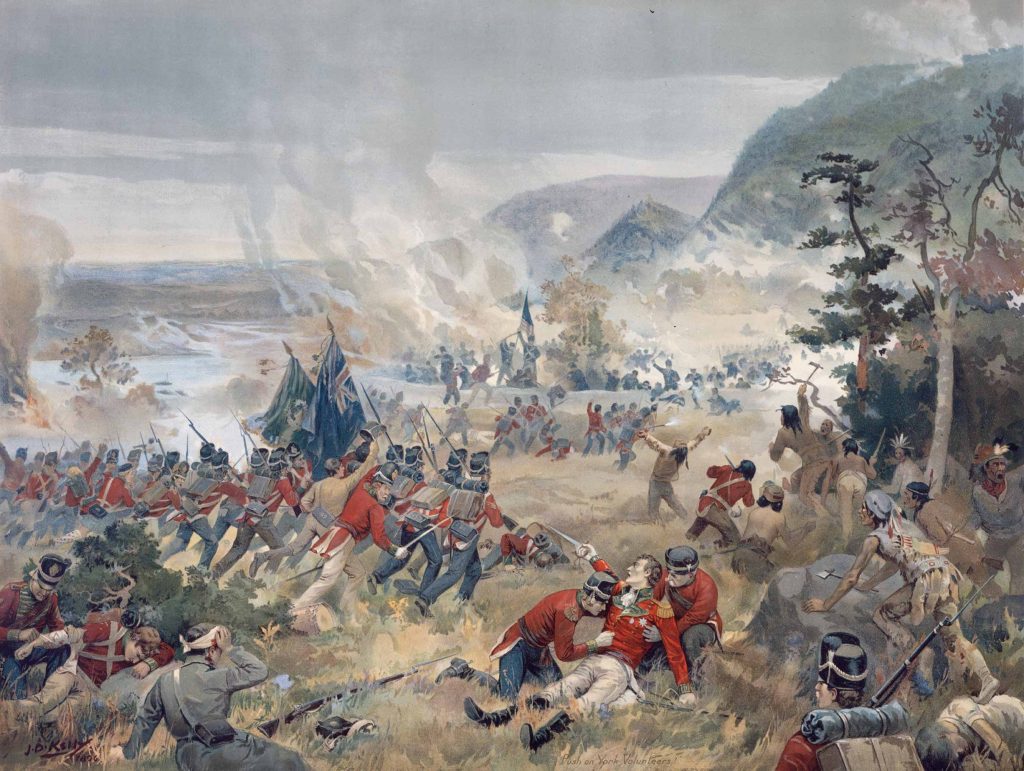
Image of the death of General Brock at the Battle of Queenston Heights by John David Kelly published 1896.
And on this day in 1812, Mohawk warriors helped defeat American forces at the Battle of Queenston Heights during the War of 1812.
Fighting alongside British and Canadian troops, Indigenous warriors played a critical role in defending the Niagara frontier in present-day Ontario, Canada, against an American invasion.
Get National Native News delivered to your inbox daily. Sign up for our daily newsletter today.
Download our NV1 Android or iOs App for breaking news alerts.
Check out today’s Native America Calling episode

Leave a Reply