Podcast: Play in new window | Download | Embed
The investigation into the death of a 19-year-old Alaska Native college student in January is still ongoing.
As Rhonda McBride from our flagship station KNBA reports, Anchorage Police say they have taken some unusual steps.
Kelly Hunt’s teachers remember her as a strong student with a bright future. They say she hoped to return to Shaktoolik one day to become a teacher or work in health care.
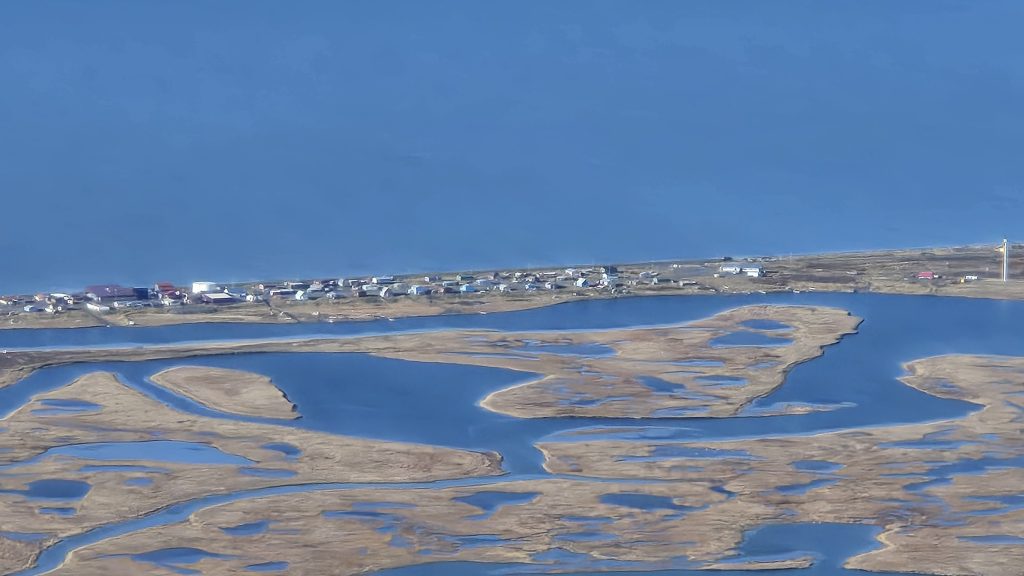
Last week, the department revealed it sent detectives hundreds of miles away to Kelly Hunt’s home village. They traveled to the Bering Sea community of Shaktoolik on a U.S. Marshals Service plane in September, eight months after she disappeared in Anchorage.
Police Chief Sean Case says investigators had a two-fold mission: to give Hunt’s family an update and learn more about her last moments.
“Although the case remains open, there’s a very narrow window that this can turn into a homicide.”
In January, Hunt passed through Anchorage on her way back to college. She stayed with some friends, who told police she was last seen headed to meet someone to buy alcohol.
Three months later, as the snow began to melt, Hunt’s remains were found at the bottom of steep, wooded embankment.
The Medical Examiner said she died of hypothermia with alcohol in her blood.
Alexis Savage, an advocate for the Hunt family, says the fact that an underage girl had alcohol in her system raises questions investigators need to answer.
“In my heart, I just don’t feel like a 19-year-old would end up in that ravine. And even if she did, we need to know who supplied that alcohol to her.”
The Anchorage Police Department is saying little about their investigation, except that it also wants to answer the same question.
“If we can uncover that question, we also going to get more of the story.”
Savage says this case is bigger than Kelly Hunt. She believes there is a network of illegal alcohol suppliers who make money off young Alaska Natives.
“A lot of times, they’d say something like, I’ll give you a tip of $15 and gas money. A lot of times, it’s just that.”
Savage says these sellers, often called “plugs”, can be found on Snapchat. She says what begins as an alcohol sale can become a gateway to sex trafficking.
Case says trafficking does not appear to be a factor in Hunt’s case, but says alcohol sales to minors often end in violence.
“We have so many cases and it’s in sexual assault cases, it’s assault cases. It’s in robbery cases. We’ve seen this over the years.”
Case declined to say whether they have any suspects in the Hunt case.
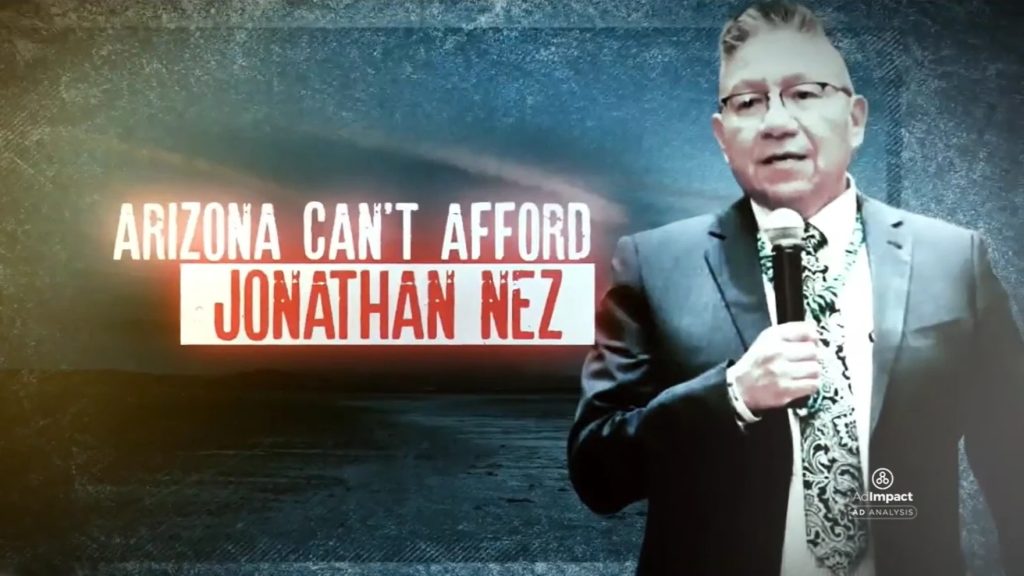 An ad funded by a political action committee backing U.S. Rep. Eli Crane, R-Arizona, attacked his Democratic opponent, Jonathan Nez, on Friday, but as KJZZ’s Gabriel Pietrorazio reports, it misidentified Nez twice – before the error was corrected.
Nez, a former Navajo Nation president, points out the PAC released the ad just days before the controversial federal Columbus Day holiday. He thinks they were in a rush.
“And they didn’t do their research obviously, because they mixed up me with my former vice president.”
While Arizona families are struggling, Jonathan Nez was accused of using tribal money to take his family to Disney World.
A photo of his former VP, Myron Lizer, appears twice as the ad references Nez. And ironically, Lizer is an outspoken conservative and staunch Trump supporter – even speaking at the 2020 Republican National Convention.
KJZZ reached out to both Lizer and Crane about the ad, but neither immediately responded.
“That just shows you that there is fear amongst my opponent and his supporters in this election.”
Get National Native News delivered to your inbox daily. Sign up for our daily newsletter today.
Download our NV1 Android or iOs App for breaking news alerts.
Check out today’s Native America Calling episode
Monday, October 12, 2026 — Joy Harjo on the healing power of poetry



Leave a Reply