Podcast: Play in new window | Download | Embed
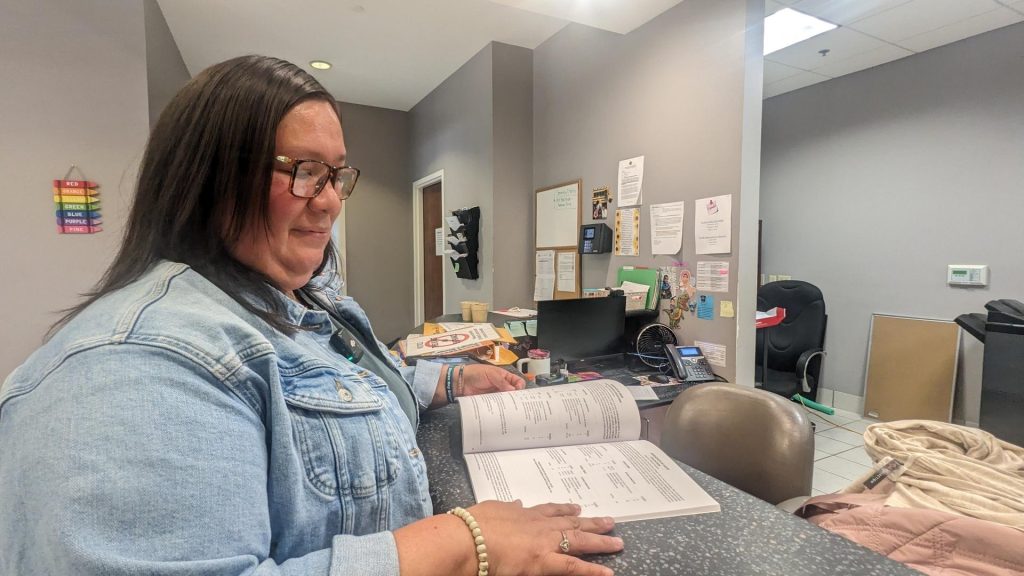
Photo: Tina Hickman of Choctaw, Mississippi flips through the course catalog for Bay Mills Community College, the tribal college she attended to earn her bachelor’s degree. (Elise Catrion Gregg / Gulf States Newsroom)
Tribal colleges and universities are higher education institutions chartered by Native American tribes. There are over 30 of them around the country – but none in the Gulf South.
Elise Gregg of the Gulf States Newsroom spoke to Indigenous students around the region who do not have a TCU of their own.
At the Pearl River Head Start in Choctaw, Mississippi, Tina Hickman is getting ready for things to pick up with the start of the school year.
Two years ago, she started her bachelor’s in early childhood education.
“I only took one class at first, but after that I started taking three classes. My kids, they were about to graduate high school, they’re back to back, so I was like, I need to do this for them.”
Unlike her other undergraduate studies, though, this degree was not at one of Mississippi’s local community colleges.
Hickman attended Bay Mills Community College, a tribal college in Michigan.
She says it was not just a chance to finish her bachelor’s.
Her favorite class, Native American Contributions to Society, gave her a new perspective on her Indigenous heritage.
“Taking that class, it just made me feel proud to be Native.”
But Hickman had to do the program online. The closest brick and mortar TCU is in Oklahoma and it does not offer four-year programs.
Indigenous students in the Gulf South often have to travel even further, to Haskell Indian Nations University in Kansas or other Midwest or Western states.
Rachel Billiot is part of United Houma Nation, a Louisiana state-recognized tribe.
She now wants to go to grad school, ideally at a TCU, to study the environment from an Indigenous perspective on the rights of nature, history of the land, and traditional ecological knowledge.
But there are only a few graduate-level, higher education options and none of them are in the South.
“And I want to work in my landscape, I have to focus in the southeast. the only place you’re going to get working knowledge is by working within the landscape itself. And usually, the things that are offering work with indigenous populations from an indigenous perspective are either in the southwest or in the Midwest.”
Melinda Ben, who directs the tribal scholarship office for the Mississippi Band of Choctaw, says when she speaks to younger students, many are in the same boat as Hickman and Billiot – and simply do not know TCUs are an option when they are leaving high school. But, she says, non-Native institutions can also help.
Ben would love for Mississippi State University, where a lot of their tribal members attend, to develop similar curriculum to the University of Oklahoma – another non-TCU with a large Indigenous population.
“OU actually has that track. We’ve had a couple of students to graduate with a Native American Studies degree. They even offer Native American Law.”
The options are there, but they are just not close to home.
-
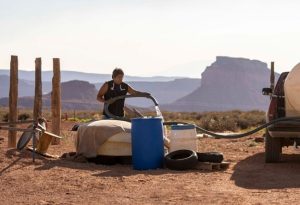
- (Photo: Jani Ingram)
-
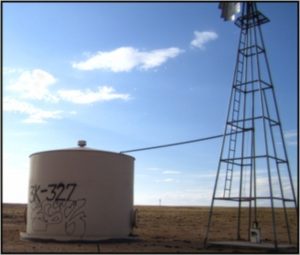
- An unregulated livestock well in western Navajo Nation used by households without indoor plumbing. (Photo: Jani Ingram)
Indigenous researchers in Arizona are educating Navajo Tribal members about potential dangers in their water.
In many rural communities, Native people rely on wells for drinking water, and the quality of that water can vary.
Mark Moran reports.
Many Native American communities in the Southwest rely on well water, but its quality and safety can vary.
Parts of the Navajo and Hopi reservations were heavily mined for uranium used in nuclear weapons during the Cold War.
Northern Arizona University chemist and Navajo Nation citizen Jani Ingram grew up on the reservation. She says it became clear that many abandoned mine sites had not been cleaned up.
“There’s over 500 abandoned mine sites out on Navajo that are an issue because there really was very little to no cleanup that happened.”
Ingram says her goal is to determine pollution levels and educate Tribal members about the importance of safe drinking water.
She presented her latest findings to the American Chemical Society late last month.
Get National Native News delivered to your inbox daily. Sign up for our daily newsletter today.
Download our NV1 Android or iOs App for breaking news alerts.
Check out today’s Native America Calling episode
Tuesday, September 15, 2026 — An Indigenous-led opera retells a historic Tlingit act of resistance

Leave a Reply