Podcast: Play in new window | Download | Embed
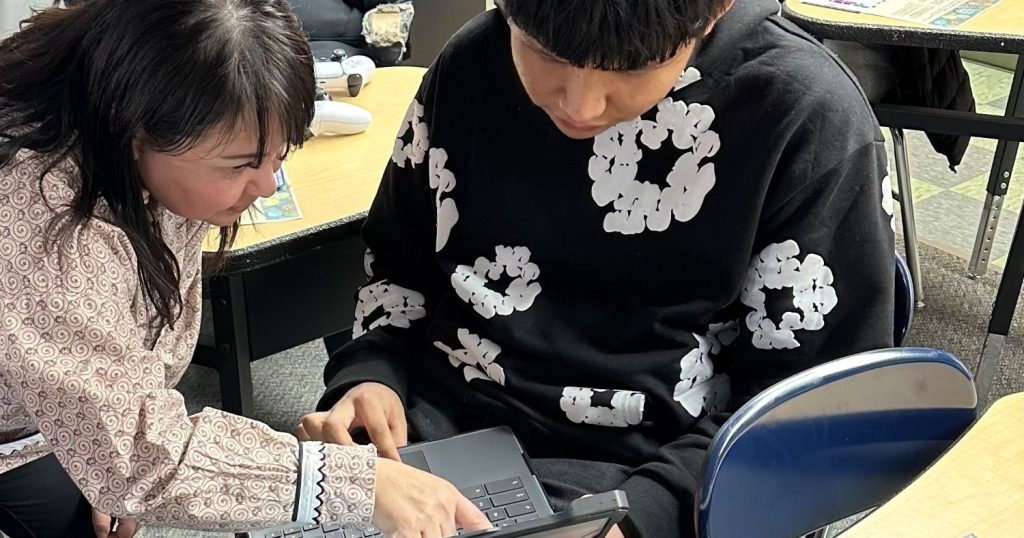
Photo: The Alaska Federation of Natives educates young people in Indigenous villages about the importance of voting in every election. (Michelle Sparck / AFN)
Alaska Native leaders are working to bring back the power of the state’s Indigenous voters.
In a state where one in four voters is Native, Tribal leaders say that inaccessible geography and information gaps have combined to reduce the potency of Indigenous voices.
What was once a powerful voting bloc has weakened over the years as younger generations have become less politically active, as Mark Moran reports.
As recently as 1982, Indigenous people wielded substantial power at the polls – some villages even had voter turnout as high as 80%. That number has fallen drastically, now hovering at closer to 30%.
Michelle Sparck, director of Get Out Native Vote for Alaska Federation of Natives, says Indigenous leaders are encouraging Native villagers to carry on the tradition of democracy established by their elders.
“How difficult is it to convince a dozen of your friends and neighbors in a small community to invest in making informed decisions, and testimony, and willingness to serve? And that’s what we’re asking our people to do, is reflect on our history.”
Sparck says Alaska’s Indigenous population prefers to cast its vote in person rather than by mail, which can often be difficult due to geography, health issues or a lack of polling places. But even if voting by mail, postal service can often be interrupted by severe weather.
There is also limited access to Alaskan communities that can only be reached by boat or plane.
The Alaska Federation of Natives has worked in schools to teach young people about civics and government.
The organization also travels to villages to encourage young people to re-awaken the power of voting.
“We have so much political power. We have an ability to shape Alaska’s government in our own image, and we just need to own that power again, just like our elders did.”
Indigenous villages are also facing a shortage of poll workers, especially in the most remote regions of the state, or physical polling places that were never open at all in recent elections – including in Shaktoolik, Diomede, and Kobuk in northwest and western Alaska.
Federal officials are also working to build practices to best communicate with Indigenous villagers, and help them exercise their right to vote.
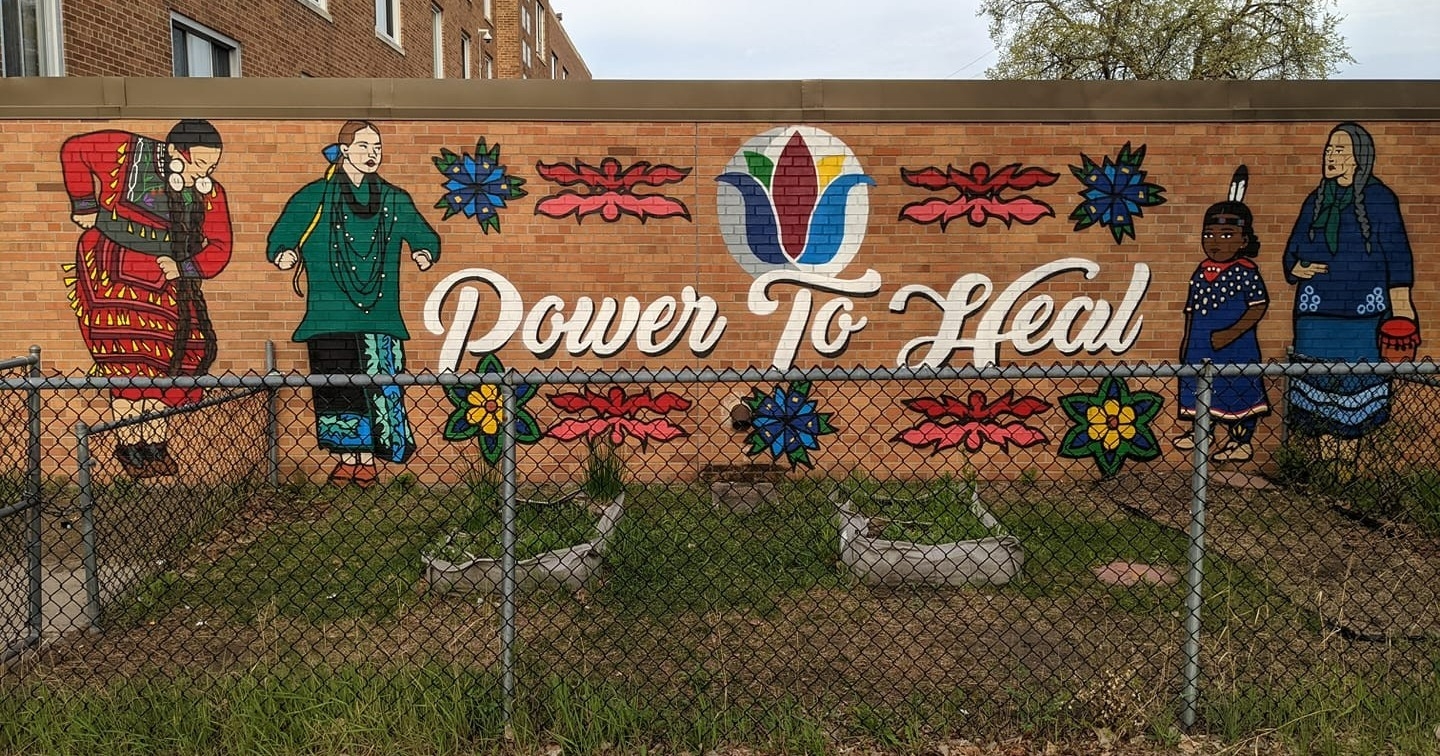
Organizations like the Minnesota Indian Women’s Resource Center in south Minneapolis offer supportive housing that helps urban Native Americans access culturally responsive healthcare, social, and recreational services as they overcome obstacles in their lives. (Courtesy MIWRC)
Ending longstanding disparities for Native Americans is not just limited to reservations.
A lack of access to affordable, stable housing is an issue felt across Minnesota. Support organizations working with Indigenous populations in Minneapolis say they are working through a maze of complications, as Mike Moen reports.
Minneapolis is home to one of the largest concentrations of urban Native Americans in the United States with a key cultural corridor on the city’s south side.
The American Indian Community Development Corporation offers programs addressing housing and homelessness in the area.
Executive Director Travis Earth-Werner says the support system has had a lot to contend with recently.
“The opioid epidemic, the pandemic, all these events that have occurred throughout, you know, the last ten years [have] escalated homelessness, poverty. There’s a lot of first-time homeless individuals.”
His nonprofit has about 500 units available for Native Americans overcoming substance use disorders and other challenges so they can maintain their housing, but Earth-Werner says resources are stretched thin, with added concerns about possible federal cuts on the horizon. And he says there are still gaps to fill for needs like sober housing options.
In communities all over, Earth-Werner says everybody wants to add affordable housing development to meet demand, but he says to stay in those units, people need good paying jobs that do not always require a long list of education credentials.
And for areas with unique needs, he says groups on the ground need all the outside support they can get so that staff members can stay mission focused.
“It takes people with a lot of hard work to work with individuals and progress them forward when often there’s a lot of hopelessness involved.”
Ruth Buffalo, president of the Minnesota Indian Women’s Resource Center, echoes thoughts about having strong supportive services to go alongside any new housing development.
In this part of South Minneapolis, she says public safety feels like an afterthought, with drug dealing and other criminal activity making it hard for American Indians to go about their daily lives.
“Our most vulnerable are really trying hard to make a new path forward, but they can just go right outside and there’s predators lurking.”
The Women’s Resource Center recently opened its 24-unit supportive housing building called Oshki-Gakeyaa, or New Way.
The city contributed funding to that effort, but on a larger scale, Buffalo says policymakers need to listen to what residents want in crafting solutions, like housing they can afford.
Get National Native News delivered to your inbox daily. Sign up for our daily newsletter today.
Download our NV1 Android or iOs App for breaking news alerts.
Check out today’s Native America Calling episode

Leave a Reply