Podcast: Play in new window | Download | Embed
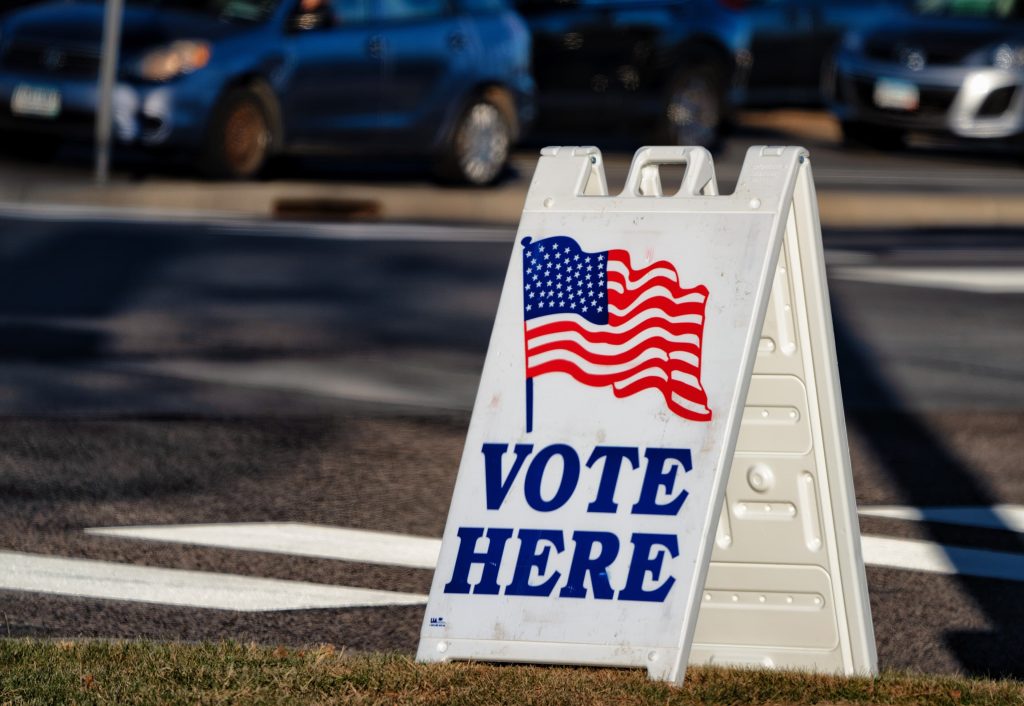
Photo: A “Vote Here” sign outside an election polling place at Woodbury City Hall in Woodbury, Minnesota, during the 2020 general election. (Tony Webster / Wikimedia)
Indigenous people continue to face barriers throughout the election process. That is according to a new report that says those challenges can begin well before a voter reaches the ballot box.
For the Mountain West News Bureau, Daniel Spaulding has more.
The report from the Native American Rights Fund says voting disparities have deep historical roots.
NARF analyzed federal data from 2020 through 2024 and found issues ranging from voter registration rejections to difficulties with mail-in ballots. In counties where Native Americans make up at least a quarter of the population, rejected voter registration applications increased by an average of 200%.
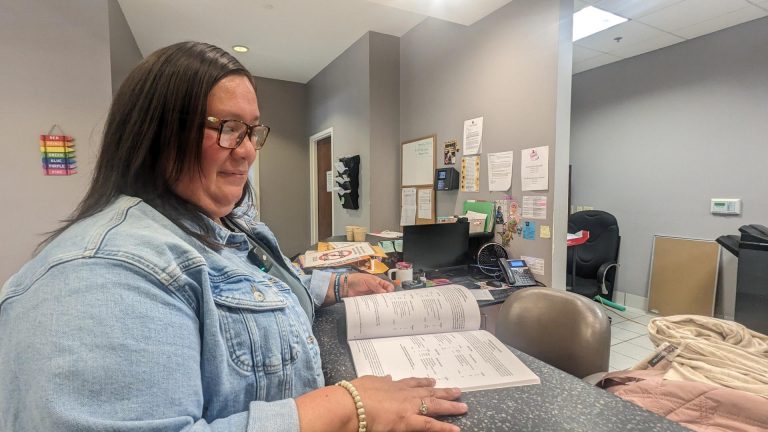
Allison Neswood (Navajo) is a senior staff attorney at NARF.
“Voting is not just one act. It’s a series of steps and the report illustrates that Native people are more likely to get hung up every step along the way.”
Neswood says addressing those issues will require greater investment in voting infrastructure across Indian Country.
The study focused on counties with high Native populations, including Arizona’s Apache and Navajo counties – and New Mexico’s Cibola, McKinley, and San Juan counties.
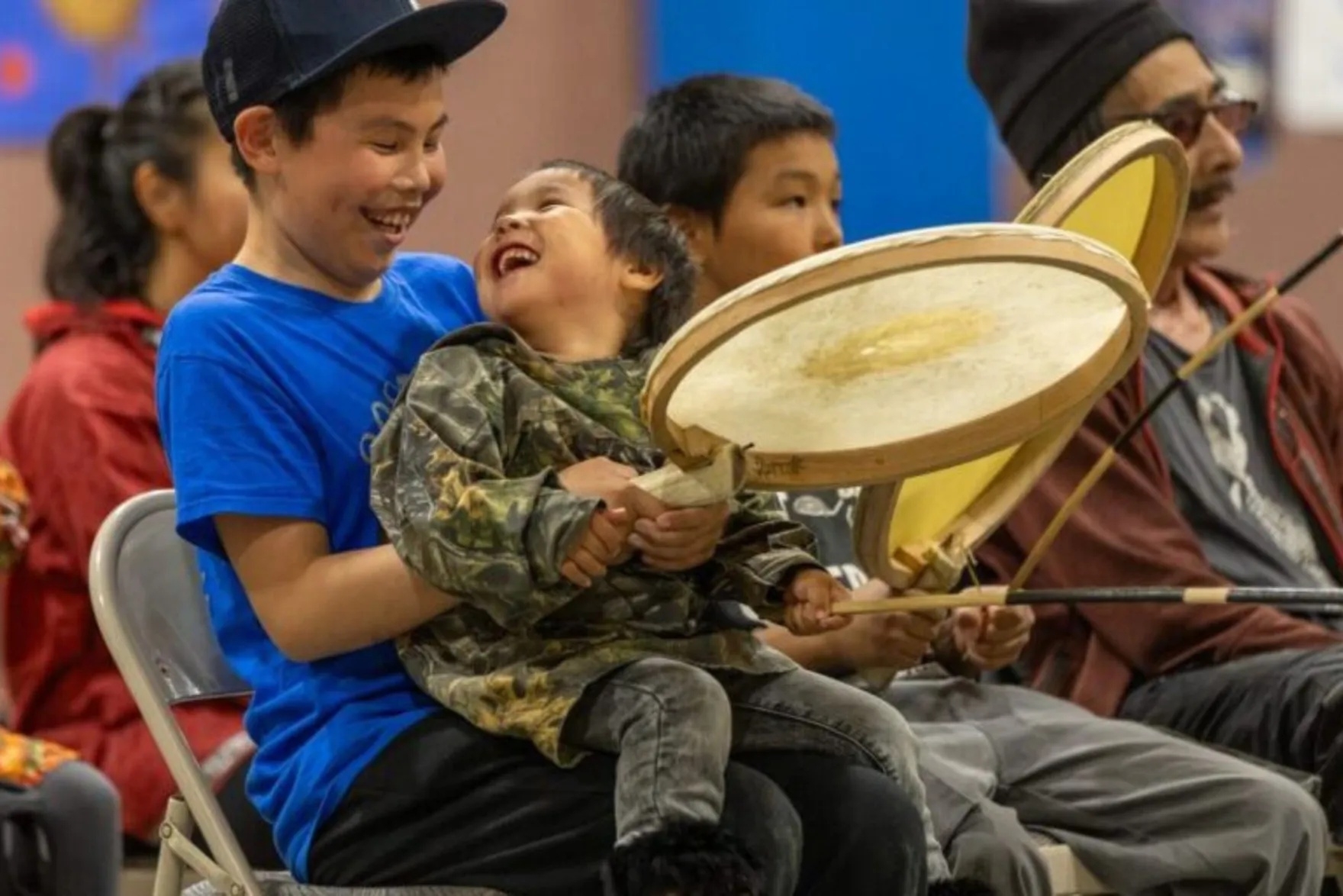
Young drummers from the Kingikmiut Dance Group wait to perform at the 25th Annual Kingikmiut Dance Festival. (Photo: Margaret Sutherland / KNOM)
Dance groups from across the Bering Strait region gathered in Wales, Alaska last weekend for the Kingikmiut Dance Festival.
The event marked a quarter century of teaching and sharing songs and dances that leaders say had been absent from some communities for decades.
KNOM’s Margaret Sutherland traveled to the remote village for this story.
On the first night of the Kingikmiut Dance Festival, fog settles over the runway in Wales.
Three of the five scheduled visiting groups are grounded: Gambell, Savoonga, and Brevig Mission. But inside the Kingikmiut School gym, the festival began anyway with groups from Wales and Unalakleet.
The Kingikmiut Dance Group from Wales takes its place in the center of the gym.
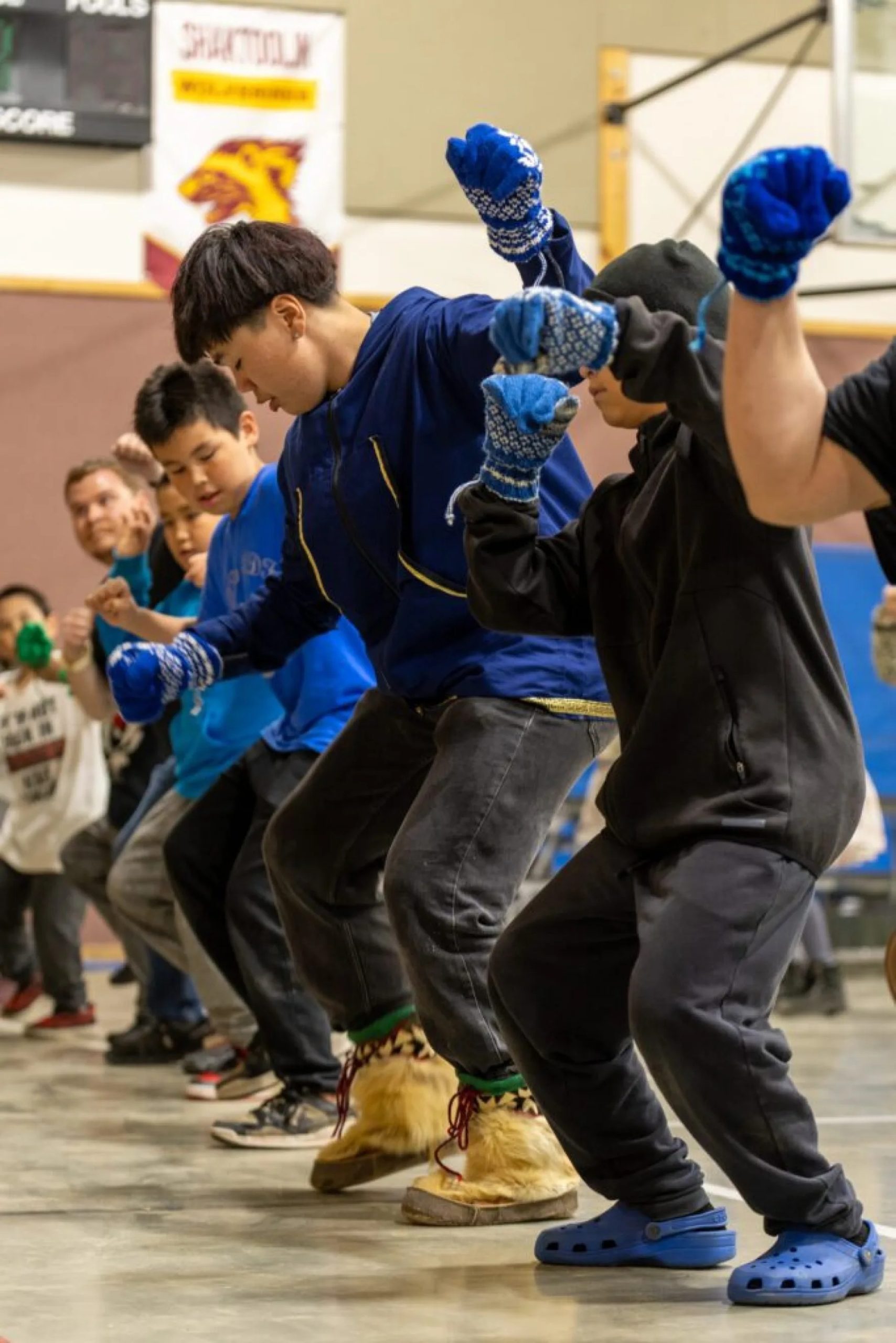
Frank Komonaseak, center, dances during the 25th Annual Kingikmiut Dance Festival. (Photo: Margaret Sutherland / KNOM)
Drummers sit in a line, holding skin drums in front of them as they sing together while dancers move out front, following the songs.
Sixteen-year-old Cain Seetook is one of the younger Kingikmiut drummers.
“It heals my hurt and makes me happy. And I don’t know. That’s just it.”
Seetook says he has been drumming since he was about one year old and practices with the Kingikmiut group once or twice a week.
His cousin, 15-year-old Frank Komonaseak, is also part of the group, rotating between the drum line and the dance floor.
“It feels good to be dancing again. It’s an honor to be in this dance group again, to be singing and dancing. I grew up doing it, and I’m proud of who I am, and I’m proud of my cousins because they’re all good dancers too.”
Komonaseak moved back to Wales about a year ago after living in Anchorage for several years. He says he stopped dancing while he was away.
When he returned, he went to practice and began relearning the songs.
“It is really sad to not have dancing, because I don’t think I can go a week without Eskimo dancing, because that’s how much I love it.”
Get National Native News delivered to your inbox daily. Sign up for our daily newsletter today.
Download our NV1 Android or iOs App for breaking news alerts.
Check out today’s Native America Calling episode
Wednesday, September 16, 2026 — Native advocates assess barriers to upcoming elections

Leave a Reply