Podcast: Play in new window | Download | Embed
Families and communities across western Alaska are getting long-awaited answers after federal investigators released their final report on last year’s deadly crash of Bering Air Flight 445.
The report identifies multiple factors that contributed to the accident, including severe icing and safety shortcomings by the airline.
Alaska Desk reporter Alena Naiden from our flagship station KNBA has more.
All nine passengers and the pilot died when a Bering Air Cessna Grand Caravan crashed during its flight between Unalakleet and Nome in February of last year.
The National Transportation Safety Board (NTSB) final report on the incident faults the pilot for “inadequate airspeed management”. It also says the plane faced severe icing conditions and was overweight, leaving less of a margin to avoid a stall.
NTSB Chairwoman Jennifer Homendy was on scene in Nome last year and visited the state again this week, meeting with families of the victims of the crash. She says several preventable problems contributed to the accident.
“In this case, we had a number of issues. We had first chronic underreporting of weight loads on the aircraft. There were problems with airspeed management. Between the airspeed, the increased load, the icing conditions, and some pilot inputs, he ended up in a stall.”
Homendy says the pilot encountered severe icing conditions that were not initially forecast. She says investigators found that the pilot checked the weather, but did not receive any support from the air carrier making the decision on whether it was safe to fly.
“We found that there wasn’t a process in place for Bering to have a weather risk assessment of when to fly – go/no go decision. It was all on the pilot.”
According to the report, a few minutes before the crash, a controller in Anchorage told the pilot that both of Nome’s runways were temporarily closed for de-icing and advised the pilot to slow down.
The pilot initially decreased speed before increasing engine power again. Flight data showed that the plane pitched nose up at one point before losing speed and altitude until its low airspeed awareness system activated, which disengaged the autopilot.
The controller sent a low-altitude alert but had lost contact with the pilot.
The NTSB report says the plane’s anti-icing system was working, and the pilot used it before the crash.
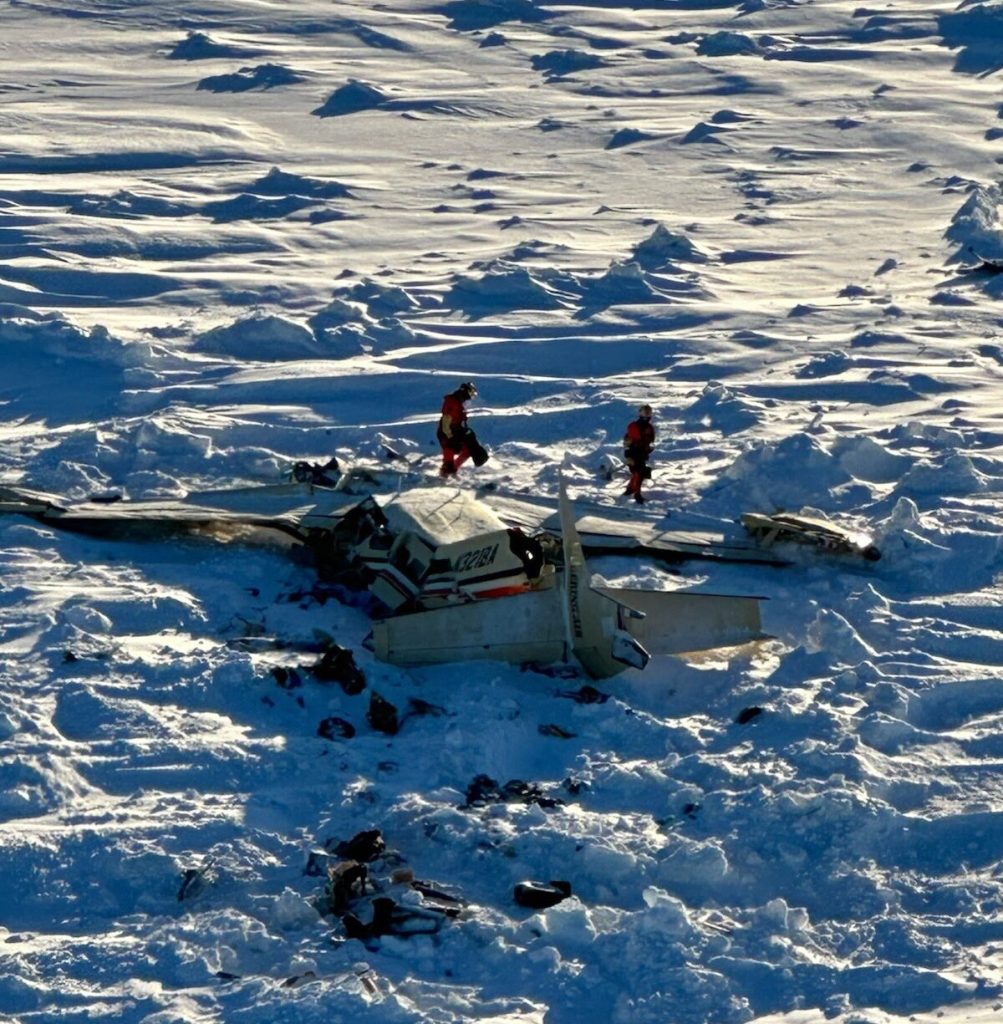
A U.S. Coast Guard plane found the wreckage resting on an ice floe east of Nome the next morning, with no survivors.
The NTSB also listed “inadequate safety management” by Bering Air as a cause of the crash.
The report says the airline’s planes routinely flew overweight.
Bering Air declined to provide a statement when reached for comment.
Homendy says the agency looked at 16 other Bering Air flights and found that loads often exceeded what was stated.
She says that the agency did not look at whether other Alaska operators were also underreporting weights, but broadly speaking, it is a concern.
She says the Federal Aviation Administration (FAA) did not provide adequate oversight of the air carrier, particularly as it rapidly expanded in the region in recent years. She says the agency advised the FAA to require operators to adopt safety management systems like evaluating risks, having procedures to make sure the loads are accurate, and look at how they do pre-flight planning and go/no go decisions.
“Those, to me, are not burdensome. Those are procedures that any operator, including a single operator can put in place themselves and can save lives and frankly save a company.”
Bering Air faces three wrongful death lawsuits related to the crash.
Clay Robbins is an attorney representing the family of Talaluk Katchatag (Iñupiaq) from Unalakleet. He says the suit seeks compensation for Katchatag’s children, but the family also hopes to set a standard for bush airlines across the state.
“They must be held accountable for satisfying their responsibility to exercise the highest standard of care to protect their customers from tragedies such as this, that was entirely, entirely avoidable.”
The report is NTSB’s final action on the crash. It calls for more training for pilots to better handle loss of control situations.
It also includes a host of recommendations for airlines like Bering Air, called Part 135 operators, like using certified dispatchers and expanding flight monitoring.
KNOM’s Ben Townsend contributed to this reporting
Get National Native News delivered to your inbox daily. Sign up for our daily newsletter today.
Download our NV1 Android or iOs App for breaking news alerts.
Check out today’s Native America Calling episode