Podcast: Play in new window | Download | Embed
What does it mean to have a constitution?
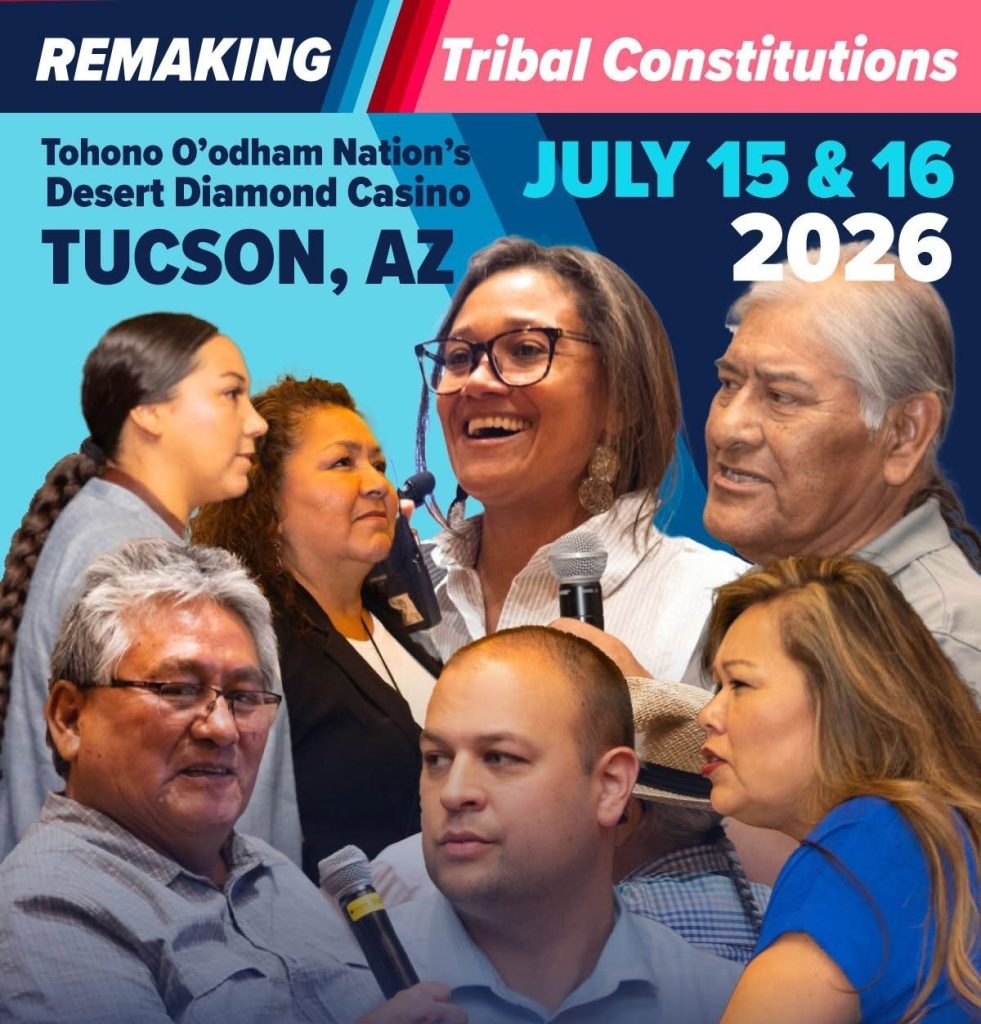
That is a question tribal leaders are going to grapple with this week in southern Arizona during a two-day seminar.
KJZZ’s Gabriel Pietrorazio has more.
Up until Congress passed the landmark Indian Reorganization Act, tribes were not seen as sovereign. That all changed in 1934.
Dave Beeksma is from the Red Cliff Band of Lake Superior Chippewa in Wisconsin.
“But there are going to be some conditions. So, what the U.S. government did, was they provided these boilerplate templates. [In] some cases, these were literally fill-in-the-blank constitutions.”
He is also director of the Native Nations Institute at the University of Arizona.
“We the people of – state your tribe – are constituting a constitution to do x, y, and z. That created some challenges for us over the next 90 years.”
Which is why the institute is helping tribes review these outdated texts. The U.S. Constitution has been amended 27 times. Such reform is something Thomas Jefferson encouraged.
“The Cherokee Nation does something like that right now. They have a provision every 20 years where they can look and decide whether or not to have essentially a constitutional convention. Our constitutions should be like nature. They should be like our world. They should be like our communities. They should be able to grow.”
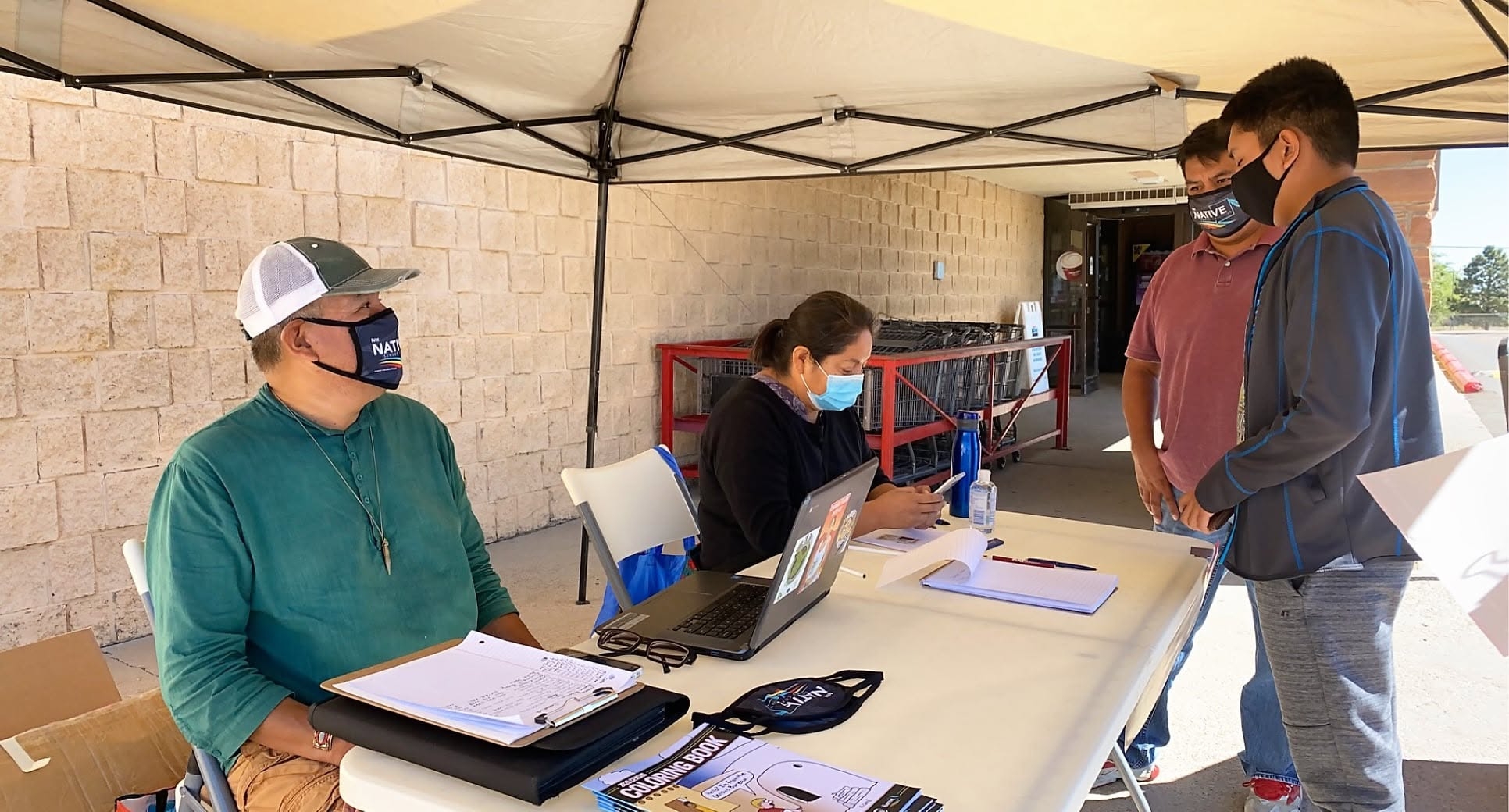
(Courtesy New Mexico Native Census Coalition / Facebook)
The 2030 Census is still nearly four years off, but a growing distrust of government has those planning to help with the New Mexico count worried about fairness and representation.
Roz Brown has more.
The count is conducted every ten years by the U.S. Census Bureau and relies on a vast network of partners and community organizations like the League of Women Voters to help.
State Demographer Robert Rhatigan says New Mexico has had a constant problem with undercounting of first-generation immigrant families and Native Americans, primarily because addresses are missing from the Census Bureau’s address list.
“Those reasons include non-standard addressing, field work limitations; there’s the language and cultural barriers, and distrust of the federal government. The Hispanic community in particular, and that is a big part of it.”
Rhatigan says census undercounts can prevent tribal communities and other groups from receiving federal funding. He notes the state’s financial investment in a program called the Local Update of Census Addresses for the 2020 Census was highly successful – adding more than 100,000 previously overlooked addresses.
He believes the state could see more gains if some $300,000 are allocated by the state legislature for the 2030 Census.
Compared to other agencies, the Trump administration’s staff cuts to the Census Bureau have been minimal.
About 300 workers, or 25% of the Bureau’s employees, were laid off during broader federal downsizing, but Rhatigan worries it still could be detrimental.
“That 25% of staff represented well north of 50% of the institutional knowledge, folks who’d been through two or three censuses. So that’s a huge loss.”
In 2019, the U.S. Supreme Court ruled the first Trump administration could not include a question about citizenship on the 2020 census form, but there are new efforts in Congress to add a similar question in 2030.
States with a majority of Democratic voters argued such a question would discourage legal and illegal immigrants from responding and make the population count less accurate.
Rhatigan says there also are efforts underway by Congressional Republicans to limit the Census Bureau’s contact strategies.
“The policy in 2020 was six knocks on the doors. They wanna limit that to two contacts. That would be extremely problematic, and it would almost certainly depress the count in New Mexico more so than in other states.”
Get National Native News delivered to your inbox daily. Sign up for our daily newsletter today.
Download our NV1 Android or iOs App for breaking news alerts.
Check out today’s Native America Calling episode
Monday, July 13, 2026 – Tribal solar projects shine on without much federal support