Podcast: Play in new window | Download | Embed
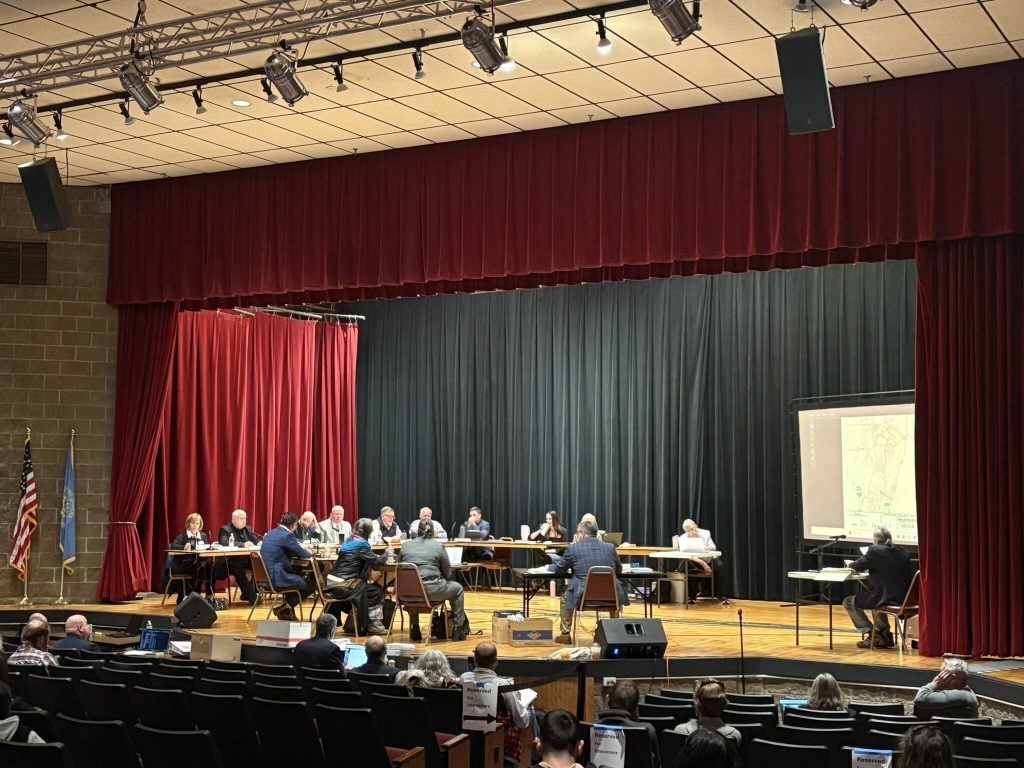
Photo: The South Dakota Board of Minerals and Environment conducts a hearing about a uranium exploration permit application on May 19, 2026, at the Mueller Civic Center in Hot Springs, South Dakota. (Meghan O’Brien/South Dakota Searchlight)
A new South Dakota law requires language translation services for some government proceedings.
The law does not take effect until July, but it already had a test during a hearing on a uranium drilling permit application.
South Dakota Searchlight’s Meghan O’Brien explains.
The new law requires translation services for contested administrative cases, like a pending case involving a permit application for uranium exploration in the southern Black Hills.
State Rep. Erik Muckey (D-SD) sponsored the legislation.
“Any proceeding that’s open to the public would receive or have those translation services available at no cost to the participants, so it would be covered by the state of South Dakota. We can’t turn people away from due process of law, and we need to be able to provide that, especially knowing that we already do this when it comes to the civil and criminal case law that goes before the state.”
The state Board of Minerals and Environment is considering the drilling permit. Some project opponents requested Lakota interpretation services.
Lakota-speaking tribes formerly controlled the Black Hills as part of the Great Sioux Reservation. There is rock art created thousands of years ago on the walls of Craven Canyon near the drilling site.
The board voted in March to provide interpretation services.
Board members knew the new law won’t take effect until July first, but decided to honor the intent of the law anyway.
Alex White Plume is one of the two people hired to interpret spoken English into Lakota during the hearing.
“I speak Lakota better than I speak English.”
He grew up in Manderson, an especially rural part of the Pine Ridge Reservation.
“The vast majority of the members of my community will still speak Lakota, and it’s funny to hear somebody come speak white man language amongst us, you know, cause it sounds funny.”
White Plume was happy to interpret the hearing.
“That was really important for the Lakota speakers to really hear their language and get a clear understanding about what the legal jargon was that the lawyers were speaking. So it’s really an important day, and to me, it was a historic day.”
But the state board failed to provide a Lakota interpreter for the first day of the hearing. A state official said potential interpreters had conflicts of interest or scheduling conflicts that prevented them from accepting the role.
On the second day of the hearing, the department contracted with two interpreters — White Plume and Leola One Feather.
So, when Clean Nuclear Energy’s legal counsel asked a question to an executive for its parent company, Nexus Uranium …
“Can you generally describe steps Clean Nuclear Energy took to evaluate the project’s potential impact on historic, archaeologic, geologic, scientific, recreational aspects of the effective surrounding land?”
…Leola One Feather translated.
As the hearing continued, some exchanges went without interpretation. Project opponents in the audience objected.
Elizabeth Lone Eagle (Rosebud Sioux), is one of more than a dozen people who have filed official complaints against the project.
“This is institutionalized racism, and you are promoting it.”
She interjected after exchanges between the hearing chair, lawyers, and a witness went untranslated.
“You are forbidding her from doing her job, because you want your white colonizer sanitized way of doing things.”
The board did not respond and the hearing continued.
The day after that exchange, Lone Eagle filed a federal lawsuit against the board, the Department of Agriculture and Natural Resources, and the company seeking the permit.
It cites concerns about the hearing’s lack of interpretation on the first day.
A spokesperson for the department told South Dakota Searchlight that the hearing is adjourned until the lawsuit is resolved.
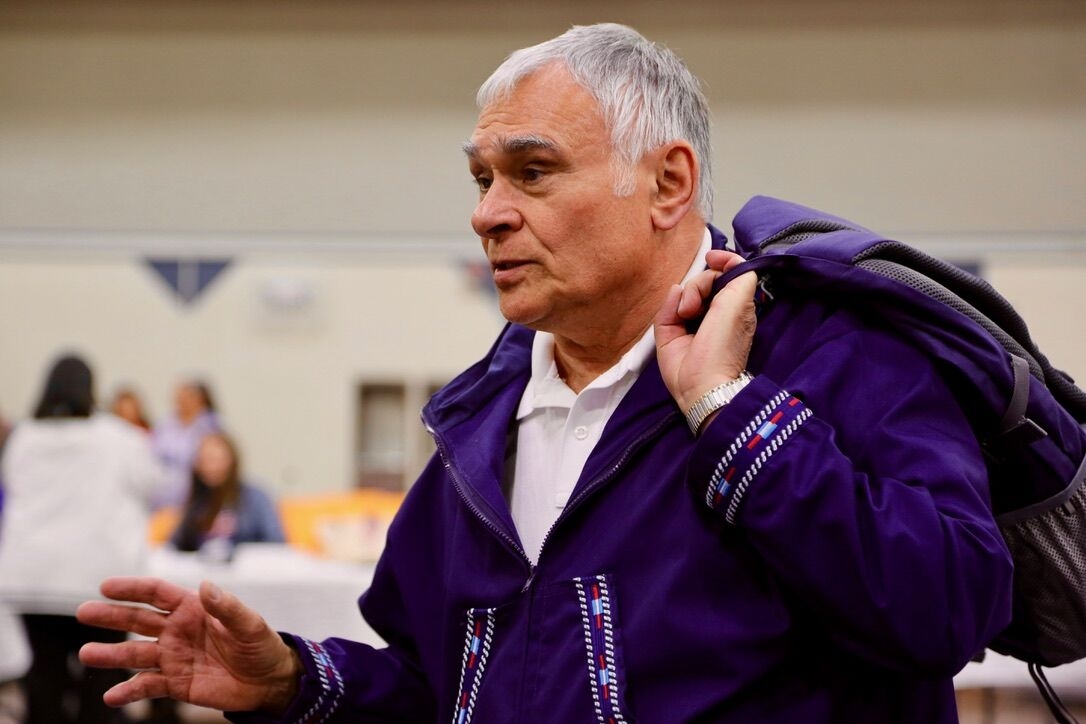
(Courtesy Inuit Circumpolar Council Alaska / Facebook)
Alaska Native leaders are remembering a long-time advocate for Inuit rights, James “Jimmy” Stotts, who passed away in May.
As the Alaska Desk’s Alena Naiden from our flagship station KNBA reports, Stotts spent decades promoting food sovereignty and creating a unifying voice for Indigenous people across the Arctic.
James “Jimmy” Stotts died late last month after a long fight with cancer. He was 78.
For more than four decades, Stotts led the Inuit Circumpolar Council, an organization that represents Inuit people from Alaska, Canada, Greenland, and Russia. In his work, he fought for protecting Inuit food sovereignty and culture, and for including Inuit people in the decisions concerning the Arctic.
Patsy Aamodt was Stotts’ friend and former colleague.
“He cared so much for our people all across the circumpolar north, because we’re related.”
Stotts was born in Utqiagvik and lived in various villages across Alaska.
“He knew the importance of making sure caribou were caught…. Nobody had to explain that to him.”
Stotts worked for several tribal organizations, including the Arctic Slope Regional Corporation.
Rex Rock Sr., the current head of the corporation, called Stotts a mentor.
“He was someone that I respected, and you always looked up to, right?”
The leadership of the Inuit Circumpolar Council Alaska said in a written statement that Stotts worked to bring people across the Arctic together.
Rock says that Stotts’ Utqiagvik roots helped those efforts.
“We know, being whalers, that you cannot accomplish landing that whale on your own. … He knew what it took to work together to accomplish great things.”
Former Alaska politician and Northwest Arctic leader Reggie Joule knew Stotts for a long time. He says Stotts was among leaders who made it their goal to educate others about the Iñupiaq way of life.
“This is something that Jimmy understood really well – rise to the challenge and responsibility of being an Indigenous person. … It goes on to basics – teaching your children the things that we would like to continue to be.”
Joule and Aamodt say they hope Stotts’ legacy lives on and the young people take on that mantle.
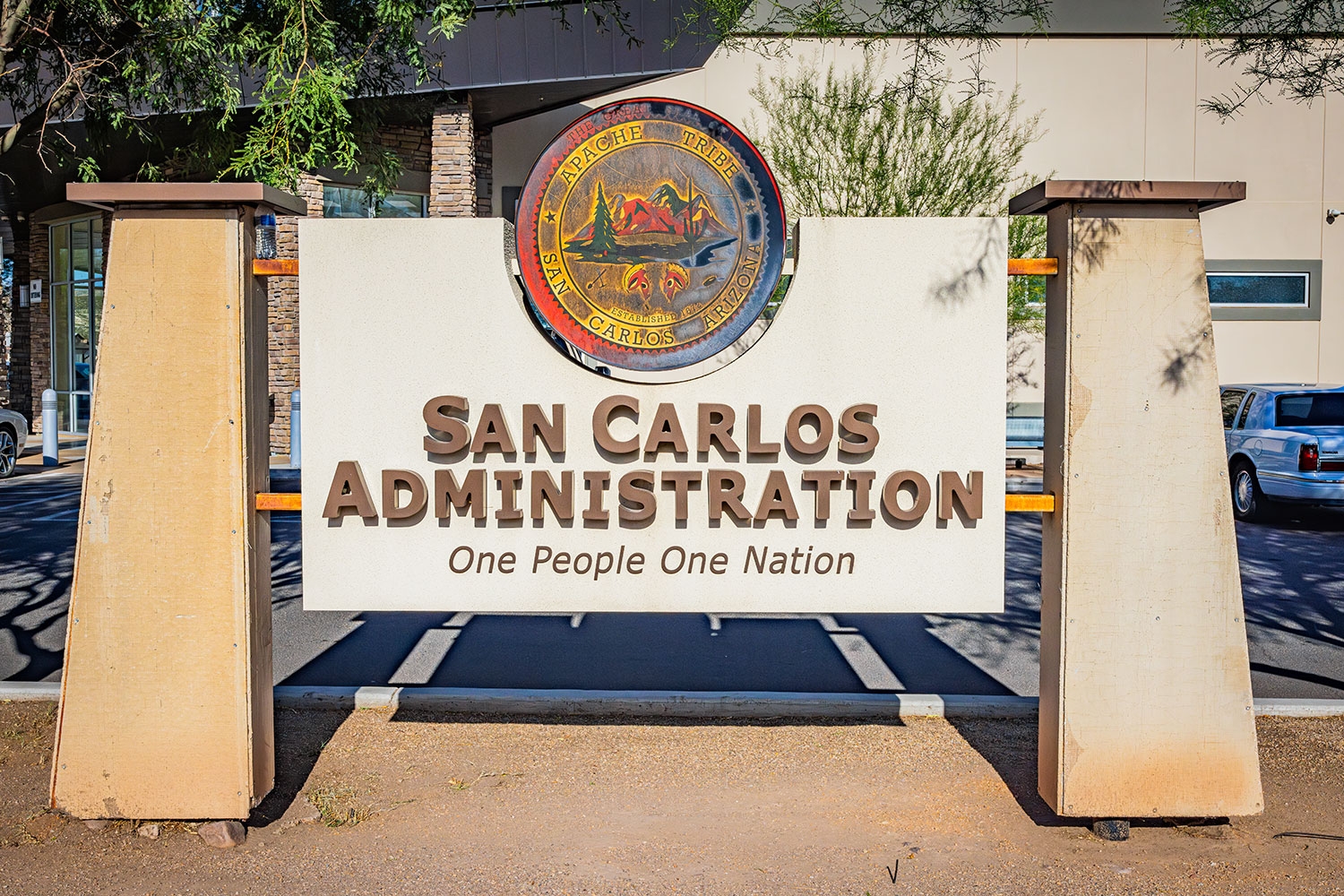
(Courtesy San Carlos Apache Council)
The San Carlos Apache Council has hired a forensic accounting firm to conduct an audit following recent allegations of embezzlement by the tribe’s own staffers.
KJZZ’s Gabriel Pietrorazio has more.
Four employees, including the tribe’s secretary, have all been placed on paid administrative leave pending this review.
The staffers have been accused of cashing fraudulent checks using the tribe’s funeral assistance fund by creating hundreds of fake names for spouses or siblings, who are not enrolled.
The family of each deceased relative is entitled up to $850.
The team responsible for overseeing the burial expense program paid out nearly $470,000 within the last six months alone.
The tribe says it remains “committed to ensuring that all funds are accurately accounted for.”
Get National Native News delivered to your inbox daily. Sign up for our daily newsletter today.
Download our NV1 Android or iOs App for breaking news alerts.
Check out today’s Native America Calling episode
Tuesday, June 2, 2026 — A focus on Native legal rights bears fruit