Podcast: Play in new window | Download | Embed
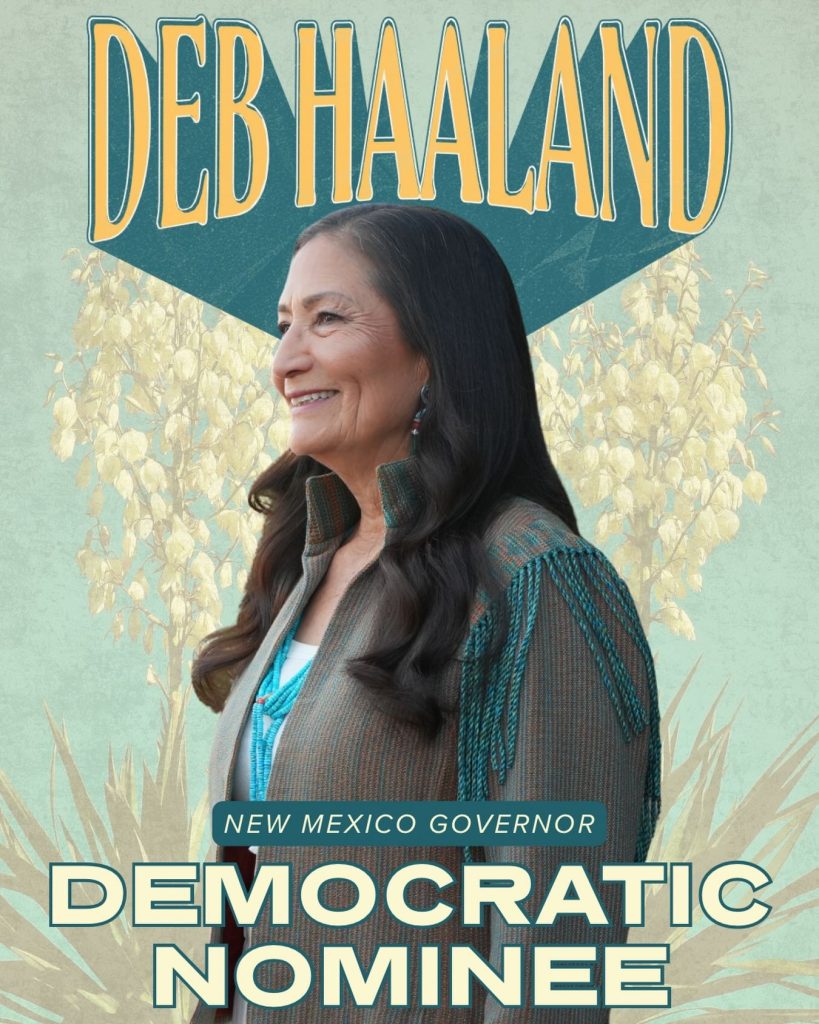
New Mexico and the U.S. are one step closer to having the first female Native American governor as former Interior Secretary Deb Haaland (Laguna Pueblo) beat out her Democratic opponent Sam Bregman with 72% of the vote Tuesday night in the primary election.
KUNM’s Jeanette DeDios (Jicarilla Apache and Diné) was among the attendees at her watch party.
Old Town plaza was filled with New Mexicans young and old in support of Democratic gubernatorial candidate Deb Haaland, dressed in a black and white dress with bright red cowboy boots.
Haaland told the crowd she would lower costs so that New Mexicans can have better access to health care, education, and safe communities.
“I’ve been through hard times. I’m a single mom, I’ve lived paycheck to paycheck, I survived off SNAP and WIC. I’m over 35 years sober. These are the same struggles so many New Mexicans face today, but with the grit, creativity, and persistence that only New Mexicans know, I know a better New Mexico, as possible.”
Haaland served as the 54th U.S Secretary of Interior, making her one of the first two Native American women elected to Congress. She said she will put that work into experience.
“To combat [President] Donald Trump’s cuts to Medicaid, fight against rising health care costs, and take a stand, so that ICE will not be allowed near schools, places of worship, or public community spaces.”
Kalika Tallou (Diné and Ute) works for the nonprofit New Mexico Community Capital and was in the crowd. She says she has heard some reservations from other Indigenous people about Haaland, but she says Haaland has a big voice in the grand scheme of things.
“I feel supportive of her and her work in Washington, DC, and internationally, and across the island, and wanting to uplift and support our Indigenous women with the challenges that they’re faced with.”
Haaland will face Republican candidate Greg Hull on November 3.
“If I didn’t earn your vote this primary election, I want you to know I’m going to work every day to earn it now.”
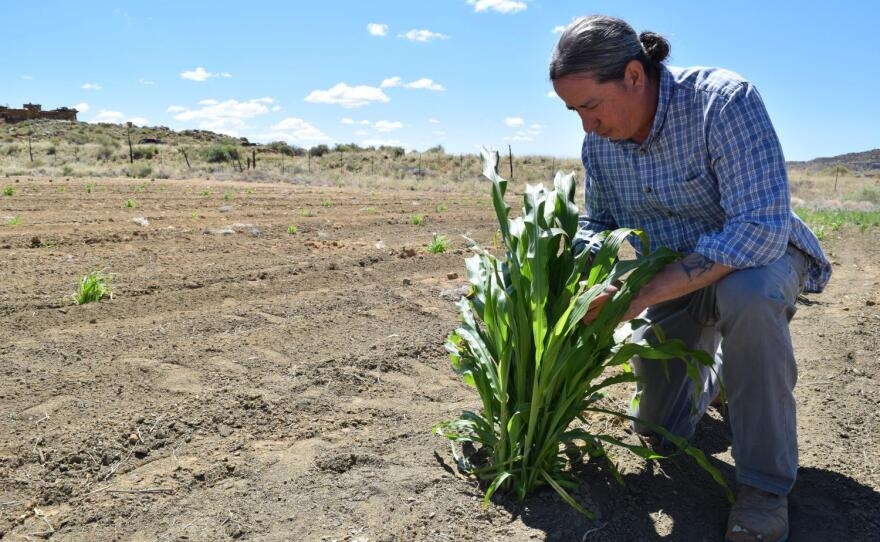
Hopi dry farmer Michael Kotutwa Johnson. (Photo: Lauren Gilger / KJZZ)
The University of Arizona has released a new report highlighting the huge economic impact of tribal agriculture throughout the Grand Canyon State – including $750,000,000 in total economic output statewide.
KJZZ’s Gabriel Pietrorazio has details.
According to the study, Indigenous farms outnumber all other operations statewide. And while most tribal farms are between one and nine acres in size, they collectively manage more than 80% of Arizona’s farmlands during 2022.
For Hopi dry farmer Michael Kotutwa Johnson, who is a co-author, this report is an important reminder.
“The main story is that Indian people are still doing agriculture since before we were in a state… Maybe doing it in a different form, but we’re still here, and we’re still doing that, and I think that our contributions have been really unnoticed.”
Including how the vast majority of Arizona farms for commodities, like sheep, goats, vegetables, and melons, are owned by Indigenous peoples.
Johnson thinks that trend will continue to grow.
“So I really would make the claim that in about 20 years the only real agriculture in Arizona will be on Indian reservations.”
Get National Native News delivered to your inbox daily. Sign up for our daily newsletter today.
Download our NV1 Android or iOs App for breaking news alerts.
Check out today’s Native America Calling episode
Wednesday, June 3, 2026 — Native child welfare notches wins in a time of adversity